
Advanced Micro Devices (AMD) is a brand that has been around for decades in the PC space. Responsible for some of the best CPUs and GPUs, the company has been in a strange place since the early 00s, struggling to keep up with Intel and Nvidia with its multi-segment approach. Many would shun AMD due to system instability, hotter components, and a general lack of polish found with competitors, but that's no longer the case. AMD is now value-centric and powerful enough to consider an all-AMD PC build.
5 AMD Ryzen is the best CPU
Intel needs to catch up
Firstly, AMD has been winning on the processor front since 2016 with the launch of Ryzen. The original Zen processors had their faults, largely due to it being an entirely new platform, but Intel was caught off guard after enjoying years of stagnet competition. Now, AMD is in the lead with the fastest gaming processors, 3D V-Cache, and incredibly powerful Threadripper and EPYC chips. If you're considering a new PC build, AMD would be the way to go for the CPU alone.
The latest Ryzen CPUs are stable, efficient, and powerful enough for most applications. Intel continues to struggle with its switch to the Intel Core Ultra family, though Team Blue is still making notable gains in the laptop space. The AMD Ryzen 9 9950X3D may be the best and most powerful gaming processor, but there are countless options out there with plenty of routes for upgrades.

Best CPUs in 2025
Trying to build your next PC for gaming or work? Here are the best CPUs you can buy for a new machine or if you're looking for an upgrade.
4 AMD Radeon RX 90 is a hit
FSR 4, ray tracing, and more
AMD's Radeon RX 90 series is finally here, and it's amazing. The RX 9070 XT costs $599 and can handle 4K gaming with ray tracing and other demanding visual settings to be configured, thanks to the gains the company made with its newest generation RT cores and FSR 4. Nvidia still holds the mantle for the most powerful consumer-grade graphics card in the form of the Nvidia GeForce RTX 5090, but in the mid-range segment where GPUs are somewhat affordable, AMD is making strides.
No one needs an RTX 5090. Even an Intel Arc B580 is a solid pick for a 1440p-focused gaming PC build. But for AMD, you can now install a branded CPU and GPU in the same system and enjoy some butter-smooth gaming with results that almost match what Nvidia has been able to refine over the years. Gone are the days when AMD GPUs were effectively relegated to a division below their Nvidia counterparts. They're better than ever, especially with an AMD CPU.
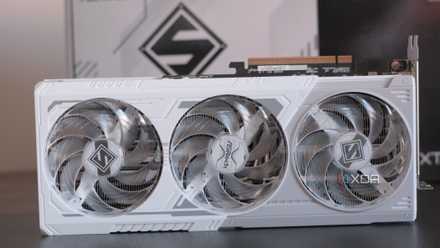
AMD's Radeon RX 9070 XT is the most exciting GPU to launch in years
It's here. It's brilliant. Go and buy one.
3 AMD supports its sockets for longer
AM4 is still going strong
Did you know AMD is still releasing new AM4 processors? The newer AM5 socket launched in 2022, and the company refuses to give up on the older platform, offering those with older motherboards a means to inject more performance into their system. The company has promised to support AM5 until 2027, though I suspect we'll see AMD continue to roll out new chips even after the next-gen socket is rolled out with new families of Zen chips and chipsets.
This provides peace of mind that you won't be left behind once AMD eventually moves on from the platform your PC relies on. There could be a viable upgrade released even if you're currently using the best processor available. And if you're rocking a more affordable chip, you can be sure there will be plenty of performance headroom to tap into.

4 reasons AM4 won't die for a long time
While some may say that AM4 is dead, AMD and others say it still has plenty of life left
2 AMD ❤️s Linux (more than Nvidia)
There's always room for improvement
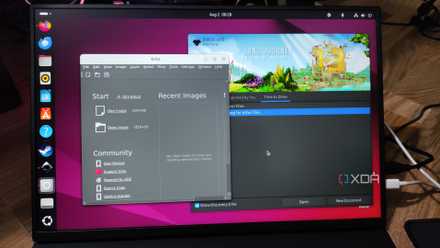
AMD and Nvidia both support Linux, but with the latter, you need to rely on proprietary code, which is no good in the FOSS world. Enter amdgpu, which is AMD's driver support for Linux, baked into the kernel. No need for separate packages to be installed; simply install the GPU, load up the OS with a kernel supporting the Radeon RX 90 cards, and you're ready to go with Mesa. Games will work flawlessly, although it would be good for AMD to launch Adrenalin for Linux.
Still, the foundations are there with excellent support on day one for the latest RX 90 series. Having the drivers baked into the OS is a great way to ensure the GPUs work as intended without factoring in overheads with proprietary code. It also means the community can easily check and work out fixes for AMD hardware, resulting in shorter times between bug reports and fixes being applied to channels. For Nvidia, you're at the mercy of the corporate giant, focusing on AI and its largest OS market.
5 reasons I can’t go back to Windows after trying Linux
As weird as it may sound, Linux has more game-changing QoL features than Windows
1 AMD is generally more cost-effective
Save money in the process!
Want a cost-effective CPU? AMD. The same with a GPU for 4K gaming? AMD again. The company has always been present in the bargain section for PC parts, and it didn't change this approach with the Zen 5 and RDNA 4 launch. Even though the company has made strides with its CPU developments, prices are still pretty good, depending on which model you're after. X3D CPUs cost considerably more than their counterparts without 3D V-Cache.
The RX 90 series is the same. It was expected that AMD would undercut Nvidia's pricing by a few coins and call it a day, but the company instead opted for a more aggressive approach to claw some market share and offer better value for PC gamers. That's not to say we won't see AMD rejoin Nvidia with its obscene GPU pricing, but for now, we can at least enjoy some lower MSRPs, even if demand and scalpers continue to make it difficult to locate stock.

AMD listened — The Radeon RX 9070 XT is the "best 4K GPU for less than $600"
Here's how much you'll need to pay for solid 4K gaming with AMD in 2025.
Building with AMD has never been better
I've moved between AMD, Intel, and Nvidia during my almost three decades of building systems. I cannot recall when I could outright recommend an all-AMD system. It was always a combination of either AMD and Nvidia or Nvidia and Intel. Now, with Zen 5 and RDNA 4, I can comfortably recommend CPUs and GPUs from Team Red to create the ultimate gaming powerhouse. The best part? You won't spend too much on these parts to enjoy higher performance.
I'm also practicing what I preach by planning out an AMD-only PC build for my next project. Just need to get my hands on a 9070 XT and a compatible water block, and we're good to go.