
Shopping for a mid-range graphics card in 2025 is very tricky. Although Nvidia is the market leader, its graphics cards don't impress me in terms of price-to-performance. Sure, if money is not an issue, the RTX 5090 is an easy recommendation if you can find one in stock. But things get complicated in the mid-range segment, where you'll see Nvidia trying to cut corners with its GPUs. And that's quite literally why I won't consider Nvidia the next time I'm in the market for a value-for-money GPU.
Although I don't mind switching to Intel's Arc GPUs, they have a long way to catch up in terms of performance and driver support. AMD, though, has quietly improved its graphics cards with each generation, offering impressive value, performance, and a commitment to openness. Yes, the company doesn't have anything to offer for high-end consumers, but if you're on a budget, it's hard to overlook Team Red for these reasons.
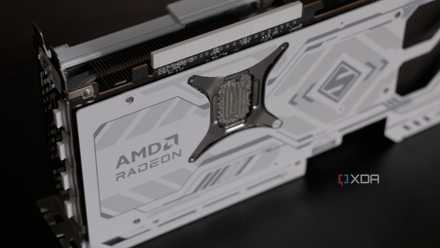
5 ways AMD embarrassed Nvidia with the RX 9000 launch
Nvidia set a low bar with RTX 50, but AMD smashed it in a near-flawless RX 9000 launch
3 AMD doesn't cheap out on VRAM
Nvidia continues to offer GPUs with 8GB of VRAM
8GB of VRAM was once considered the golden standard for gamers, but that's no longer the case in 2025. Many modern games support ray tracing, with some titles like Indiana Jones and the Great Circle and Assassin's Creed Shadows, forcing users to utilize these advanced lighting effects. Pair that with high-resolution textures, and 8GB of VRAM quickly becomes a bottleneck. Although a GPU with this amount of VRAM is fine for 1080p gaming right now, I'm confident that it will age poorly over the next couple of years.
Nvidia currently sells the RTX 5060 Ti in 16GB and 8GB variants, with the latter performing poorly in various games at higher resolutions according to Hardware Unboxed's benchmarks. The more expensive RTX 5070 comes with 12GB of VRAM, which still isn't great by any means if you want a future-proof GPU. AMD, on the other hand, sells the RX 9070 and RX 9070 XT with 16GB of VRAM. Even the last-generation Radeon RX 7600XT and 7700XT had 16GB and 12GB of VRAM, respectively. I know the company has a good track record of offering more VRAM than its arch-rival in the same price range.
2 Better price-to-performance ratios
I don't have to worry about paying the "Nvidia tax"
It's no secret that Nvidia charges a premium for its graphics cards. Many people are okay with it since the company has offered a more robust ecosystem of features, like DLSS Super Resolution and Frame Generation, and better driver support. But I feel that has gotten to Nvidia's head, since the company no longer tries to please the value-for-money consumers. Remember when Nvidia launched the 1080 Ti for $699 in 2017? Even if you account for inflation, you won't find a new 5080 for less than $1,000 today.
Even Nvidia's mid-range RTX 5070 Ti is expensive at an MSRP of $749. AMD, on the other hand, offers the Radeon RX 9070 and RX 9070 XT at an MSRP of $549 and $599, respectively. The best part? The RX 9070 XT is only 2-5% slower on average than the RTX 5070 Ti at 1440p and 4K resolutions. That's incredible value for a graphics card that costs 20% less. Moreover, the cheaper RX 9070 beats the RTX 5070 for the same price, making Nvidia's offerings far less compelling in the mid-range segment. AMD has earned quite a reputation for undercutting Nvidia in recent years, so I know that if I want the best bang for my buck, Team Red is the way to go for the foreseeable future.
1 AMD's open-source and transparent approach
I'm done paying a premium for Nvidia's proprietary features
Let me make this clear: I've prioritized Nvidia for years because of its proprietary features and optimized driver implementation. AMD was just way behind, and their GPUs seemed lackluster. However, the tides have turned in recent years, as AMD's technologies like FidelityFX Super Resolution (FSR) have almost caught up with Nvidia. For instance, AMD's FSR 4, introduced alongside the Radeon RX 9000 series GPUs, is mostly better than DLSS 3 quality-wise.
However, what makes FSR interesting to me is AMD's open-source approach. Unlike DLSS, which requires RTX GPUs and game-specific optimization, FSR 3 works with Nvidia and Intel cards too (FSR 4 is exclusive to RX 9000 series GPUs for now). Similarly, AMD's FreeSync technology doesn't need proprietary hardware within the monitor like G-Sync did, which drove up costs for manufacturers. AMD also actively contributes to open-source drivers on Linux, ensuring better stability and support across operating systems, and that's something Nvidia historically neglected.
Team Red has gotten better in recent years
Being too loyal to a brand isn't a great idea, and I've learned that the hard way. At the end of the day, all companies are in it to make money, but if they compete against each other to sell their products, we'll be the ones to benefit from it. Currently, AMD lacks a GPU powerful enough to compete in the high-end segment, which is one reason the RTX 5090 costs a substantial $2,000. However, if you're in the market for a mid-range GPU, switching to Team Red seems more tempting than ever. It's safe to say AMD has listened to user feedback and improved its FSR implementation and driver support to make its GPUs worth your hard-earned money.
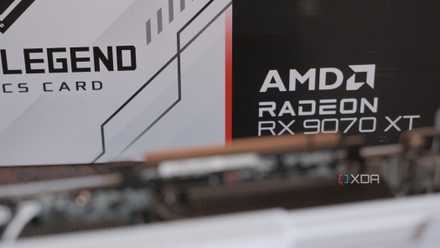
Here's why I don't miss Nvidia after upgrading to an AMD Radeon RX 9070 XT
I'm finally leaving team Green altogether in favor of AMD's new Radeon RX 9070 XT, and I'm not looking back.