
The marketing around mesh Wi-Fi makes it seem like the best upgrade you can make to your home network. Most users suffering from poor Wi-Fi coverage are tempted to invest in an expensive mesh system instead of Wi-Fi extenders to make up for a subpar router. While a mesh network is capable of providing a high-speed blanket of connectivity across your house, it can often make things worse. Choosing the wrong model or cramming too many mesh nodes inside a relatively small area can lead to limited bandwidth and increased interference. Your devices may see improved coverage around the house, but the network performance may degrade. Most homes don't even need a mesh network; they just need a better router or some cheap wired access points. That said, if you have already bought one, it is possible to ensure it works in your favor instead of making your network worse than before.

I fixed my home network lag without buying a new router or a mesh system
Cheap and free network upgrades can do much more than you think
A mesh network can create new and worse problems
It doesn't always work out well
When you're deliberating whether to buy a mesh system or not, the problem you're facing is poor coverage. Maybe you have one or two dead zones in the rooms furthest from the router. Setting up a few mesh nodes seems like the obvious answer, but it doesn't always work as intended. Most people use the simpler method to set up a mesh network, i.e, using the default wireless backhaul for the communication between the satellite nodes and the primary node. On most budget systems, this communication with the main router eats up a lot of the bandwidth that could have been used by your devices. You end up increasing the theoretical network coverage, but the real-world improvement is minimal — your network still feels sluggish.
Another problem often seen in mesh networks is sticky autoconnect. Your smartphone or laptop is supposed to automatically jump between nodes, depending on the one offering better connectivity as you move through the house. What often happens, though, is that your device refuses to make the switch, clinging to the node with the inferior signal instead of the one that's actually closer to it. You're essentially locked to a node with a barely working connection. And it becomes worse if said node is down for some reason — your phone continues to see and connect to it, but the backhaul isn't actually working, leaving you without Wi-Fi.
A mesh network isn't a magic fix for every Wi-Fi problem in your house. It's an intelligent workaround for poor Wi-Fi coverage, but it needs to be set up the right way for the best results. Otherwise, you're simply trading in old problems for new ones while throwing away hundreds of dollars.

6 home network upgrades I made that were better than a new router
Unless it's ancient, you will probably get more mileage from a few simple fixes than replacing your router
Mesh works well when executed properly
Tri-band mesh or wired backhaul is your friend
I mentioned how the wireless backhaul between the satellite and primary nodes affects the available bandwidth for your devices. However, if your mesh system supports Wi-Fi 6E or 7, it uses the 6GHz band as the dedicated backhaul, allowing every device to enjoy the maximum bandwidth of your connection. The additional wireless radio prevents the backhaul from crowding the 2.4GHz and 5GHz bands used by your devices, keeping things smooth instead of sluggish. You might have to pay slightly more for a tri-band mesh system, but the benefits are immediate and tangible. Many people buy starter models with Wi-Fi 6 support, leading to buyer's remorse when the system doesn't perform as well as they expected.
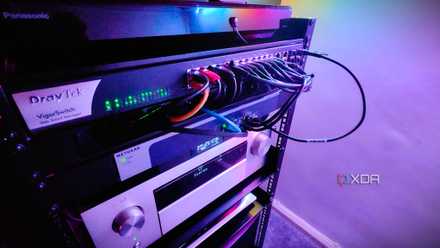
Fortunately, you don't need to fret if you've already bought a Wi-Fi 6 mesh system. You still have the option of using a wired backhaul instead of a wireless one. By connecting your mesh nodes to the primary node or router with Ethernet, you're offloading the backhaul activity to the wired connection, keeping the airwaves free for your devices. This not only prevents slowdowns, but also removes the possibility of a single malfunctioning node taking you offline.
TP-Link Deco XE75
- Coverage
- 5,500 ft squared
- Number of Devices Supported
- 200 devices
- Speed
- Up to 5,400Mbps
- Wi-Fi Protocols
- WPA, WPA2, WPA3
The TP-Link Deco XE75 is a mid-range Wi-Fi 6E mesh Wi-Fi kit with an AXE5400 tri-band connection. This router has 574Mbps available at 2.4GHz, 2402Mbps at 5GHz, and another 2402Mbps at 6GHz, allowing for fast mesh speeds, even in a heavily congested building.
I ran wired backhaul to every room in my house, and it was so worth it
After years of being Wi-Fi first, now I've seen the light
You might not even need a mesh network for your house
It's not the default solution
All said and done, not everyone needs a mesh network. For starters, if your house isn't large enough, and the layout doesn't create too many blockages, you probably just need a better router, which doesn't have to cost more than $50–$100, even for a Wi-Fi 7 model. If that doesn't solve your Wi-Fi range problems, then you can repurpose an old router into a wired access point (AP) by running a cable to your main router and disabling DHCP on the old one. Using the same SSID and password on both of them will allow seamless roaming when your devices move through the house. One or two wired APs can dramatically improve your Wi-Fi performance by enabling a high-speed and reliable connection anywhere in the house. You're essentially getting all the benefits of a mesh system without the investment.
TP-Link AXE5400 Tri-Band Router (Wi-Fi 6E)
If you want a great Wi-Fi 6e router but don't want to spend a whole lot of money, check out this one from TP-Link.

6 myths you probably still believe about mesh networking
If you've been on the fence about getting a mesh network, or you're set on getting one, make sure you have all the details first.
Mesh networking can be the answer, but only when done right
If your home Wi-Fi is not up to the mark, you don't have to default to buying a mesh system. Moving your router to a better spot or replacing it with a Wi-Fi 6E or 7 model could be all you need. Alternatively, you could use old routers and create wired access points for excellent coverage throughout your house. If your house really needs a mesh system, ensure you buy a Wi-Fi 6E or 7 model for the 6GHz band, or use wired backhaul on your Wi-Fi 6 model.