ChatGPT for business (2026): What matters and what's missing

Last edited September 29, 2025

It feels like ChatGPT has been around forever, doesn't it? Since it showed up, it's completely changed how we think about AI, making it something millions of us can use every day. It's fantastic for brainstorming an idea, knocking out a quick email draft, or just asking a random question that pops into your head.
But for businesses, the story gets a bit more complicated. When you're thinking about using AI for something as important as customer support or your internal IT helpdesk, you have to look past the initial "wow" factor. While ChatGPT is a powerful general-purpose tool, using it well in a business setting means really understanding what it can, and, more importantly, can't, do.
This post is a complete ChatGPT overview from a business owner's point of view. We’ll walk through its features, break down the full pricing, and dig into the serious limitations you'll run into when trying to use it for customer or internal support.
What is ChatGPT and how does it work?
To get a real sense of what ChatGPT is good at and where it falls short, it helps to know a little bit about what's going on behind the curtain.
The technology behind ChatGPT
ChatGPT stands for "Generative Pre-trained Transformer," which is a fancy way of saying it’s an AI model from OpenAI that's been trained on a truly mind-boggling amount of text and data from the internet. This training is what allows it to understand grammar, context, and different writing styles, letting it generate human-like text on almost any topic.
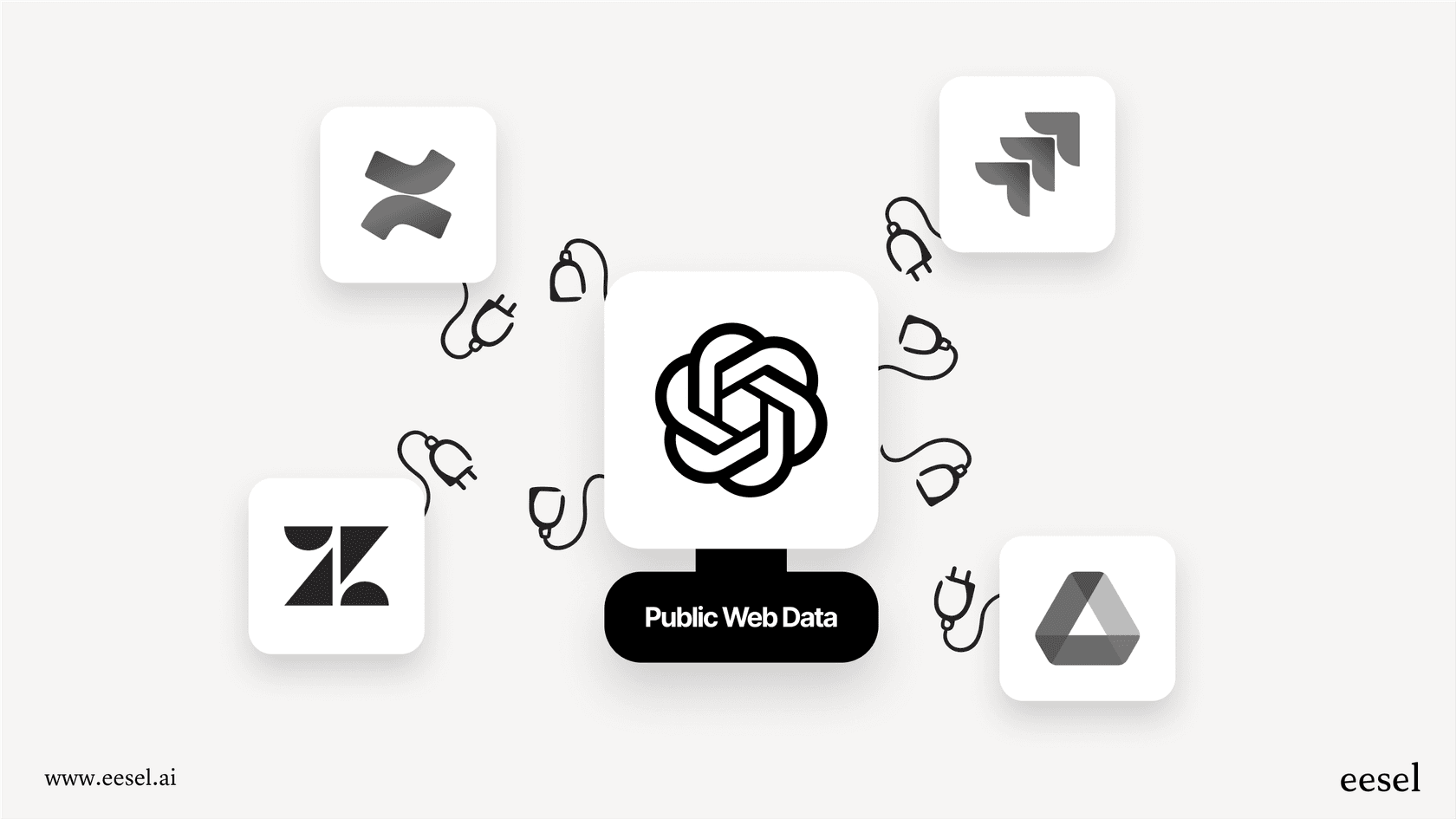
Its greatest strength is that it's conversational. You can ask follow-up questions, correct it, or tell it to be more casual, and it usually gets it. But this is also its biggest weakness for business: its knowledge is a mile wide and an inch deep when it comes to your company. It can tell you all about the French Revolution, but it has no idea what your refund policy is.
The difference between the models (GPT-4, GPT-4o, GPT-5)
You’ve probably heard people talk about GPT-4, GPT-4o, or the upcoming GPT-5. The easiest way to think about these is like software updates on your phone. Each new version gets a bit faster, more accurate, and better at reasoning. Newer models are also often "multimodal," which just means they can understand things other than text, like images and voice.
For a business, the main takeaway is that the latest and greatest models are almost always locked behind a paid plan. If you need consistent, high-quality answers for your team, you're going to have to pay up, which is a big piece of the puzzle.
Key features and capabilities
A big part of ChatGPT's appeal is its flexibility. It’s like a Swiss Army knife for all sorts of digital tasks. Let's look at what it really shines at.
Content generation and creative writing
This is what ChatGPT is famous for. It can whip up a draft for pretty much any kind of writing you need. It’s a huge help for getting past that blinking cursor on a blank page or just speeding up routine writing. Think of it for things like drafting marketing emails, writing the first version of a blog post, or brainstorming slogans for a new campaign.
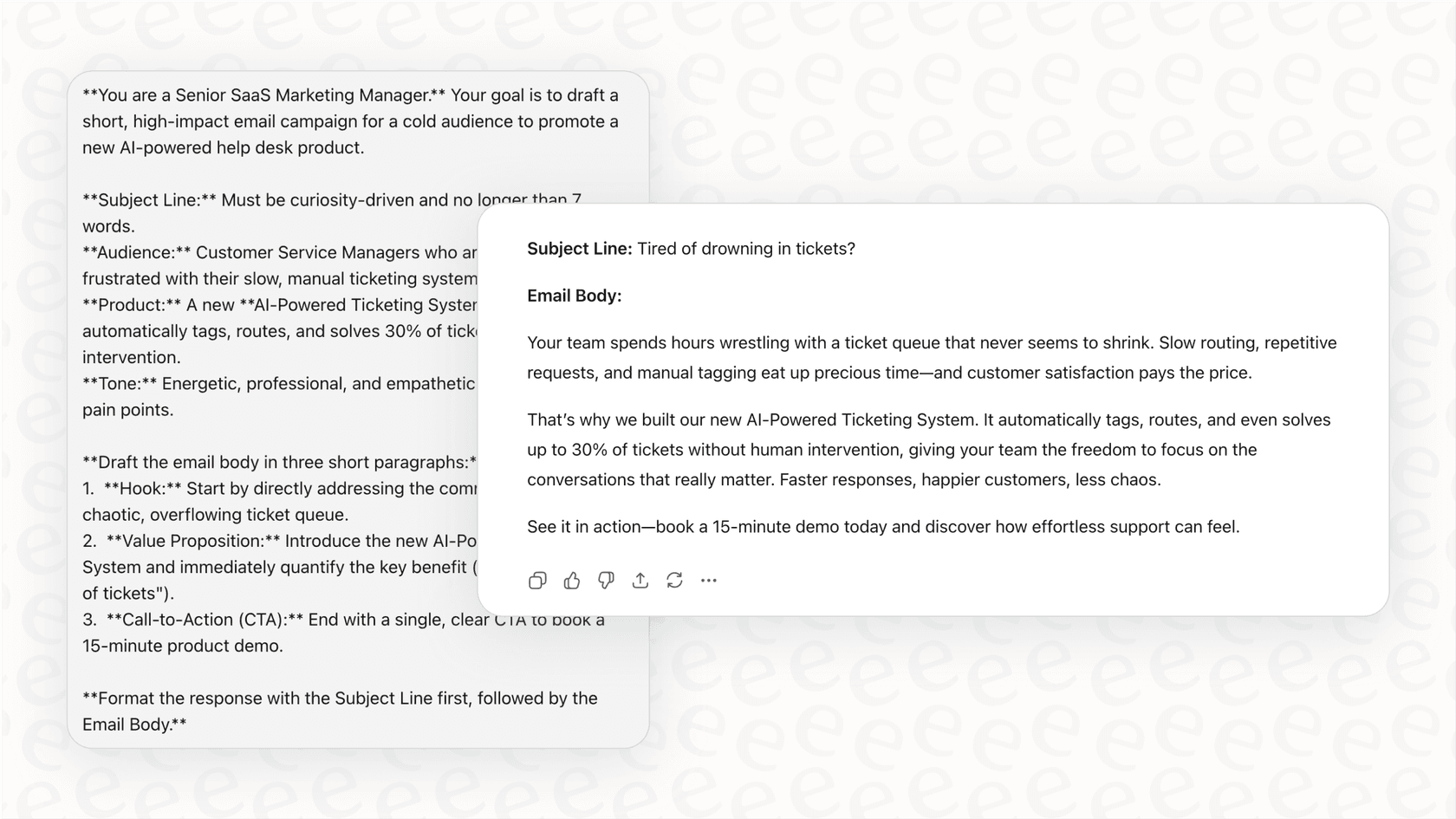
Of course, the content it produces almost always needs a human to go over it to make sure it matches your brand's voice and style. This can turn into a lot of manual editing, especially when you compare it to specialized AI tools that can learn your company's tone automatically.
Language translation and summarization
ChatGPT is also pretty handy for language translation and summarization and summarizing long documents or meeting notes. If you have a team spread across the globe or just need to get the gist of a dense report without reading every word, this can be a real time-saver.
Code generation and debugging
For developers, ChatGPT can feel like a helpful coding buddy. It can write code snippets in different languages, explain what a block of code is supposed to do, and even help hunt down bugs. This really shows its strength as a general assistant, but it also highlights its limits. It can help a developer, but it can’t take action on its own inside your company’s systems. For example, it can't just go look up a customer's order ID in your Shopify admin and then write a support reply based on the shipping status. For that, you’d need a developer to spend a lot of time building a custom integration.
ChatGPT pricing and plans
To make a good call, you need to know the full cost. Here’s a straightforward breakdown of ChatGPT’s pricing tiers so you know exactly what you’re getting for your money.
For individuals: Free, Plus, and Pro
These plans are designed for one person, whether you're just messing around with AI or you're a professional who uses it daily.
| Feature | Free | Plus ($20/month) | Pro ($200/month) |
|---|---|---|---|
| Model Access | Limited access to GPT-5 | Good access to GPT-5 | All-you-can-eat GPT-5 & Pro models |
| Usage Limits | Pretty restrictive | Higher message caps | The highest limits available |
| Key Features | Basic chat, web search | Data analysis, DALL-E, custom GPTs | Better reasoning, top performance |
| Best For | Casual users, trying it out | Professionals, frequent users | Researchers, devs, heavy users |
For businesses: Team and Enterprise
OpenAI has two plans aimed at organizations, with more features for collaboration, management, and security.
ChatGPT Team:
-
Price: $30 per user/month if you pay monthly, or $25 per user/month if you pay for the year.
-
Features: You get higher message limits than the Plus plan, a private workspace for your team, and an admin console to manage who has access. Most importantly, your business data isn't used to train OpenAI's public models.
-
Limitation: Even though it's for teams, it’s still just a shared chat window. It doesn't connect directly to your core business tools like your helpdesk, and it can't do things like automatically tag, route, or close a support ticket.
ChatGPT Enterprise:
-
Price: This is custom. You have to contact their sales team for a quote, but word on the street is it costs around $60 per user, per month.
-
Features: This plan gives you unlimited, high-speed access to the best models, plus security features like single sign-on (SSO). It also comes with API credits your developers can use to build custom things.
-
Limitation: Having to go through a sales process can be a real drag for teams that want to get started quickly. And those API credits? They're useless unless you have developers ready to build and maintain custom integrations. What looks like a simple software purchase can quickly become a complex and expensive development project.
Critical limitations of ChatGPT for business support
Okay, here’s where we get down to brass tacks. While ChatGPT is impressive technology, it has some major blind spots that make it a tough and often impractical choice for customer service, ITSM, or any kind of scaled support.
It doesn't connect to your business tools out of the box
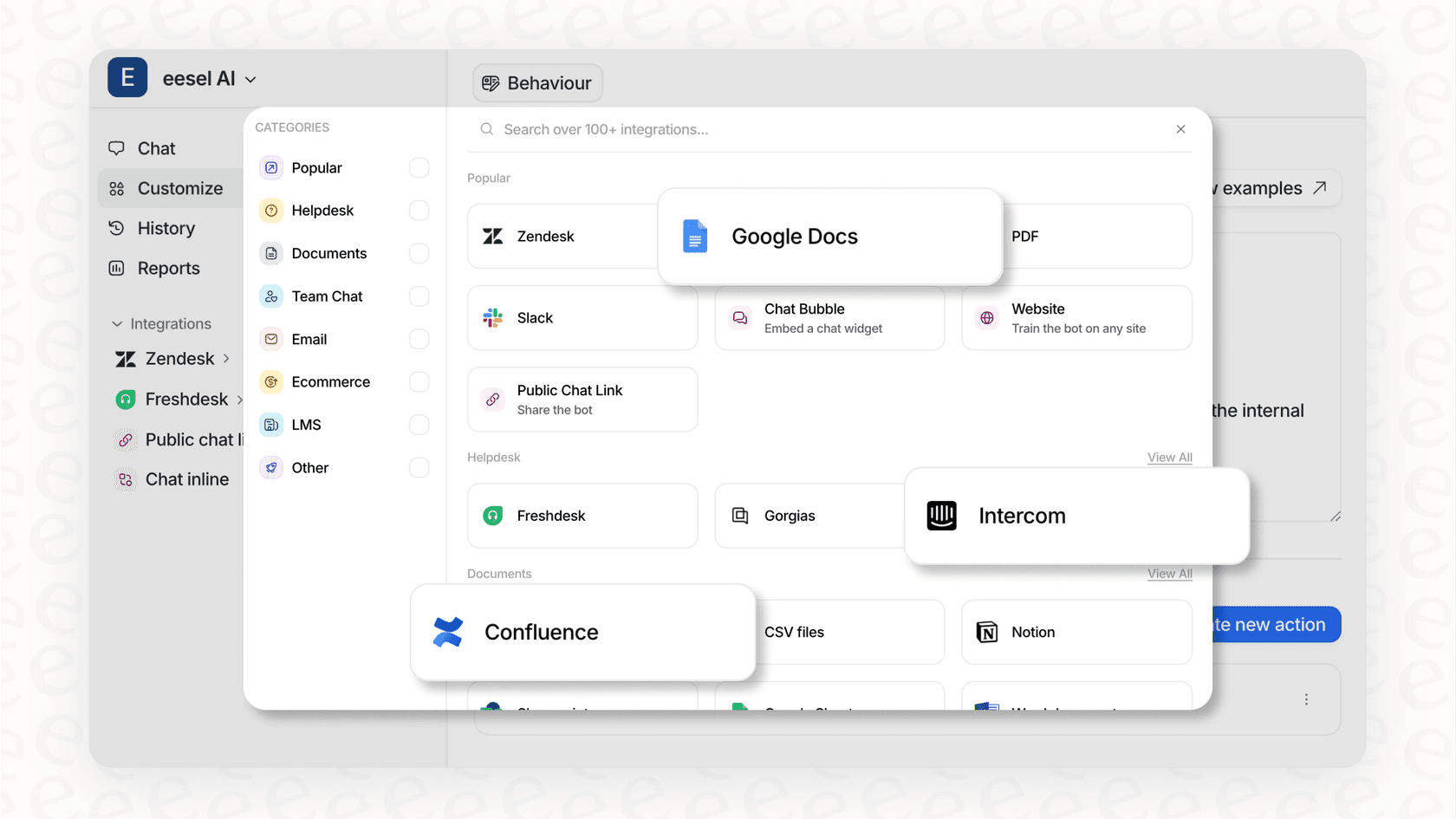
ChatGPT has no simple, one-click integrations with the tools you rely on, like Zendesk, Freshdesk, or Intercom. If you want it to answer a customer ticket, you need a developer to build a custom solution using its API. This isn't a small task, it takes a lot of time and money, not to mention ongoing work to keep it running as your tools change.
In contrast, platforms like eesel AI are built from the ground up for support teams. They offer one-click helpdesk integrations that can get you up and running in minutes, not months, with zero developers needed.
You have no control over its knowledge sources
ChatGPT learned from the public internet. It can't see your company's private knowledge base in Confluence, your internal how-to guides in Google Docs, or all the valuable info buried in your past support tickets. This means it can't give accurate answers to company-specific questions, follow your internal workflows, or talk in your brand's unique voice.
A purpose-built solution like eesel AI fixes this by securely connecting to all your scattered knowledge. It can even learn from your past support tickets from day one to automatically understand your business, common customer problems, and unique tone.
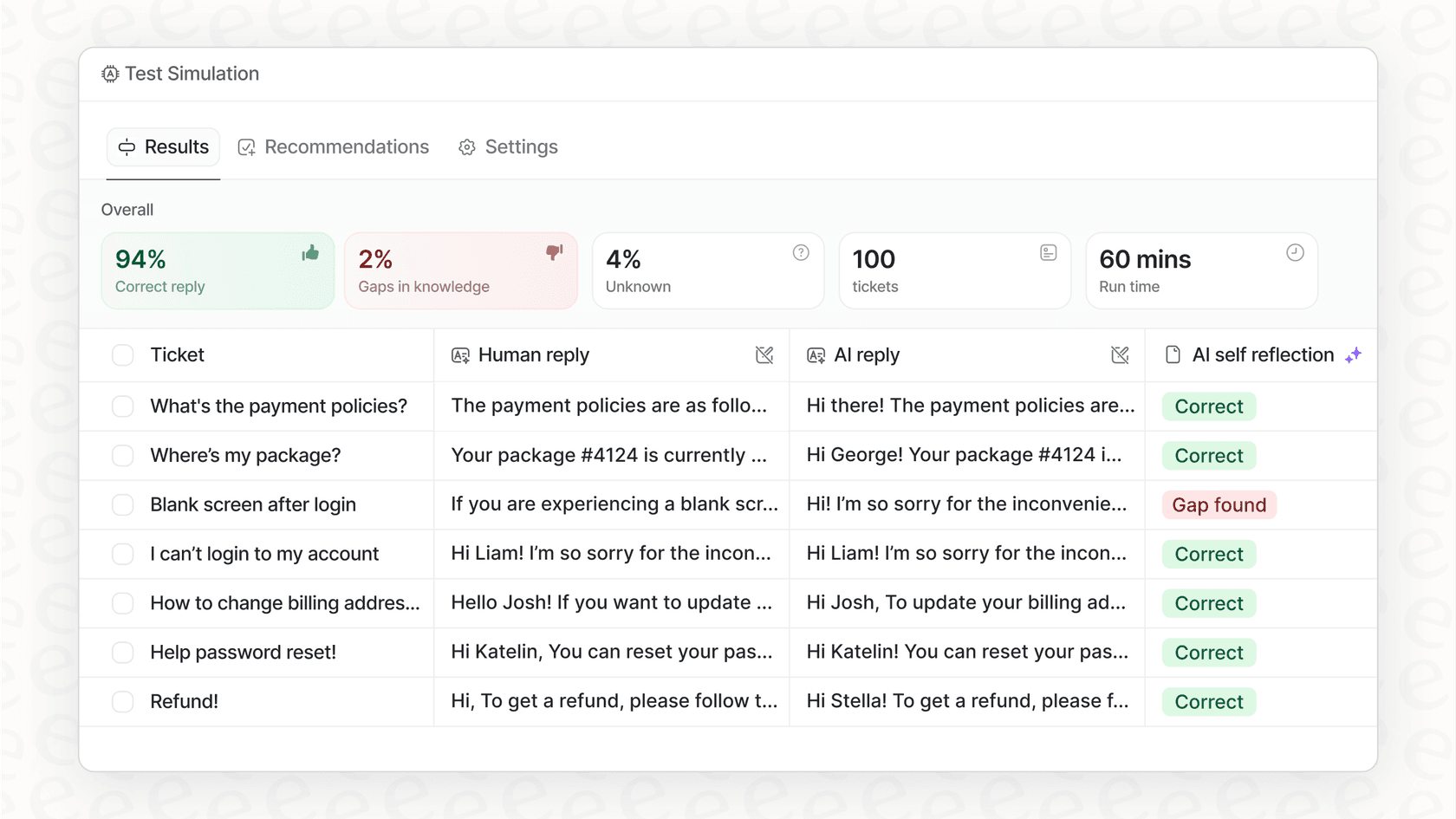
There is no safe way to test and simulate performance
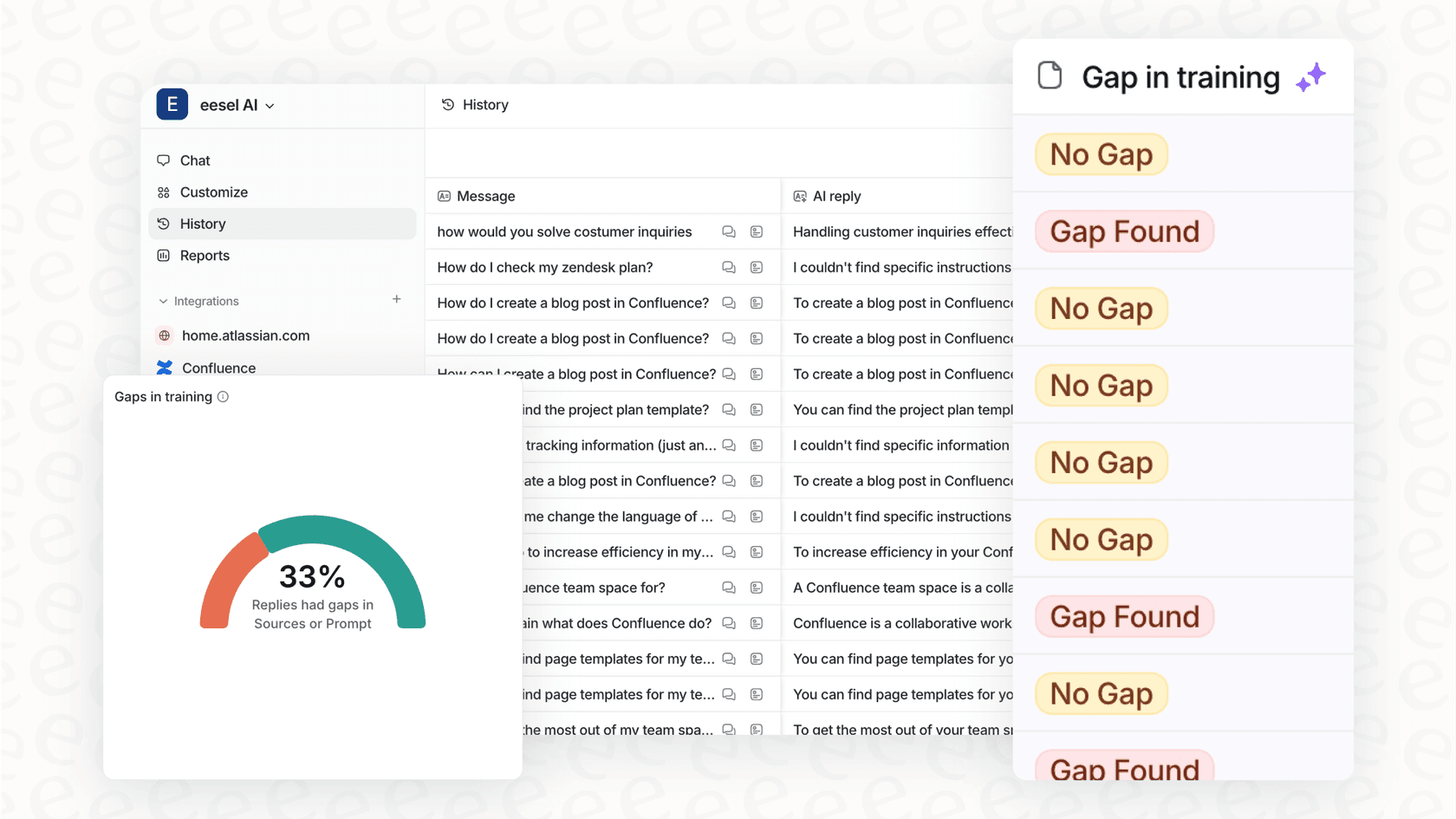
With ChatGPT, you can't really see how it will perform with your real customer questions before you turn it on. There’s no way to know how accurate it will be, what percentage of tickets it might solve, or what kind of ROI you can expect. For any support leader, letting an untested tool talk to paying customers is a huge gamble.
This is where a tool like eesel AI's simulation mode really shines. It lets you run the AI over thousands of your past tickets in a totally safe sandbox. You can see exactly how it would have replied and get accurate predictions on its performance and cost savings before it ever interacts with a single live customer.
Automation is rigid and not fully customizable
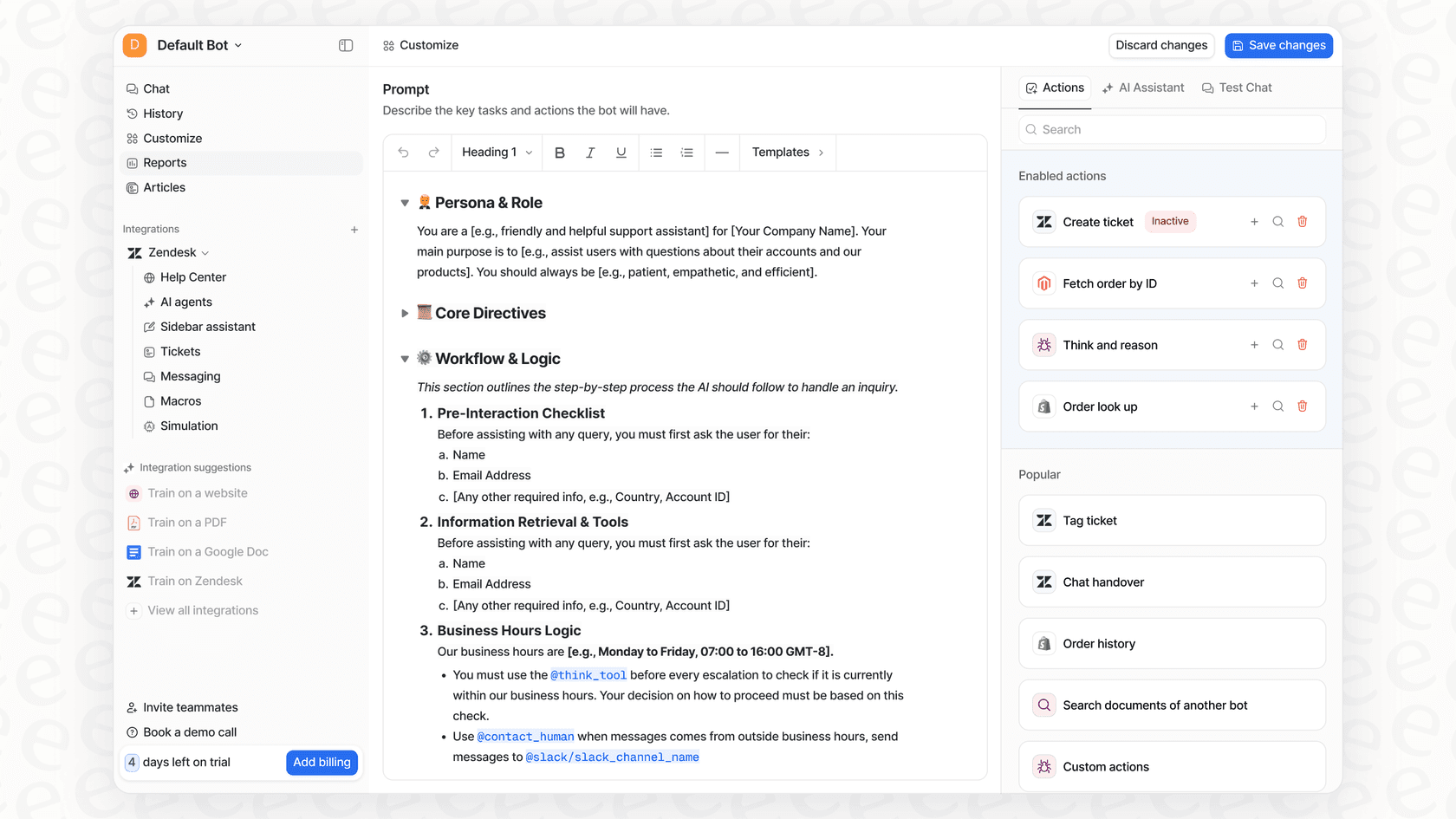
Even if you go through the trouble of building a custom API solution, creating smart and flexible support workflows is incredibly hard. You can't just tell ChatGPT to only handle refund questions and send everything else to a human. You can't get it to automatically tag tickets based on what the customer is asking about or check a customer's subscription status before it replies.
With eesel AI, you get a fully customizable workflow builder. Using a simple interface, you can set rules for exactly which types of tickets the AI should handle and what it can do, whether that’s sending a ticket to a specific team, looking up order info, or tagging it for your reports.
A powerful tool, but not the right one for every job
After this detailed ChatGPT overview, what's the final verdict? It's simple: ChatGPT is an amazing and flexible AI assistant for general tasks. For brainstorming, creating content, and boosting personal productivity, it's a fantastic tool.
But when it comes to specialized, critical functions like customer service or ITSM, its limitations create some serious problems. The lack of integrations, the inability to learn from your private knowledge, and the absence of a safe way to test it make it a risky and inefficient choice. Businesses that need reliable and deeply integrated AI automation are much better off with a platform designed specifically to solve these challenges.
Go from a general tool to a dedicated AI support agent
You've seen the limits of a one-size-fits-all tool. Now, see what a platform built just for support can do.
eesel AI is a simple, self-serve platform that plugs right into your helpdesk and other tools. You can go live in minutes with one-click integrations, instantly bring all your scattered knowledge together, and test everything with confidence using a powerful simulation engine.
Stop trying to fit a square peg in a round hole. Start automating your frontline support the right way.
Start your free trial or book a demo.
Looking to learn more about ChatGPT? See our ChatGPT pricing breakdown, read ChatGPT reviews, or explore ChatGPT alternatives. You can also compare: ChatGPT vs Claude, ChatGPT vs Gemini, ChatGPT vs Copilot, and ChatGPT vs Perplexity. For business use, see ChatGPT Enterprise and ChatGPT Teams.
Explore more ChatGPT resources: ChatGPT apps directory, ChatGPT plugin marketplace, ChatGPT voice rollout, GPT-5.1, GPT-5.1 Codex Max, GPT-5.2, and how to write blog posts using ChatGPT.
Frequently asked questions

Share this article

Article by
Stevia Putri
Stevia Putri is a marketing generalist at eesel AI, where she helps turn powerful AI tools into stories that resonate. She’s driven by curiosity, clarity, and the human side of technology.