
Ukrainians have the most favorable views of Germany, France, and the UK, while China and Hungary receive the lowest ratings, according to a study
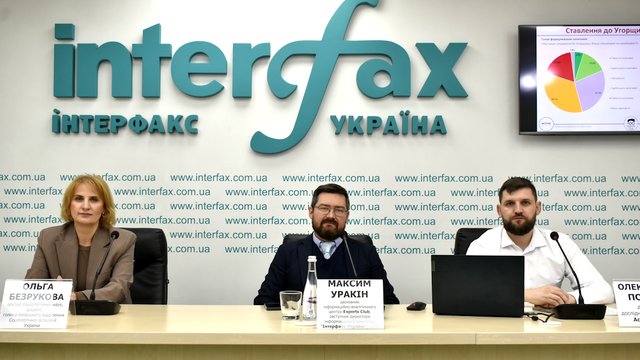
According to the results of a joint study by Active Group and Experts Club, Ukrainians view Germany, France, the United Kingdom, and Lithuania most favorably, while China and Hungary receive significantly lower ratings, despite their importance in Ukraine’s foreign trade.
“The modern international economy is not just about foreign trade figures, but also about reputation, trust, political proximity, humanitarian presence, and a sense of partnership at the societal level. It is precisely within this framework that both Ukraine’s trade ties and the work of foreign embassies in Ukraine’s information and public spheres should be evaluated,” noted Maksym Urakin, founder of the Experts Club information and analytical center, at a press conference at the Interfax-Ukraine agency on Thursday.
Urakin also cited Ukraine’s overall foreign trade figures for 2025. According to his data, total trade turnover exceeded $125 billion, of which nearly $85 billion was accounted for by imports and about $40 billion by exports, while the trade deficit in goods amounted to approximately $44.5 billion. He noted that this indicates the continued high openness of the Ukrainian economy even amid the war, but at the same time highlights its significant dependence on foreign supplies.
As noted during the presentation, China remains Ukraine’s largest trading partner in terms of trade turnover. At the same time, it is trade with China that creates the largest trade imbalance for Ukraine, as out of $20 billion in total trade, about $19 billion is accounted for by imports, while Ukrainian exports amount to only about $1.8 billion.

“In essence, nearly 39–40% of Ukraine’s entire annual trade deficit is attributable to China. This is a classic example of asymmetric trade: Ukraine sells resources and buys goods with high added value,” Urakin emphasized.
According to him, Ukraine has a different type of relationship with Poland. Poland remains a key neighbor, a logistics hub, an important political ally, and at the same time the largest market for Ukrainian exports. Total trade with Poland exceeds $13 billion, but here too, Ukraine’s trade balance remains negative—at nearly minus $3 billion. At the same time, as noted by participants at the press conference, Poland is not merely a sales market but a bridge connecting Ukrainian producers with the European Union market.
A similar situation is observed in trade with Germany, Turkey, and the United States. According to data presented at the press conference, trade turnover with Germany amounts to about $9 billion, with Turkey—nearly $9 billion, and with the United States—nearly $6 billion, with Ukraine having a negative balance in all three cases. Urakin emphasized that the U.S. market is particularly important, as the significance of the United States for Ukraine is determined not only by trade volumes but also by the role of the United States as a security, financial, technological, and political partner.
At the same time, as noted during the presentation, the most advantageous markets for Ukraine in terms of a positive trade balance are Egypt, Moldova, the Netherlands, Spain, Lebanon, Algeria, Iraq, Libya, Kazakhstan, and the United Arab Emirates.

“Ukraine achieves the best results where it has a strong position in the agricultural sector and where the Ukrainian export offering is well-suited to the respective market. Future improvements in the trade balance lie in the transition to products with higher added value in those markets where Ukraine already has a presence and is proving itself to be a stable partner,” he said.
The sociological part of the study, presented at the press conference, showed that Ukrainians demonstrate the highest levels of positive attitude toward Germany—77.4%, Lithuania—75%, France—74%, the United Kingdom – 74%, Sweden – 72.5%, Japan – 71.8%, Italy – 70%, and the Czech Republic – 67%. Ratings for Spain, Greece, Bulgaria, Poland, and Turkey also remain high. At the same time, 56% of respondents view Poland positively, compared to 14.7% negative ratings, and 55% view Turkey positively, compared to 5.6% negative ratings.
China, however, presents a different picture: 23% of respondents expressed a positive attitude toward it, while 42% expressed a negative one. Assessments of Hungary were even more critical: only 18.6% held a positive view, compared to 52% who held a negative one. 44.1% of respondents view the United States positively, while 24.7% view it negatively.
Oleksandr Pozniy, director of the research company Active Group, emphasized that this is the second study in the series, allowing for tracking the dynamics of public perceptions. According to him, this is not only about the emotional perception of other countries but also about a factor increasingly linked to foreign economic relations, security, and the image of a partner country within Ukrainian society.
“The ratings of some countries have deteriorated slightly compared to the previous survey. In the case of the United States, this could have been influenced by changes in American policy following the arrival of the new president and the corresponding media coverage,” Pozniy noted.
The participants in the press conference paid particular attention to cases where a country’s economic importance does not align with how it is perceived emotionally in Ukraine. Responding to questions from the audience, Pozniy cited China as an example—a country that is viewed quite negatively but remains Ukraine’s largest trading partner. Similarly, he noted, there are cases where a country, such as Iraq, has a positive trade balance with Ukraine, yet attitudes toward it remain reserved or negative.
Olga Bezrukova, Ph.D. in Sociology and head of the Kyiv branch of the Sociological Association of Ukraine, emphasized that public opinion during wartime is particularly sensitive to external factors, and therefore such measurements must be considered within a specific temporal context. “Attitudes toward a country should be viewed as attitudes toward the country as a whole, and they are shaped by Ukrainians’ perception of that country as a strategic partner in achieving peace in Ukraine. The second component is attitudes toward its representatives and citizens, which are based either on personal experience or on the experiences of friends, colleagues, and family members,” she explained.
According to Bezrukova, social media, the political context, cultural stereotypes, and everyday perceptions acquired through socialization play an important role in shaping these assessments. This, in particular, may explain the high proportion of neutral responses regarding certain countries about which Ukrainians have insufficient personal experience or information in the public sphere. She also drew attention to the influence of stereotypes on attitudes toward some countries in the Muslim world, even though, from an economic standpoint, some of them are important partners for Ukraine.

Maksym Urakin noted that foreign missions should communicate with Ukrainian society not in abstract diplomatic language, but in the language of tangible benefits—through jobs, investments, humanitarian projects, educational programs, and logistical opportunities. He also called on diplomatic missions to work more actively not only in Kyiv but also in the regions, and to link their countries’ images not only to political support for Ukraine but also to tangible participation in reconstruction, energy, industry, agricultural processing, healthcare, and education.
“If society sees a massive flow of imports coming into the country but does not see a corresponding flow of investment, technology, or localized production, a sense of imbalance arises. And this directly affects the emotional perception of the partner. That is why countries with a large trade surplus with Ukraine should pay particular attention to the reputational aspect of their presence in the Ukrainian market,” added Urakin
In summary, the participants of the press conference emphasized that the study’s findings could be useful for businesses, government institutions, and Ukraine’s international partners alike. In their view, public opinion can influence economic policy, consumer behavior, and even the perception of goods and services from various countries, and thus becomes a crucial element of today’s foreign economic reality. Oleksandr Pozniy noted that the world is not “black and white” for Ukrainians, and the large proportion of neutral assessments regarding a number of countries indicates caution and a desire for balanced judgment rather than indifference.
The survey was conducted in March 2026; sociologists analyzed Ukrainians’ attitudes toward 50 countries that are among Ukraine’s largest trading partners. The study was conducted using a self-administered questionnaire on an online panel; 800 respondents participated, and the stated margin of error does not exceed 3.5%.
You can view the full presentation of the study by clicking the link.