
Oschadbank working on new secure routes for delivering cash foreign currency to Ukraine
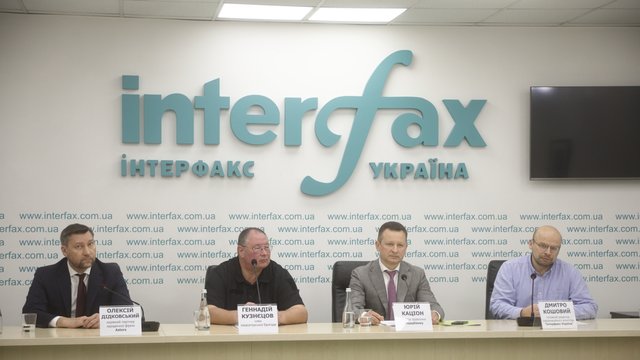
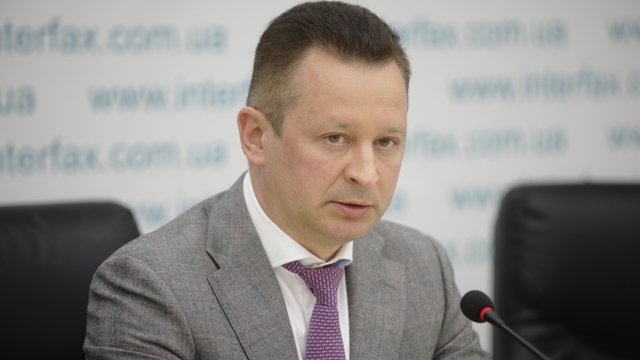
State-owned Oschadbank, following Hungary's seizure on March 5 of two of its cash-in-transit vehicles carrying $40 million, EUR 35 million, and 9 kg of gold, has temporarily suspended the import of cash foreign currency into Ukraine and is working on new secure routes, the bank's Board Chairman Yuriy Katsion said.
"We are working on new secure transportation and delivery routes, taking into account the risks we experienced and observed while using Hungarian territory," he said at a press conference at the Interfax-Ukraine agency on Tuesday.
Katsion added that Oschadbank is the only commercial bank in Ukraine that holds a valid license to transport cash foreign currency across the territory of the European Union.
"That is why we are able to purchase [currency] directly, avoiding intermediaries, from the largest bank providing such services," the Board Chairman explained.
@Interfax-Ukraine / Oleksandr Zubko
He said that the transportation of funds and banking metals had been carried out on a regular basis, essentially every week, under an international agreement with Raiffeisen Bank International signed back in 2020.
"Ground logistics is currently the only route for bringing foreign currency cash into Ukraine, as air travel has been unavailable since the start of the full-scale invasion. Previously, such currency shipments were delivered by aircraft to Boryspil Airport," Katsion recalled.
According to him, the National Bank is currently covering market demand from its own reserves, but the situation requires a solution, as the volume of cash currency purchases is quite significant: the population and the financial system need to be supplied with physical cash.
He noted that the difference between the amount of currency purchased and sold by the population in 2025 alone amounted to the equivalent of $6.8 billion, which had to be imported into Ukraine.
In 2025, $1.451 billion and EUR 387 million were sold to the public through the bank's cash desks, while about $522 million and EUR 82 million were purchased from the population.
In addition, Oschadbank supplied physical currency to 39 Ukrainian banks in 2025 in the amount of $1 billion and about EUR 800 million.
Katsion recalled that the seized assets – $40 million, EUR35 million, and 9 kg of bank gold – remain in Hungary, which on March 12 returned only the two armored vehicles, showing signs of damage.
@Interfax-Ukraine / Oleksandr Zubko
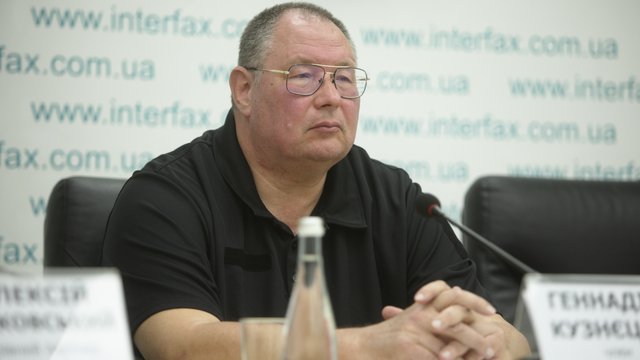
Deputy Director of the Cash Collection, Counting, and Storage Department at Oschadbank, and member of the collection team, Hennadiy Kuznetsov, said that the returned vehicles had their internal surveillance system wiring cut, along with the hard drives used to store recorded data. According to him, there is no online video streaming due to the fleet size of more than 400 vehicles, but GPS tracking systems are in place, so the routes taken by the vehicles in Hungary and their parking locations have been preserved.
As reported, on March 5 in Hungary, during a special operation by the Counter Terrorism Centre, two Ukrainian armored cash-in-transit vehicles carrying $40 million, EUR 35 million, and 9 kg of gold were detained at a gas station on the M5 highway. Seven collectors were also detained, later released and returned to Ukraine.
The National Police of Ukraine has opened criminal proceedings over the abduction of Ukrainian citizens and Oschadbank service vehicles on Hungarian territory.
President Volodymyr Zelenskyy described the detention of the Oschadbank cash convoy in Hungary as an act of banditry. On March 9, Hungary's Ambassador to Ukraine Antal Heizer was summoned to Ukraine's Ministry of Foreign Affairs, where he was issued a strong protest over the seizure of hostages and assets.
The National Bank of Ukraine (NBU) conducted operations from March 9 to March 13 to exchange non-cash foreign currency held by banks for cash currency to replenish their vaults, totaling $153.1 million and EUR 111 million, out of a declared volume of $500 million and EUR 265 million.
"The actual demand from banks was significantly lower than the offered volume of currency, which confirms the absence of a shortage of cash foreign currency," the regulator said on its website.