More than two-thirds of Ukrainians plan to participate in first postwar elections, but their share is declining — poll
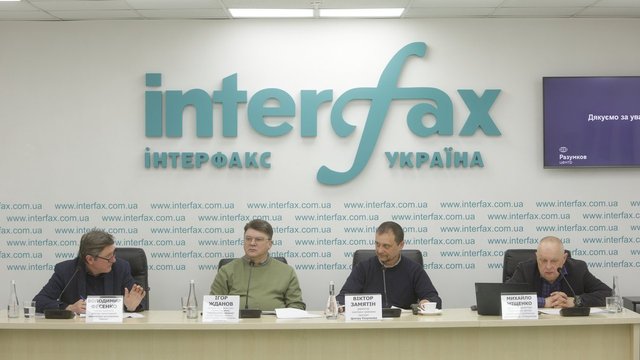
An absolute majority of Ukrainians plan to participate as voters in Ukraine's first postwar elections — both parliamentary (67.7%) and presidential (69.5%) — according to a sociological poll conducted by the Razumkov Centre's sociological service on November 11-18, 2025, and presented at a press conference at Interfax-Ukraine on Wednesday.
The poll was conducted as part of the project "Ukraine: Socio-political challenges of the transition from war to peace and post-war recovery," implemented with support from the Konrad Adenauer Foundation's representation in Ukraine.
At the same time, it noted that this figure is declining over time — during a poll in June 2024, 73% and 75.6% of Ukrainians, respectively, planned to participate as voters in the first parliamentary and presidential elections.
Meanwhile, there has been a sharp increase in the share of those who do not intend to participate in elections: from 7.1% to 11.2% for parliamentary and from 5.7% to 10.7% for presidential. The share of those who have not yet decided or find it difficult to answer changed insignificantly.
A similar picture exists with willingness to participate in local elections: 67.1% of respondents are ready to participate in the first postwar elections for city and village mayors, and 65.8% in elections for city and village council deputies. Similarly, this figure has declined since 2024, with a sharp increase of approximately 1.5 times in the share of those who have already decided not to vote in local elections.
A plurality of Ukrainians (47% to 50%) believe that in the first postwar elections, citizens who remained in Ukraine during the war but did not update their military registration data within legally established deadlines and evaded mobilization, those who remain in Ukraine but refuse mobilization due to religious beliefs, those who left Ukraine on legal grounds and did not return, and those who lived in occupied territories until the end of the war should all have the right to vote and be elected.
Meanwhile, 29% to 30% of respondents believe such citizens should be stripped of the right to vote and be elected. Regarding those who legally left the country and did not return, this figure is even higher — 39.7%.
At the same time, an absolute majority (61.6%) of Ukrainians believe that citizens who crossed Ukraine's border illegally and did not return should not have the right to vote and be elected in postwar elections. Only 24.6% of respondents hold the opposite view.
On the other hand, an absolute minority (12% to 16%) of Ukrainians would allow citizens who left Ukraine during the war and did not return to run for office in the first postwar elections. Between 71% and 76% oppose this. This applies to both nationwide elections (parliamentary, presidential) and local elections (for city and village mayors, city and village councils).
At the same time, there has been noticeable growth in tolerance toward such citizens since 2024: then, 9% to 11% of respondents would allow them to run for office, while 81% to 82% opposed it.
The poll was conducted using the face-to-face method in all government-controlled regions of Ukraine where fighting is not taking place, among 2,008 respondents aged 18 and older. The poll used a stratified multistage sample with random selection at the initial stages of sample formation and a quota method for selecting respondents at the final stage, when respondents were selected according to gender and age quotas. The sample structure reproduces the demographic structure of the adult population of the territories where the poll was conducted as of early 2022 by age, gender and settlement type. The theoretical margin of error does not exceed 2.3%, but additional systematic sample deviations are possible due to the consequences of Russia's aggression.