Turnout in postwar elections in Ukraine could be around 35%, marking an anti-record - head of United Ukraine center
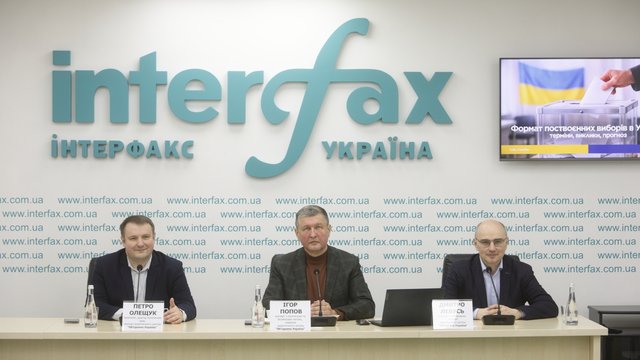
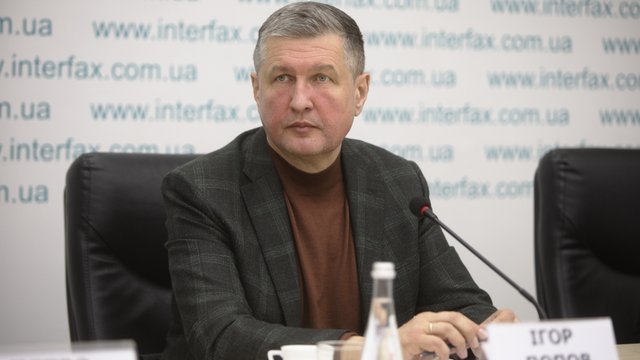
About five million Ukrainians are currently abroad in friendly countries alone, of whom only 400,000 are registered with consulates, while another two million remain in Russia and Belarus and the same number in territories occupied since the full-scale invasion of Ukraine by Russia. The issue of their participation in first elections declared after the end of hostilities is a challenge for the country, noted political and security expert and head of United Ukraine analytical center Ihor Popov.
According to UN estimates, there are currently about five million Ukrainian voters in friendly countries. This is very many. Of them, 400,000 are on our consular records. This is clearly not enough to understand in which countries, cities, or provinces our voters are located, Popov said during the presentation of analytical report "Format of Postwar Elections in Ukraine: Timing, Challenges, Forecast" at Interfax-Ukraine agency on Tuesday.
He noted that in the 2019 presidential elections, fewer than 60,000 voters cast ballots at polling stations abroad, and current electoral code provides for voting only at diplomatic missions of Ukraine, meaning "current throughput capacity is slightly more than 1% of voters." Expert consensus, according to Popov, is not to use online or mail-in voting, and "if the embassy is told to open another 100 stations outside the embassy – it is difficult... this would require a long time and significant educational work so that Ukrainians would then come to these stations."
Regarding Ukrainians living in temporarily occupied territories, Belarus, and Russia, he said there is consensus that "these voters will only be able to vote in controlled territory of Ukraine or in other countries." We realize that few will take advantage of this opportunity, but blame for this lies exclusively with leadership of Russia... Although the Russian side – we understand – will demand at all peace negotiations that Ukrainians living in occupied territories or Russia also have opportunity to vote. They will have this opportunity, standards are not violated, but for security reasons and impossibility of ensuring free elections on territory of the Russia and in occupied territories, polling stations will not open there, the expert noted.
He noted that in 2014 and 2019 elections, 18-18.5 million voters participated, but due to large numbers of people abroad and part of society avoiding contact with the state, turnout in postwar elections could be lowest in the country's history.
We have about 2 million voters in newly occupied territories – compared to 2019. We may have about 2 million voters in Republic of Belarus and Russia, although there are no exact statistics – these are estimated data, including those based on Russian statistics. We have about 5 million refugees in friendly countries. And we have another group that will likely demonstrate minimal turnout – citizens who evade digital contacts with the state, including updating their data in mobilization registers. Thus, we can predict that turnout in presidential elections after the war could be around 35%. This will be a negative record for Ukraine, Popov said.
He is certain that Russia will use this for propaganda purposes to claim the government's illegitimacy. We just need to come to terms with this and understand that the only one responsible for low turnout in postwar elections is again Russia, which created problems for millions of Ukrainian citizens in accessing voting, the expert noted.
Popov noted that the postwar option proposed by CEC – "within a month after end of hostilities and cancellation of martial law, date for presidential elections is set, with six months for preparation and three months for the campaign" – would allow many Ukrainians to return to Ukraine and solve many other problems, but elections still "will not be as ideal as in 2019." Conversely, if elections must be held faster during a certain course of peace process, risks will be higher.
In turn, international expert and United Ukraine analytical center expert Dmytro Levus emphasized during the press conference that "there can be no questions regarding legitimacy of government in Ukraine."
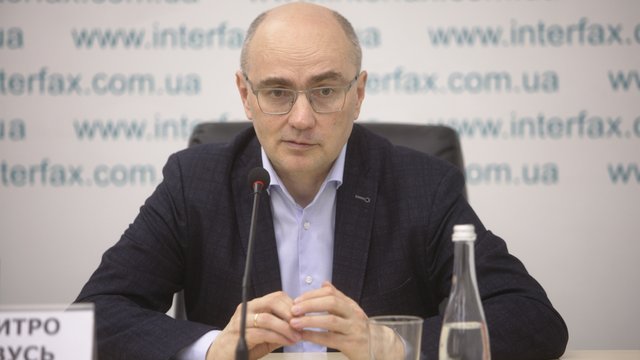
This is clearly defined by Ukrainian legislation and most importantly – international democratic standards also allow for postponement of elections in wartime conditions; they logically state that there is a reasonable frequency of elections, as mentioned in Protocol No. 1 of European Convention on Human Rights. So there is no urgent need to hold elections under wartime conditions based on some requirements or standards of democracy, and this is mainly external political pressure and speculation that has entered Ukraine in such a way, Levus noted.
The presented analytical report by United Ukraine center notes that holding full-scale elections during martial law in Ukraine is not provided for by current legislation and is associated with significant risks to their organization and legitimacy of the result. The most realistic scenario is elections after cancellation of martial law with a preparatory period of at least 6 months.
Participation of military personnel in elections is mandatory for legitimacy of future government, but requires a balance with principle of political neutrality of the army and creation of real mechanisms for their voting and participation in the campaign.
It is also noted that joint holding of elections and a nationwide referendum, for example, on parameters of a peace agreement, is technically and legally very difficult, associated with high organizational risks and turnout thresholds.