


The Climbing Portal
_(32589506286)_crop.jpg)



Climbing is the activity of using one's hands, feet, or other parts of the body to ascend a steep topographical object that can range from the world's tallest mountains (e.g. the eight thousanders) to small boulders. Climbing is done for locomotion, sporting recreation, for competition, and is also done in trades that rely on ascension, such as construction and military operations. Climbing is done indoors and outdoors, on natural surfaces (e.g. rock climbing and ice climbing), and on artificial surfaces (e.g. climbing walls and climbing gyms). (Full article...)
Random climbing article (Refresh with new content)


Altitude sickness, the mildest form being acute mountain sickness (AMS), is a harmful effect of high altitude, caused by rapid exposure to low amounts of oxygen at high elevation. People's bodies can respond to high altitude in different ways. Symptoms of altitude sickness may include headaches, vomiting, tiredness, confusion, trouble sleeping, and dizziness. Acute mountain sickness can progress to high-altitude pulmonary edema (HAPE) with associated shortness of breath or high-altitude cerebral edema (HACE) with associated confusion. Chronic mountain sickness may occur after long-term exposure to high altitude.
Altitude sickness typically occurs only above 2,500 metres (8,000 ft), though some people are affected at lower altitudes. Risk factors include a prior episode of altitude sickness, a high degree of activity, and a rapid increase in elevation. Being physically fit does not decrease the risk. Diagnosis is based on symptoms and is supported for those who have more than a minor reduction in activities. It is recommended that at high altitude any symptoms of headache, nausea, shortness of breath, or vomiting be assumed to be altitude sickness. (Full article...)
.jpg)

Rock climbing is a climbing sports discipline that involves ascending routes consisting of natural rock in an outdoor environment, or on artificial resin climbing walls typically found in climbing gyms. Routes are documented in guidebooks, and on online databases, detailing how to climb the route (called the beta), and who made the first ascent (or FA) and the coveted first free ascent (or FFA). Climbers will try to ascend a route onsight, however, a climber can spend years projecting a route before they make a redpoint ascent.
Routes range from a few metres to over a 1,000 metres (3,300 ft) in height, and traverses can reach 4,500 metres (14,800 ft) in length. They include slabs, faces, cracks and overhangs/roofs. Popular rock types are granite (e.g. El Capitan), limestone (e.g. Verdon Gorge), and sandstone (e.g. Saxon Switzerland) but 43 types of climbable rock types have been identified. Artificial indoor climbing walls are popular and competition climbing — which takes place on artificial walls — became an Olympic sport in 2020.
Contemporary rock climbing is focused on free climbing where — unlike with aid climbing — no mechanical aids can be used to assist with upward momentum. Free-climbing encompasses bouldering on short 5-metre (16 ft) routes, single-pitch climbing on up to 60–70-metre (200–230 ft) routes,multi-pitch climbing — and big wall climbing — on routes of up to 1,000 metres (3,300 ft). Free-climbing can be done as free solo climbing with no protection whatsoever, or as lead climbing with removable temporary protection (called traditional climbing), or permanently fixed bolted protection (called sport climbing).
The evolution in technical milestones in rock climbing is tied to the development in rock-climbing equipment (e.g. rubber shoes, spring-loaded camming devices, and campus boards) and rock-climbing technique (e.g. jamming, crimping, and smearing). The most dominant grading systems worldwide are the 'French numerical' and 'American YDS' systems for lead climbing, and the V-grade and the Font-grade for bouldering. As of August 2025, the hardest technical lead climbing grade is 9c (5.15d) for men and 9b+ (5.15c) for women, and the hardest technical bouldering grade is V17 (9A) for men and V16 (8C+) for women.
The main types of rock climbing can trace their origins to late 19th-century Europe, with bouldering in Fontainebleau, big wall climbing in the Dolomites, and single-pitch climbing in both the Lake District and in Saxony. Climbing ethics initially focused on "fair means" and the transition from aid climbing to free climbing and latterly to clean climbing; the use of bolted protection on outdoor routes is a source of ongoing debate in climbing. The sport's profile was increased when lead climbing, bouldering, and speed climbing became medal events in the Summer Olympics, and with the popularity of films such as Free Solo and The Dawn Wall. (Full article...)
Sport climbing • Traditional climbing • Free climbing • Aid climbing • Big wall climbing • Free solo climbing • Roped solo climbing • Crack climbing • Via ferrata
Climbing sport disciplines


When lead climbing, the lead climber wears a harness tied to one end of a rope. The leader's partner provides the belay, paying out rope as needed, usually with the aid of a belay device, to catch the leader in the event of a fall. The lead climber ascends the route, periodically placing protection for safety in the event of a fall. (Full article…)


Bouldering is a form of rock climbing that is performed on small rock formations or artificial rock walls, known as boulders, without the use of ropes or harnesses. (Full article…)
.jpg)

Speed climbing is a climbing discipline in which speed is the ultimate goal. Speed Climbing is done on rocks, walls and poles (Full article…)


Ice climbing is the activity of ascending inclined ice formations. Usually, ice climbing refers to roped and protected climbing of features such as icefalls, frozen waterfalls, and cliffs and rock slabs covered with ice refrozen from flows of water. (Full article…)
- International Competitions: Sport climbing at the 2020 Summer Olympics • IFSC Climbing World Championships • IFSC Climbing World Cup • Sport climbing at the World Games • IFSC Climbing European Championships • IFSC Climbing Asian Cup • Rock Master
- Organizations: International Federation of Sport Climbing (IFSC) • International Climbing and Mountaineering Federation (UIAA) • USA Climbing • German Alpine Club (DAV) • British Mountaineering Council (BMC)
- Disciplines: Lead • Bouldering • Speed • Ice • Deep Water Solo


Mountaineering is a set of outdoor activities that involves ascending mountains. Mountaineering-related activities include traditional outdoor climbing, skiing, and traversing via ferratas that have become sports in their own right. Indoor climbing, sport climbing, and bouldering are also considered variants of mountaineering by some, but are part of a wide group of mountain sports. In everyday language, the term "mountaineering" means mountain climbing or alpinism.
Unlike most sports, mountaineering lacks widely applied formal rules, regulations, and governance; mountaineers adhere to a large variety of techniques and philosophies (including grading and guidebooks) when climbing mountains. Numerous local alpine clubs support mountaineers by hosting resources and social activities. A federation of alpine clubs, the International Climbing and Mountaineering Federation (UIAA), is the International Olympic Committee-recognized world organization for mountaineering and climbing. The consequences of mountaineering on the natural environment can be seen in terms of individual components of the environment (land relief, soil, vegetation, fauna, and landscape) and the location/zone of mountaineering activity (hiking, trekking, or climbing zone). However, it should be borne in mind that tourism in mountain areas, by shifting the sector from agriculture to services, has a positive balance of change - agriculture is more invasive. Mountaineering impacts communities on economic, political, social, and cultural levels, often leading to changes in people's worldviews influenced by globalization, specifically foreign cultures and lifestyles. In terms of both its impact on the natural environment and local communities, the significance of this impact depends on the location in the vertical (altitude above sea level) and horizontal (zone) dimensions, and is therefore an example of environmental determinism. (Full article...)
Selected Mountaineering Topics
- Mountaineering: Alpine style • Expedition style • Alpine Clubs • Boots • Crampons • Ice axes • Mountain huts • Mountain rescue • Ropes • Rucksacks • Effects of high altitude on humans
- History: Golden age of alpinism • Silver age of alpinism • Timeline of climbing Mount Everest • Exploration of the High Alps
- Alpine clubs: Alpine Club (UK) • German Alpine Club (DAV) • Austrian Alpine Club • Swiss Alpine Club • Club Alpino Italiano (CAI) • American Alpine Club • Japanese Alpine Club
- Pioneers: Christian Almer • Melchior Anderegg • Hermann von Barth • Walter Bonatti • Meta Brevoort • William Martin Conway • Angelo Dibona • Hans Dülfer • Paul Grohmann • Adolphus Warburton Moore • Paul Preuss • Ludwig Purtscheller • Schlagintweit brothers • Leslie Stephen • Gottlieb Samuel Studer • Tenzig Norgay • Herbert Tichy • Lucy Walker • Edward Whymper • Georg Winkler • Matthias Zurbriggen
- High-altitude mountaineers: Chris Bonington • Hermann Buhl • Kurt Diemberger • Ralf Dujmovits • Günther Dyhrenfurth • Maurice Herzog • Sir Edmund Hillary • Sandy Irvine • Gerlinde Kaltenbrunner • George Mallory • Nives Meroi • Reinhold Messner • Simone Moro • Oh Eun-sun • Edurne Pasaban • Wanda Rutkiewicz • Lionel Terray • Um Hong-Gil • Stephen Venables • Ed Viesturs • Other mountaineers
- Publicists: Karl Blodig • W. A. B. Coolidge • David Breashears • Jon Krakauer • Gaston Rébuffat
-
Rock climber with a helmet, harness, rope, a traditional climbing "rack" of protection devices on their harness and additional gear sling, which contains SLCDs, nuts, a tricam, and quickdraws
-
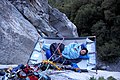
Climber lying on a portaledge
-
UIAA-certified twin ropes
-
Cross-section of 10.7 mm kernmantle dynamic rope
-
Petzl's "via ferrata lanyard set" with attached "energy absorber"
-
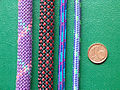
Rope (two on left) and cord (two on right) thicknesses compared
-
Sport/competition climbing quickdraw with a "bent gate" at one end for easier clipping-in
-
Various models of tubers, and a sticht plate (r-lower)
-
Sets of sewn webbing slings
-
Non-locking (top) and locking (bottom) carabiners
-
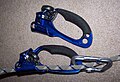
Ascender attached to a rope
-
A modern rock climbing shoe
-
Climber using a bouldering mat





.jpg)


.jpg)


- Hands: Chalk • Athletic taping
- Feet: Climbing shoe • Approach shoe • Mountaineering boot • Crampons • Ice cleat
- Rope: Dynamic rope • Static rope • Kernmantle rope
- Rope control: Belay device • Figure 8 • Self-locking device • Ascender • Sling
- Harness: Climbing harness
- Connectors: Carabiner • Quickdraw • Maillon
- Protection devices: Hex • Nut • Spring-loaded camming device • Tricam • Piton
- Permanent anchors: Anchor • Bolt
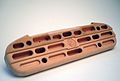
- Training: Campus board • Climbing hold • Climbing wall
- Ice: Ice tool • Ice axe • Ice screw
- Miscellaneous: Helmet • Bouldering mat • Webbing • Portaledge • Rock climbing hammer • Copperhead
Random Selected Climber (Refresh)


Akiyo Noguchi (野口 啓代, Noguchi Akiyo; born May 30, 1989) is a Japanese professional rock climber who specializes in competition bouldering as well as outdoor bouldering and sport climbing.
She participates in both competition bouldering and competition lead climbing disciplines. She is known for winning the IFSC Climbing World Cup in Bouldering four times. In her home country, she won Bouldering Japan Cup nine times consecutively from 2005 to 2014, which no other Japanese athlete has been able to match. She retired from competition climbing after competing and winning a bronze medal in the 2020 Summer Olympics. (Full article...)
Notable Climbers
- Competition climbers: Jakob Schubert • Janja Garnbret • Tomoa Narasaki • Jain Kim • Sean McColl • Akiyo Noguchi • Adam Ondra • Mina Markovic • Sean McColl • Akiyo Noguchi • Jakob Schubert • David Lama • Angela Eiter • Sandrine Levet • Tomáš Mrázek • Liv Sansoz • Kilian Fischhuber • Alexandre Chabot • François Petit
- 9b (5.15b) climbers: Chris Sharma • Adam Ondra • Jakob Schubert • Alex Megos • Sachi Amma • Stefano Ghisolfi • Ethan Pringle • Angela Eiter • Steve McClure • Sébastien Bouin • Julia Chanourdie
-
Kalymnos, Greece (from Portal:Climbing/Popular climbing areas)
-
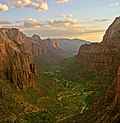
Zion National Park, United States (from Portal:Climbing/Popular climbing areas)
-
Canmore, Canada (from Portal:Climbing/Popular climbing areas)
-
Cederberg, South Africa (from Portal:Climbing/Popular climbing areas)
-
Yosemite National Park, United States (from Portal:Climbing/Popular climbing areas)
-
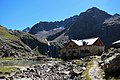
Ötztal Alps, Austria (from Portal:Climbing/Popular climbing areas)
-
Saxon Switzerland, Germany (from Portal:Climbing/Popular climbing areas)
-
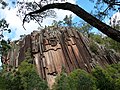
Mount Kaputar National Park, Australia (from Portal:Climbing/Popular climbing areas)
-
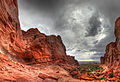
Arches National Park, United States (from Portal:Climbing/Popular climbing areas)
-
Bohemian Paradise, Czech Republic (from Portal:Climbing/Popular climbing areas)
-
Leonidio, Greece (from Portal:Climbing/Popular climbing areas)
-
La Huasteca, Mexico (from Portal:Climbing/Popular climbing areas)
-
Shawangunk Ridge, United States (from Portal:Climbing/Popular climbing areas)
-
Owens River Gorge, United States (from Portal:Climbing/Popular climbing areas)
-
Red River Gorge, United States (from Portal:Climbing/Popular climbing areas)
-
Gorges du Loup, France (from Portal:Climbing/Popular climbing areas)
-
Devils Tower, United States (from Portal:Climbing/Popular climbing areas)
-
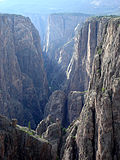
👁 Image 18 Black Canyon of the Gunnison National Park, United States (from Portal:Climbing/Popular climbing areas)Black Canyon of the Gunnison National Park, United States (from Portal:Climbing/Popular climbing areas)
-
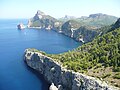
Mallorca, Spain (from Portal:Climbing/Popular climbing areas)
-
Joshua Tree National Park, United States (from Portal:Climbing/Popular climbing areas)
-
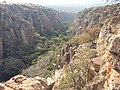
Magaliesberg, South Africa (from Portal:Climbing/Popular climbing areas)
-
Peak District, United Kingdom (from Portal:Climbing/Popular climbing areas)
-
Calanque, France (from Portal:Climbing/Popular climbing areas)
-
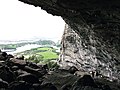
Flatanger, Norway (from Portal:Climbing/Popular climbing areas)
-
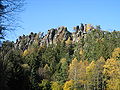
Zittau Mountains, Germany (from Portal:Climbing/Popular climbing areas)
-
El Chorro, Spain (from Portal:Climbing/Popular climbing areas)
-
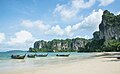
Krabi, Thailand (from Portal:Climbing/Popular climbing areas)
-
Costa Blanca, Spain (from Portal:Climbing/Popular climbing areas)
-
Buoux, France (from Portal:Climbing/Popular climbing areas)
-
Blue Mountains, Australia (from Portal:Climbing/Popular climbing areas)
-
Finale Ligure, Italy (from Portal:Climbing/Popular climbing areas)
-
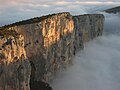
Vercors Massif, France (from Portal:Climbing/Popular climbing areas)
-
Acadia National Park, United States (from Portal:Climbing/Popular climbing areas)
-
Siurana, Spain (from Portal:Climbing/Popular climbing areas)
-
Kaiser Mountains, Austria (from Portal:Climbing/Popular climbing areas)
-
Avers Valley / Magic Wood, Switzerland (from Portal:Climbing/Popular climbing areas)
-
Rodellar, Spain (from Portal:Climbing/Popular climbing areas)
-
Lake District, United Kingdom (from Portal:Climbing/Popular climbing areas)
-
👁 Image 39 Peshastin Pinnacles State Park, United States (from Portal:Climbing/Popular climbing areas)Peshastin Pinnacles State Park, United States (from Portal:Climbing/Popular climbing areas)
-
👁 Image 40 City of Rocks National Reserve, United States (from Portal:Climbing/Popular climbing areas)City of Rocks National Reserve, United States (from Portal:Climbing/Popular climbing areas)
-
Ardèche, France (from Portal:Climbing/Popular climbing areas)
-
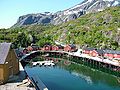
Lofoten, Norway (from Portal:Climbing/Popular climbing areas)
-
Franconian Switzerland, Germany (from Portal:Climbing/Popular climbing areas)
-
Belogradchik, Bulgaria (from Portal:Climbing/Popular climbing areas)
-
Verdon Gorge, France (from Portal:Climbing/Popular climbing areas)
-
Isle of Portland, United Kingdom (from Portal:Climbing/Popular climbing areas)
-
Ore Mountains, Germany (from Portal:Climbing/Popular climbing areas)
-
👁 Image 48 Bohemian-Moravian Highlands, Czech Republic (from Portal:Climbing/Popular climbing areas)Bohemian-Moravian Highlands, Czech Republic (from Portal:Climbing/Popular climbing areas)
-
Tisá, Czech Republic (from Portal:Climbing/Popular climbing areas)
-
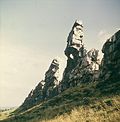
Harz, Germany (from Portal:Climbing/Popular climbing areas)
-
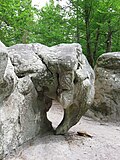
Fontainebleau, France (from Portal:Climbing/Popular climbing areas)
-
Arco, Italy (from Portal:Climbing/Popular climbing areas)
-
Sella, Spain (from Portal:Climbing/Popular climbing areas)
-
Lusatian Mountains, Czech Republic (from Portal:Climbing/Popular climbing areas)
-
Alpstein, Switzerland (from Portal:Climbing/Popular climbing areas)








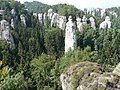

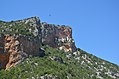



.jpg)


.jpg)



.JPG)

.jpg)





.JPG)









_(021).jpg)

.jpg)





.jpg)


Climbing area
Glossary of climbing terms relates to rock climbing (including aid climbing, lead climbing, bouldering, and competition climbing), mountaineering, and to ice climbing. (Full article...)
.jpg)

Tree climbing is a common practice in the field of arboriculture but also as a recreational or functional activity that involves the ascent and or the movement throughout the crowns of Trees. In the professional world, climbing is often used to perform tasks such as deadwooding, pruning and cabling.
Safe ascent of a tree requires the use of a rope, helmet, and harness, with additional equipment depending on the climber's experience and skill level. Some tree climbers use specialized hammocks such as Treeboats and Portaledges, which allow them to rest, eat, or sleep within the canopy.
Many tree climbers employ a mixture of techniques and gear derived from rock climbing and caving. Including various rope-based ascent systems such as single rope technique (SRT) and double rope technique (DRT). These methods are used in other tree-related activities such as animal rescue, scientific research, seed collection, and environmental activism. (Full article...)


Canyoning (canyoneering in the United States, kloofing in South Africa) is a sport that involves traveling through canyons using a variety of techniques, such as walking, scrambling, climbing, jumping, abseiling (rappelling), swimming, and rafting.
Although non-technical descents such as hiking down a canyon ("canyon hiking") are often referred to as "canyoneering", the terms "canyoning" and "canyoneering" are more often associated with technical descents—those that require rappels and ropework, technical climbing or down-climbing, technical jumps, and/or technical swims.
Canyoning is frequently done in remote and rugged settings and often requires navigational, route-finding, and other wilderness travel skills. (Full article...)


Caving, also known as spelunking (United States and Canada) and potholing (United Kingdom and Ireland), is the recreational pastime of exploring wild cave systems (as distinguished from show caves). In contrast, speleology is the scientific study of caves and the cave environment.
The challenges involved in caving vary according to the cave being visited; in addition to the total absence of light beyond the entrance, negotiating pitches, squeezes, and water hazards can be difficult. Cave diving is a distinct, and more hazardous, sub-speciality undertaken by a small minority of technically proficient cavers. In an area of overlap between recreational pursuit and scientific study, the most devoted and serious-minded cavers become accomplished at the surveying and mapping of caves and the formal publication of their efforts. These are usually published freely and publicly, especially in the UK and other European countries, although in the US they are generally more private.
Although caving is sometimes categorized as an "extreme sport," cavers do not commonly use this terminology and typically dislike the term being used in reference to caving, as it implies a disregard for safety. Though caving is a fairly safe sport compared to other activities that are sometimes classified as "extreme sports", incidents do occur. These tend to be related to flooding, hypothermia, rock falls, caver falls, SRT accidents, or some combination of these. (Full article...)
Categories


Related Portals


Associated Wikimedia
The following Wikimedia Foundation sister projects provide more on this subject:
-
Commons
Free media repository -
Wikibooks
Free textbooks and manuals -
Wikidata
Free knowledge base -
Wikinews
Free-content news -
Wikiquote
Collection of quotations -
Wikisource
Free-content library -
Wikiversity
Free learning tools -
Wiktionary
Dictionary and thesaurus


