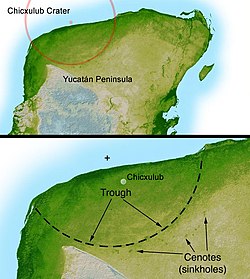
Imaging from NASA's Shuttle Radar Topography Mission STS-99 reveals part of the diameter ring of the crater in the form of a shallow circular trough. Numerous cenotes (sinkholes) cluster around the trough marking the inner crater rim.
The Chicxulub crater is an impact crater buried underneath the Yucatán Peninsula in Mexico. Its center is offshore, but the crater is named after the onshore community of Chicxulub Pueblo (not to be confused with the larger coastal town of Chicxulub Puerto). It was formed slightly over 66 million years ago when an asteroid, about ten kilometers (six miles) in diameter, struck Earth. The crater is estimated to be 200 kilometers (120 miles) in diameter and is buried to a depth of about 1 kilometer (0.62 miles) beneath younger sedimentary rocks. It is one of the largest impact structures on Earth, alongside the much older Sudbury and Vredefort impact structures, and the only one whose peak ring is intact and directly accessible for scientific research.
The crater was discovered by Antonio Camargo and Glen Penfield, geophysicists who had been looking for petroleum in the Yucatán Peninsula during the late 1970s. Penfield was initially unable to obtain evidence that the geological feature was a crater and gave up his search. Later, through contact with Alan R. Hildebrand in 1990, Penfield obtained samples that suggested it was an impact feature. Evidence for the crater's impact origin includes shocked quartz, a gravity anomaly, and tektites in surrounding areas. (Full article...)
The 1985 Mexico City earthquake struck in the early morning of 19 September at 07:17:50 (CST) with a moment magnitude of 8.0 and a maximal Mercalli intensity of IX (Violent). The event caused serious damage to the Greater Mexico City area and the deaths of at least 5,000 people. The sequence of events included a foreshock of magnitude 5.2 that occurred the prior May, the main shock on 19 September, and two large aftershocks. The first of these occurred on 20 September with a magnitude of 7.5 and the second occurred seven months later on 30 April 1986 with a magnitude of 7.0. They were located off the coast along the Middle America Trench, more than 350 kilometres (220 mi) away, but the city suffered major damage due to its large magnitude and the ancient lake bed on which Mexico City sits. The event caused between three and five billion USD in damage as 412 buildings collapsed and another 3,124 were seriously damaged in the city.
Unomásuno (English: One Plus One) is a Mexican daily tabloid newspaper circulated in Mexico City. Formed in 1977 by former employees of Mexico City's daily newspaper Excélsior, it became one of the leading leftist newspapers in Mexico during the late 1970s and early 1980s. The newspaper covered investigative topics that were often avoided by the rest of the Mexican press at the time, and it was a harsh critic of the Mexican government. By the mid-1980s, disagreements over the newspaper's management style led to internal divisions. Those who disagreed with Unomásuno and its future initiatives left in 1984 and formed La Jornada, another leftist daily in Mexico City.
In the late 1980s, Unomásuno was a victim of a backlash from the Mexican government for publishing articles highlighting a growing opposition faction within Mexico's dominant political party, the Institutional Revolutionary Party (PRI). Its founder was threatened with prison for tax evasion, and the newspaper was forced to pay hefty fines. In 1989, its founder sold the newspaper to a PRI-affiliated businessman. Under the new ownership, Unomásuno became a propaganda organ for the PRI and published articles criticizing leftist opposition groups. Its circulation declined drastically over the years, and although Unomásuno was resold in 1998, it continued to experience financial difficulties. (Full article...)
A professor at the Colegio de San Nicolás Obispo in Valladolid, Hidalgo was influenced by Enlightenment ideas, which contributed to his ouster in 1792. He served in a church in Colima and then in Dolores. After his arrival, he was shocked by the rich soil he had found. He tried to help the poor by showing them how to grow olives and grapes, but in New Spain (modern Mexico) growing these crops was discouraged or prohibited by colonial authorities to prevent competition with imports from Spain. On 16 September 1810, he gave the Cry of Dolores, a speech calling upon the people to protect the interest of King Ferdinand VII, held captive as part of the Peninsular War, by revolting against the peninsulares who had overthrown Viceroy José de Iturrigaray. (Full article...)
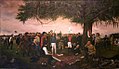
Image 3General Santa Anna known for his leadership during the Texas Revolution, Mexican-American War, and turbulent periods of Mexican history marked by political instability and territorial losses. (from History of Mexico)
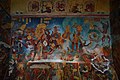
Image 16Battle of Centla, the first time a horse was used in battle in a war in the Americas. Mural in the Palacio Municipal of Paraíso, Tabasco (from History of Mexico)
Image 18David Huerta is a contemporary philosopher and poet who examines human existence, freedom, and meaning in Mexican society, blending philosophy with art and literature. (from Culture of Mexico)
Image 36Battle of Miahuatlán took place on 3 October 1866. The liberal victory at Miahuatlán was significant because it allowed them to consolidate their control over southern Mexico. (from History of Mexico)
Image 39President Obregón. Note that he lost his right arm in the Battle of Celaya (1915), earning him the nickname of Manco de Celaya ("the one-armed man of Celaya"). (from History of Mexico)
Image 44Porfirio Díaz dominant Mexican political and military figure who served as president for much of the late 19th and early 20th centuries, characterized by his long rule and the modernization efforts known as the Porfiriato. (from History of Mexico)
Image 61Plutarco Elías Calles politician and revolutionary general who served as President of Mexico from 1924 to 1928, known for his role in shaping modern Mexico through reforms and the consolidation of state power. (from History of Mexico)
Image 62Battle of Tampico (1829) a conflict between Mexican forces led by General Antonio López de Santa Anna and Spanish loyalists attempting to reconquer Mexico, resulting in a decisive Mexican victory that further solidified Mexico's independence from Spain. (from History of Mexico)
Image 65The Volkswagen Beetle, known in Mexico as the "Vocho," is perhaps the most iconic classic car in the country. Its production in Mexico began in 1967, and it continued until 2003, making it a symbol of Mexican automotive culture. (from Culture of Mexico)
Image 69Ignacio Comonfort significant role during the tumultuous period of the mid-19th century, including the Reform War and early stages of the Mexican Republic's transition. (from History of Mexico)
Image 75Agustín de Iturbide the first Emperor of Mexico in 1822 after leading the Mexican War of Independence against Spain, but his reign was short-lived, lasting only until 1823 when he abdicated, and Mexico transitioned to a republic. (from History of Mexico)








.jpg)





.jpg)






._Saturnino_Herr%C3%A1n._1910-1912.png)



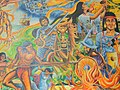
.jpg)


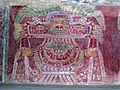


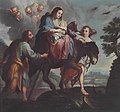
.jpg)





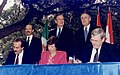






















,_Carlos_Par%C3%ADs_(1820_-_1835).png)












.svg)

.svg)


