|
VOOZH | about |
|
VOOZH | about |
This article was published as a part of the Data Science Blogathon.
Space Exploration has always been of interest to scientists and governments across the globe as it holds the key to the origin of mankind and many marvelous wonders of the universe including the possibility of alien lives. The visible universe represents the parts of space that we can see using telescopes. Yet, scientists and explorers do believe that the universe may be larger than that.
To date, scientists have explored roughly only 4% of the visible universe that is made up of planets, stars, galaxies, and other astronomical objects that astronomers and scientists can see and are aware of. Rest 96% is still left unexplored.
Artificial Intelligence or the shorter and cooler term AI refers to the simulation of human intelligence in machines that are programmed to think like humans and mimic their actions. The term may also be applied to any machines that exhibit traits associated with a human mind such as learning and problem-solving.
Machine learning is a specialized branch in the AI domain that deals with training machines to develop intelligence that can enable them to do complex tasks by using their intelligence. Machine learning algorithms use tons of data to help machines get familiar with diverse scenarios that they can face. It enables machines to learn from their training experience and use them in real-life scenarios.
Now if we were to combine the ideas of these two massive terms namely AI and Space Exploration, keeping in mind the recent developments in the field of machine learning and artificial intelligence, imagine how easy it would be for scientists and explorers to achieve their goal and how it would affect our lives.
Let us bring together these two ideas and see what has already been done, what is going on, and what else could be done.
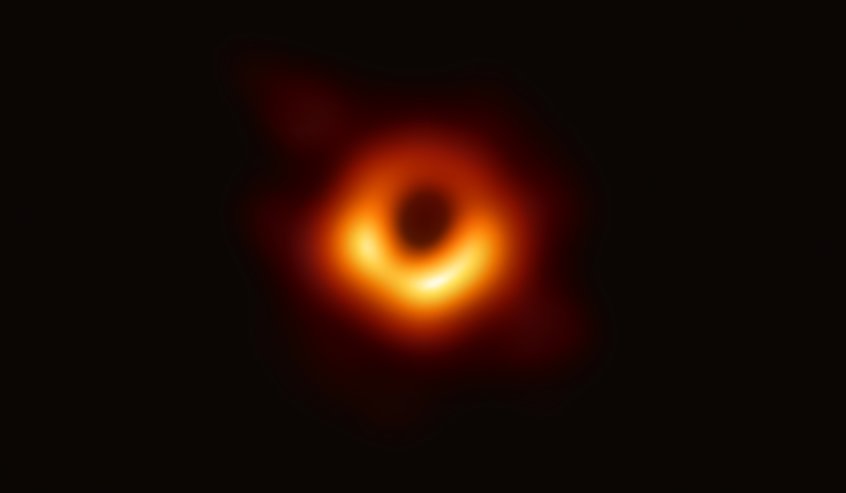
We got our first black-hole image using CHIRP (Continous High-Resolution Image Reconstruction using Patch Priors) Algorithm. CHIRP is a Bayesian algorithm used to perform deconvolution on images created in radio astronomy. The development of CHIRP involved a large team of researchers from MIT’s Computer Science and Artificial Intelligence. The CHIRP used the image data from the Event Horizon Telescopes which was too large and this is where image processing had to be done. Scientists used Numpy, pandas, and other Python libraries to scale down the data, data correlation, and calibrations. ML was also used in image analysis.
Check out this link for more details- https://numpy.org/case-studies/blackhole-image/
Now that we have the first-ever image of a black hole, scientists and researchers are working towards getting more accurate images of a black hole. To do so, they make come up with more complex algorithms that are going to use more Machine Learning and Artificial intelligence.
Keep in mind many objects are still unknown to us in the deep space, so applying Machine Learning and Deep Learning will help us in classifying the type of object and these researches in the future may lead to identify more and more new objects and hence help scientists and explorers in space exploration.
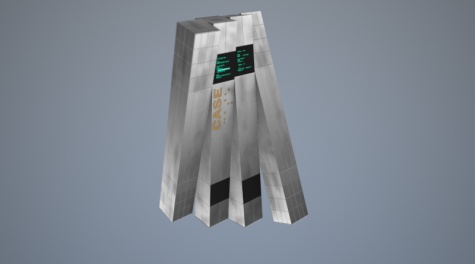
Do the names TARS and CASE ring any bells? Yes, I am talking about the robots from the very famous movie ‘Interstellar’ (and in case you haven’t watched it, I highly recommend you do). If you remember the role of TARS and CASE in the movie, imagine how useful they would be in assisting the astronauts in real life.
Scientists are developing AI-based assistants to aid astronauts in their mission to Moon, Mars, and beyond. These assistants are designed to understand and predict the requirements of the crew and comprehend astronauts’ emotions and their mental health and take necessary actions in the case of an emergency. Now how do they do that? The answer to this is sentiment analysis. Sentiment Analysis (also known as opinion mining or emotion AI) is a sub-field of NLP (Natural Language Processing) that tries to identify and extract opinions within a given text across blogs, reviews, social media, forums, news, etc.
Robots, on the other hand, can come in more handy when it comes to physical assistants like helping in piloting spacecraft, docking spacecraft, and handling extreme conditions that are not safe to humans. Most of it may sound hypothetical, but it will prove to be a lot of help to astronauts.
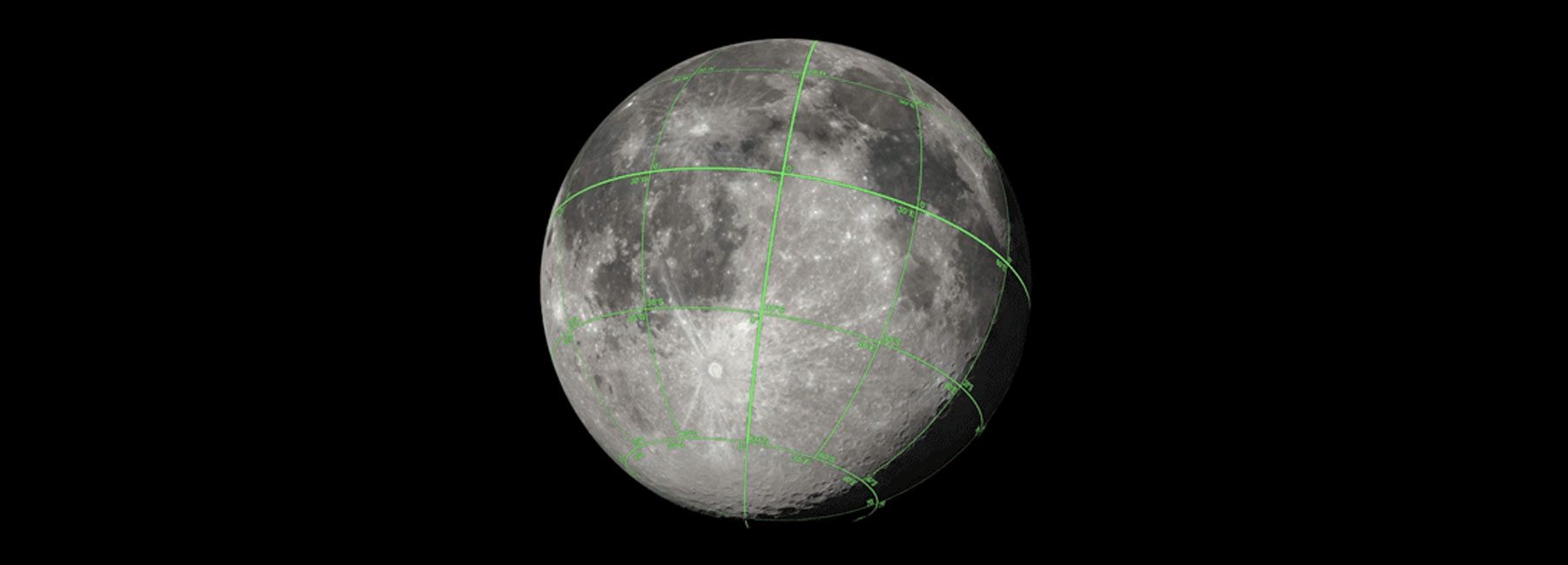
In 2018, NASA with help of Intel developed an AI system that helped Astronauts find their way on the planets. This new navigation system will help to easily navigate the surface of planets through the shortest possible routes. Scientists applied this program to our moon and the way this system worked was that it simulated the moon’s surface and then compared the same with the local environment. The AI would be trained with the millions of the moon’s images and then use a neural network to create a virtual moon’s map. The same algorithm was then applied to the Mars exploration program.
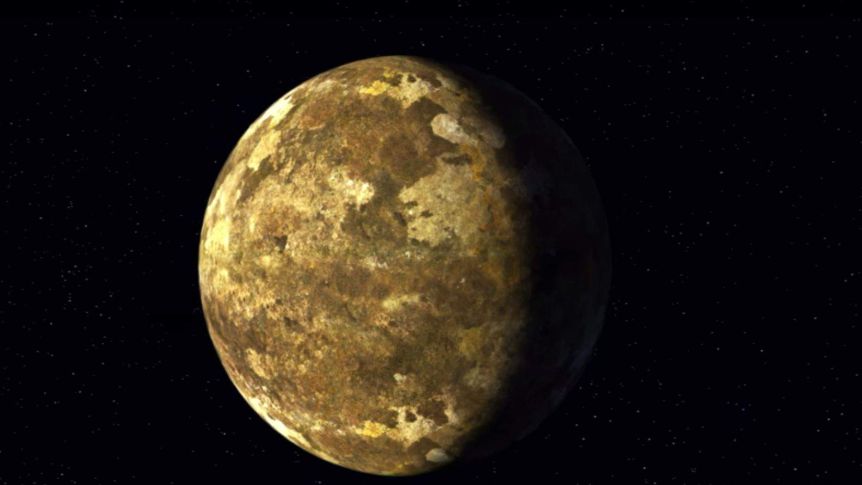
NASA’s Kepler Telescope was designed to determine the frequency of Earth-sized planets orbiting Sun-like stars, but these planets were on the very edge of the mission’s detection sensitivity. Accurately determining the occurrence rate of these planets required automatic and accurate assessing the likelihood that individual candidates are indeed planets, even at a low signal to noise ratio.
To overcome this limitation, researchers from Google and other scientists used a Convolutional Neural Network named AstroNet K2 to predict whether a given signal from Kepler’s space telescope is a transiting exoplanet or a false positive caused by the astrophysical or instrumental phenomenon. By training this neural network model up to 98(approx) percent, they successfully identified two new exoplanets namely Kepler 80g and Kepler 90i orbiting Kepler 80 star system and Kepler 90 star system respectively.
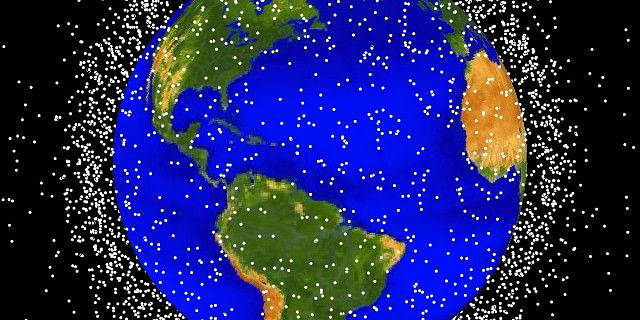
Space Debris around Earth (SOURCE: NASA)
Ever thought about what happens to the satellites and spaceships that are sent to space and never make it back to Earth, well those turns into space junks. Space Debris or space junk is any piece of machinery or debris left by humans in space. It can refer to big objects such as dead satellites that have failed or been left in the orbit at the end of their mission.
The image that you see above was released in 2013 by NASA which showed the amount of space debris we had back in 2013. The problem with space debris has reached a critical point as scientists and researchers continue to send satellites into space, which is never brought back. There are more than 23,000 human-made fragments in space that are larger than 4” and more than 500,000 small particles. The real concern with these space debris is that when they collide with the satellites or the spacecraft, they leave a dent on the body which sometimes becomes the primary reason for space accidents.
To overcome this problem, scientists are using deep learning to enhance the accuracy of laser ranging technology which was traditionally used. They used backpropagation neural network models for pinpointing the location of the debris. It was also mentioned that after improving the pointing accuracy of the telescope through a deep learning technique, space debris with a cross-sectional area of 1 meter squared and a distance of 1500 kilometers can be identified accurately.
There are so many other research going on implementing Artificial Intelligence in space exploration. Although, like other applications of AI, nothing can be secure and concrete. At the end of the day, we need human interventions in everything AI is capable of. With each innovation, AI is coming closer to providing newer insights and proving to be an advantage for humans in exploring the interstellar space with the innovative machine and project and researches.
The media shown in this article are not owned by Analytics Vidhya and is used at the Author’s discretion.
GPT-4 vs. Llama 3.1 – Which Model is Better?
Llama-3.1-Storm-8B: The 8B LLM Powerhouse Surpa...
A Comprehensive Guide to Building Agentic RAG S...
Top 10 Machine Learning Algorithms in 2026
45 Questions to Test a Data Scientist on Basics...
90+ Python Interview Questions and Answers (202...
8 Easy Ways to Access ChatGPT for Free
Prompt Engineering: Definition, Examples, Tips ...
What is LangChain?
What is Retrieval-Augmented Generation (RAG)?
Edit
Resend OTP
Resend OTP in 45s