|
VOOZH | about |
|
VOOZH | about |
This article was published as a part of the Data Science Blogathon.
Have you ever noticed the advertisements for similar shows you watched on Amazon prime Video while reading a completely irrelevant article on a totally different website? Also, have you experienced coming across the same book or the same kind of books you purchased on Amazon? How does the Internet know what you need?
This has been feasible due to Web 2.0, the current era of web technologies in which we are living now. In this article, I will discuss the evolution of web technologies, what Web 3.0 is, why is it necessary, the four principles it abides by, and conclusively, a few apps which have already incorporated Web 3.0.
Ever since web technologies came into existence, we, the users, have survived two eras to date. The third era is the future of web technologies! Let’s now begin the time travel by learning about each of these eras in detail.
This was the first era of web technologies. It was the first time websites practically came into existence! The era lasted from 1994 to 2004.
In Web 1.0, most websites were used to talk about their companies or businesses to the entire globe. They were read-only websites developed and deployed by developers on the world wide web (WWW). The visitors of the sites could only read the content displayed and know about a company or business. Hence, most websites were static or, in other words, stagnant, lacking user interaction.
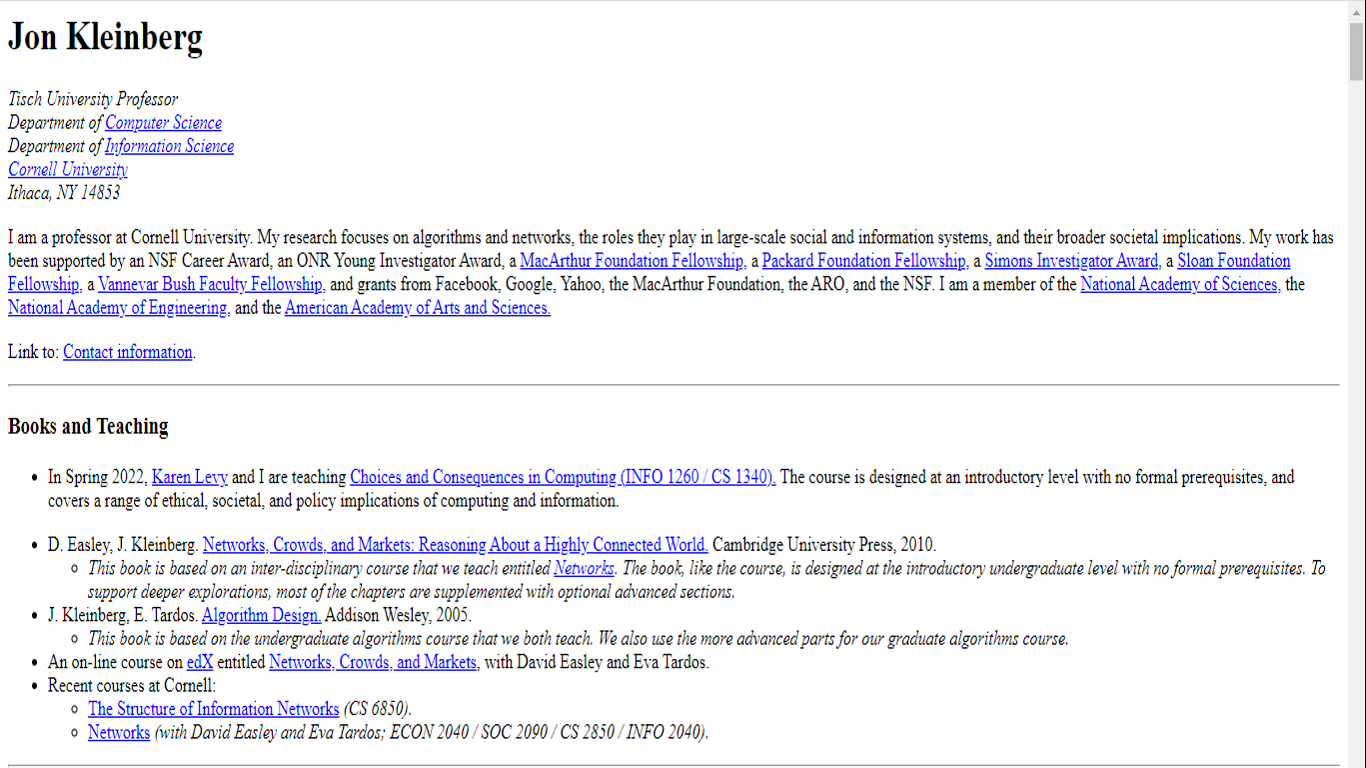
Consider the figure above. It is a snapshot of a static website, displaying some details about a professor, John Kleinberg. This is what websites looked like, back in the 90s!
This drawback triggered the rise of dynamic websites in the next era.
Web 2.0 is the current era of web technologies. It has been there from 2004 till today. Most of the web applications we visit today belong to this era. The milestone of Web 2.0 was the emergence of dynamic websites such as Instagram, YouTube, Github, Analytics Vidhya, and more! Consider Analytics Vidhya where you can not only read articles but also comment on them, write your own articles, and register for a blogathon or Data Science jobathons by filling in your details.
Another example of a dynamic website includes Github where a user can create a new account, create a new repository in their account, upload code files, commit, follow other developers and the list goes on. Look at the screenshot of the Login page to Github above. A user can enter their username and password and log in to their account easily! Observe how interactive they are, thereby overcoming the limitations of the websites of the previous era. This couldn’t have been feasible without the advancement of web technologies.
Apart from its dynamic nature, Web 2.0 also has other pros. Recall the bizarre experiences discussed at the beginning of the article. It’s not magic! They are again possible due to the power of Web 2.0! It’s based on our clicks and the cookies we ought to accept on most websites visited by us that such tailored ads are recommended by the giants such as YouTube and Google. These giants have centralized servers in which our personal information is saved and used to sell products.
Don’t worry! It’s not a case of a data breach! The personal information collected is what we provide while creating a new account on a social media platform such as Instagram. It is based on this information that products we are likely to be interested in are recommended so that we can buy them conveniently.
Interestingly, most of these platforms are free. For instance, you can watch an unlimited number of videos on YouTube on a wide range of topics including education, dramas, motivational videos, songs, and movie trailers-to mention a few. So, when we use such services, our personal information is obtained and stored to improve the user experience.
But, Web 2.0 isn’t the end! The current websites have their own limitations. For instance, do you know how your data is getting used?
It is believed that Web 3.0 is the future of web technologies! The four underlying principles of Web 3.0 include:
Let’s discuss each of them in the subsequent section.
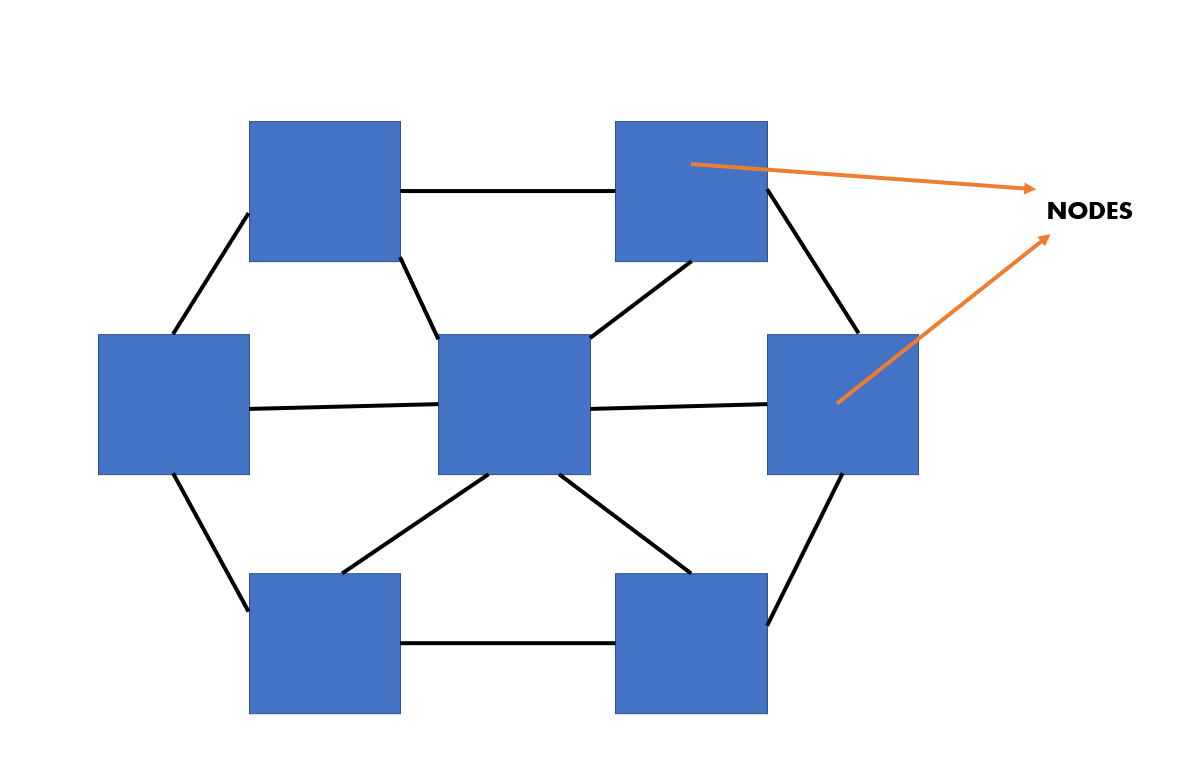
It is a peer-to-peer network unlike Web 1.0 which is a simple client-server network.
Moreover, unlike Web 2.0, all the data won’t be stored in one particular central network. Instead, it will be distributed to the entire decentralized network. In the above illustration, nodes refer to individuals or organizations or anyone who saved their information on their personal devices. Above all, this personal data can be used only if you grant them permission. Thus, Web 3.0 helps in terms of privacy as we will know how our data is being used. Presently, we click on ‘Accept Cookies’ after which we are unaware of what data are taken and how they are used! Isn’t it creepy?
Participants on the web can interact directly without seeking permission from a governing body. For instance, if A sells T-shirts and B wants to buy them, B can buy through direct interaction with A without involving a bank or any other intermediary. Besides, you can access whatever data you want even without getting a third party’s permission.
You no longer need to accept cookies when you visit a page! This is a trustful bond between the user and the web.
With Natural Language Processing(NLP), semantic webs can understand information just like how we, the humans do.
Consider the figure above. Both the statements mean the same although their syntaxes vary. The computer can figure out this due to the advent of NLP. This ability enables easy browsing on the Internet. Users too will get to see more relevant content matching their tastes.
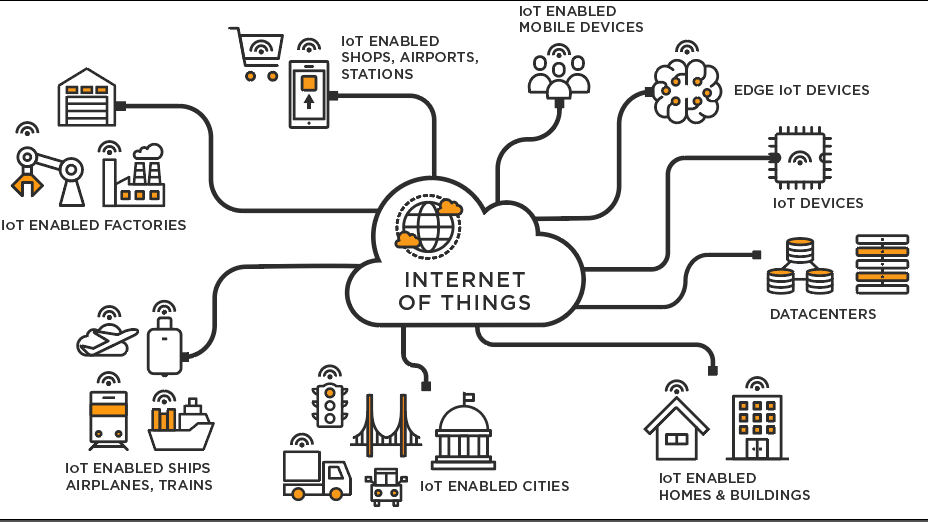
The emergence of IoT(Internet Of Things) will succeed in improving the accessibility and availability of the Internet. You don’t need to always roam with your smartphones or PCs for Internet connection as is the situation in Web 2.0. The WWW will be made available to anyone, anytime and anywhere!
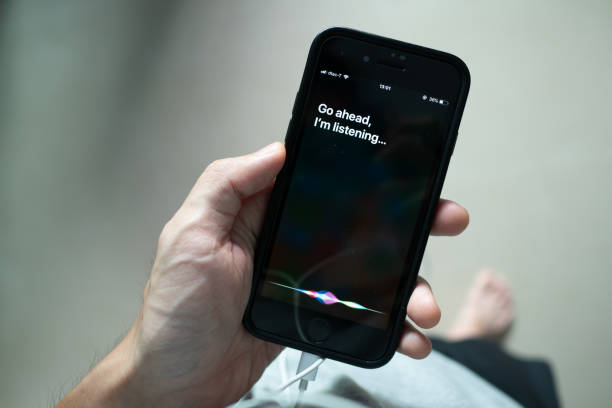
Therefore, due to the shortcomings of Web 2.0, the tech giants are planning to transform their websites from Web 2.0 to Web 3.0. Siri and Wolfram Alpha are two excellent examples of applications already using Web 3.0!
Siri is a popular voice assistant in Apple’s iOS,iPadOS,watchOS,macOS,tvOS and audioOS operating systems.It supports around 17 natural languages including English, German, Hindi, Telugu, and so on. Further, it supports six different English accents which include American, Indian, Irish, British, Australian, and South African. It is mainly used to automate tasks and provide information. The more a user uses Siri, the more it becomes familiar with their tendencies.
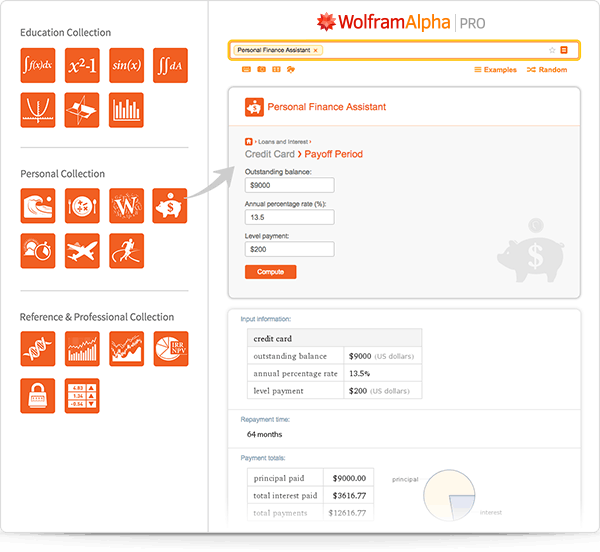
Google’s competitor, Wolfram Alpha answers certain questions by referring to its built-in knowledge base and algorithms. The app can provide mathematical solutions to any given mathematical formula. It is a computational knowledge and answer engine developed by Wolfram Research.
Summing up, in this article, we discussed the following:
The media shown in this article is not owned by Analytics Vidhya and is used at the Author’s discretion.
I am Nithyashree V, a final year BTech Computer Science and Engineering student at Dayananda Sagar University,Bangalore. I love learning technologies and putting them into practice, especially to observe how they help us solve society’s challenging problems. My areas of interest include Artificial Intelligence, Data Science, and Natural Language Processing.
GPT-4 vs. Llama 3.1 – Which Model is Better?
Llama-3.1-Storm-8B: The 8B LLM Powerhouse Surpa...
A Comprehensive Guide to Building Agentic RAG S...
Top 10 Machine Learning Algorithms in 2026
45 Questions to Test a Data Scientist on Basics...
90+ Python Interview Questions and Answers (202...
8 Easy Ways to Access ChatGPT for Free
Prompt Engineering: Definition, Examples, Tips ...
What is LangChain?
What is Retrieval-Augmented Generation (RAG)?
Edit
Resend OTP
Resend OTP in 45s