|
VOOZH | about |
|
VOOZH | about |
The goal of deep learning is to create models that have abstract features. This is accomplished by building models composed of many layers in which higher layers interpret the input while lower layers abstract the details.
This article was published as a part of the Data Science Blogathon.
Artificial neural networks are used in deep learning to process massive amounts of data and carry out complex calculations. This particular kind of machine learning is predicated on the composition and operations of the human Intelligent System.
Machines are trained by deep learning algorithms through example-based learning. Deep learning is widely used in sectors like healthcare, e-commerce, entertainment, and advertising for tasks ranging from medical diagnosis to personalized recommendations and targeted advertising strategies.
Clustering algorithms divide a larger set of input into smaller sets so that those sets can be more easily visualized –Nearest Neighbor is one such algorithm because it breaks the input up based on the distance between data points.
For example, if we had an input set containing pictures of animals and cars, the nearest neighbor would break the inputs into two clusters. The nearest cluster would contain images with similar shapes (i.e., animals or cars), and the furthest cluster would contain images with different shapes.
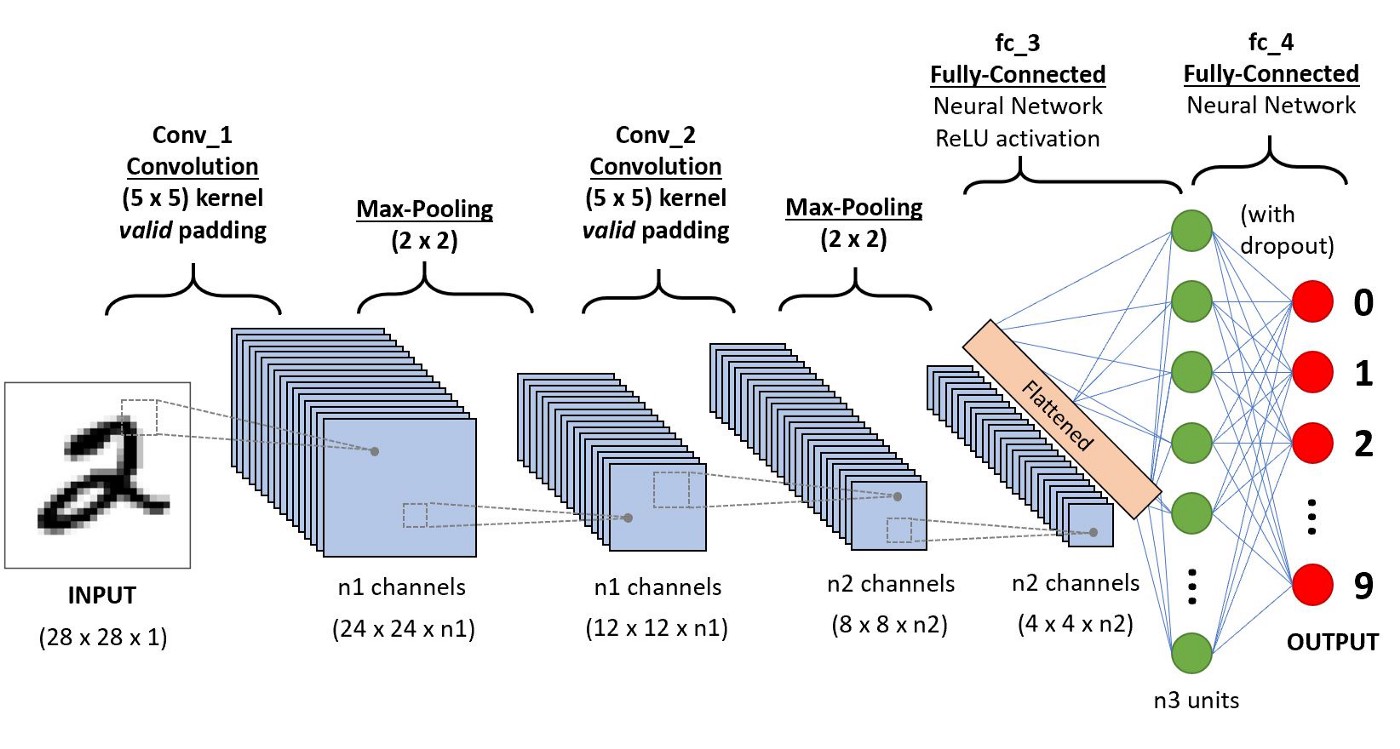
Convolutional neural networks are a class of artificial neural networks that employ convolutional layers to extract features from the input. CNNs are frequently used in computer vision because they can process visual data with fewer moving parts, i.e., they’re efficient and run well on computers. In this sense, they fit the problem better than traditional deep learning models. The basic idea is that at each layer, one-dimensionality is dropped out of the input; so for a given pixel, there is a pooling layer for just spatial information, then another for just color channels, then one more for channel-independent filters or higher-level activation functions.
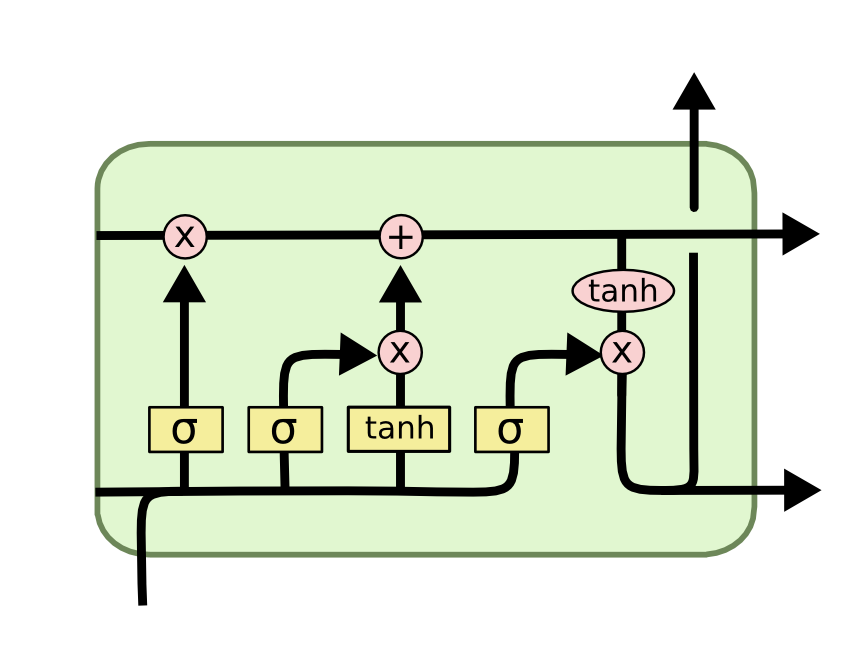
Several deep learning algorithms can be combined in many different ways to produce models that satisfy certain properties. Today, we will discuss the Long Short-Term Memory Neural Network (LSTMNN). LSTM networks are great for detecting patterns and have been found to work well in NLP tasks, image recognition, classification, etc. The LSTMNN is a neural network that consists of LSTM cells.
An RNN is an artificial neural network that processes data sequentially. In comparison to other neural networks, RNNs can understand arbitrary sequential data better and are better at predicting sequential patterns. The main issue with RNNs is that they require very large amounts of memory, so many are specialized for a single sequence length. They cannot process input sequences in parallel because the hidden state must be saved across time steps. This is because each time step depends on the previous time step, and future time steps cannot be predicted by looking at only one past time step.
GANs are neural networks with two components: the generator and the discriminator. The generator produces artificial data from scratch, with no human input, while the discriminator tries to identify that it is artificial by comparing it against real-world data. When the two-component compete against each other, this causes one of them to improve (much like how competitors might outdo each other) and eventually leads to better results in both tasks. A GAN typically consists of three modules, the generator module (G), the discriminative module (D), and an augmentation module (A). These modules can be summarized in three equations as follows: G ≈ D + A G(X) ≈ p(X) E
One deep learning algorithm is Support Vector Machines (SVM). One of the most famous classification algorithms, SVM, is a numerical technique that uses a set of hyperplanes to separate two or more data classes. In binary classification problems, hyperplanes are generally represented by lines in a two-dimensional plane. Generally, an SVM is trained and used for a particular problem by tuning parameters that govern how much data each support vector will contribute to partitioning the space. The kernel function determines how one feature vector maps into an SVM; it could be linear or nonlinear depending on what is being modeled.
ANNs are networks that are composed of artificial neurons. The ANN is modeled after the human brain, but there are variations. The type of neuron being used and the type of layers in the network determine the behavior.
ANNs typically involve an input layer, one or more hidden layers, and an output layer. These layers can be stacked on top of each other and side by side. When a new piece of data comes into the input layer, it travels through the next layer, which might be a hidden layer where it does computations before going on to another layer until it reaches the output layer.
The decision-making process involves training an ANN with some set parameters to learn what outputs should come from inputs with various conditions.
Compositional Pattern Producing Networks (CPPN) is a kind of autoencoder, meaning they’re neural networks designed for dimensionality reduction. As their name suggests, CPPNs create patterns from an input set. The patterns created are not just geometric shapes but very creative and organic-looking forms. CPPN Autoencoders can be used in all fields, including image processing, image analysis, and prediction markets.
Deep learning uses a variety of architectures and techniques to address difficult issues in a variety of fields. Although a thorough examination calls for its own article (link to main topic), the following are some of the key categories of algorithms used in deep learning:
Each of these algorithms has its own strengths, architectures, and suitable applications. To learn more about the different types of deep learning algorithms, their working principles, and use cases, check out our detailed article: Machine Learning Algorithms to Use in 2024
To summarize, deep learning algorithms are a powerful and complex technology capable of identifying data patterns. They enable us to parse information and recognize trends more efficiently than ever.
Furthermore, they help businesses make more informed decisions with their data. I hope this guide has given you a better understanding of deep learning and why it is important for the future.
There are many deep learning algorithms, but the most popular ones used today are Recurrent Neural Networks (RNN) and Convolutional Neural Networks (CNN).
I would recommend taking some time to learn about these two approaches on your own to decide which one might be best for your situation.
The media shown in this article is not owned by Analytics Vidhya and is used at the Author’s discretion.
A. The algorithm of Deep Q Learning involves training a neural network to approximate the Q-function in reinforcement learning, combining deep learning with Q-learning to handle high-dimensional state spaces.
A. Four fundamental algorithms in machine learning include Supervised Learning, Unsupervised Learning, Reinforcement Learning, and Semi-supervised Learning.
A. RNN stands for Recurrent Neural Network, designed to process sequential data by maintaining internal memory. CNN stands for Convolutional Neural Network, specialized in processing grid-like data such as images.
A. Yes, CNN (Convolutional Neural Network) is a deep learning technique, commonly used for tasks involving image recognition, classification, segmentation, and more, leveraging multiple layers of convolutional and pooling operations.
GPT-4 vs. Llama 3.1 – Which Model is Better?
Llama-3.1-Storm-8B: The 8B LLM Powerhouse Surpa...
A Comprehensive Guide to Building Agentic RAG S...
Top 10 Machine Learning Algorithms in 2026
45 Questions to Test a Data Scientist on Basics...
90+ Python Interview Questions and Answers (202...
8 Easy Ways to Access ChatGPT for Free
Prompt Engineering: Definition, Examples, Tips ...
What is LangChain?
What is Retrieval-Augmented Generation (RAG)?
You have provided easy explanations for complex topics. Very well articulated.
Edit
Resend OTP
Resend OTP in 45s