|
VOOZH | about |
|
VOOZH | about |
By YUKI NIKAIDO/ Staff Writer
June 12, 2026 at 07:00 JST
👁 Photo/Illutration
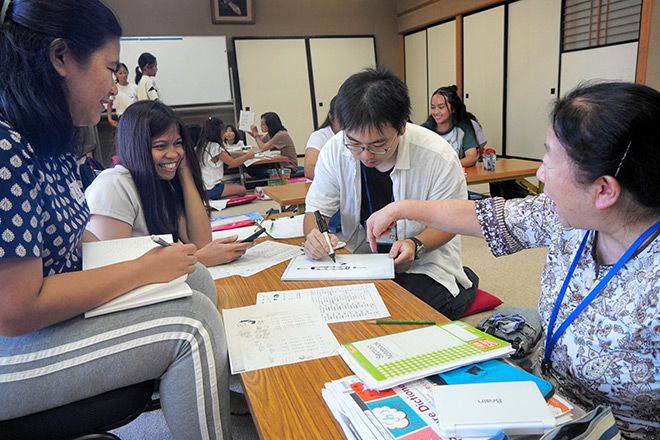
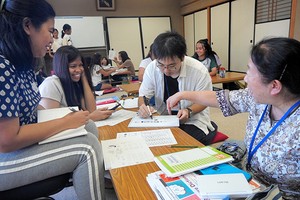
A volunteer worker teaches the Japanese language and culture to foreign residents at the Migrant Center in Yaizu, Shizuoka Prefecture, in September. (Akifumi Nagahashi)
Foreign residents in Japan tend to have lower Japanese language proficiency if they live in towns and villages with smaller populations, a government survey found.
Many foreigners in such rural communities say there are insufficient learning environments to improve their language skills, according to the results of the Immigration Services Agency’s Basic Survey on Foreign Residents released on May 19.
With the number of foreign residents sharply rising in Japan, the government is pushing for programs to help them learn Japanese and the country’s systems to realize a harmonious society.
A private entity commissioned by the agency has conducted the annual survey since fiscal 2020.
For the latest edition, questionnaires were sent to 20,000 mid- and long-term residents aged 18 and older, including special permanent residents, in October and November last year.
About 8,900 of them provided responses through the internet.
Of them, 35 percent have lived in Japan for between three and 10 years, 26 percent for between one and three years, and 19 percent for between 10 and 20 years.
Nineteen percent of all respondents said they can engage in conversations about anything appropriate for the situation, the survey showed.
While 15 percent said they can have natural conversations in fluent Japanese, 36 percent said they can converse on things necessary for their daily lives.
Two percent said they cannot have any conversations in Japanese.
The respondents who live in less-populated towns and villages tended to have lower Japanese conversation skills.
Half of all respondents said they had learned Japanese in the past but are currently not learning the language.
Ten percent said they had never learned Japanese.
One-third of the respondents said there is no need to learn Japanese because they can already speak the language.
However, 15 percent said there are no Japanese language classes that they can attend at their convenience.
Eleven percent said there are no free Japanese classes nearby, while 9 percent said they have no idea where they can learn the language.
In less-populated towns and villages, the ratio of foreign residents who say there is no need to learn Japanese was smaller, and many of the respondents who need to do so cited insufficient learning environments.
Thirteen percent of respondents said their children can’t fully understand Japanese and 9 percent said they can’t communicate well with teachers. Six percent of the parents said they can’t understand notifications from schools.
More than 80 percent of respondents said they are clueless about websites and other services offered by the government to provide information for foreign residents.
In the comment section on the survey to express what kind of support they need, many said there are hardly any documents written in simple Japanese. In particular, they want easier-to-understand explanations for health care, taxes and pension systems.
“Japan should provide a special app that explains information about disasters and evacuation sites,” one respondent wrote.
The agency intends to proceed with future measures based on the survey results.
Government to trial Japanese classes for foreign children
May 26, 2026Survey: 60% of foreign residents want to live in Saitama forever
March 31, 2026Night junior highs offer rare opportunity to foreign nationals
October 4, 2023Helping hand in Gunma for foreigners facing ‘culture shock’
September 24, 2024Group promotes Osaka ‘osekkai’ culture to help foreign tourists
September 17, 2022New curriculum for English learning called a ‘big failure’
April 28, 2024A peek through the music industry’s curtain at the producers who harnessed social media to help their idols go global.
A series based on diplomatic documents declassified by Japan’s Foreign Ministry
Here is a collection of first-hand accounts by “hibakusha” atomic bomb survivors.
Cooking experts, chefs and others involved in the field of food introduce their special recipes intertwined with their paths in life.
A series about Japanese-Americans and their memories of World War II
Some articles on this website may contain content generated by artificial intelligence programs.
Copyright © The Asahi Shimbun Company. All rights reserved. No reproduction or republication without written permission.