|
VOOZH | about |
|
VOOZH | about |
By KENTO MATSUSHIMA/ Staff Writer
March 30, 2026 at 19:03 JST
👁 Photo/Illutration
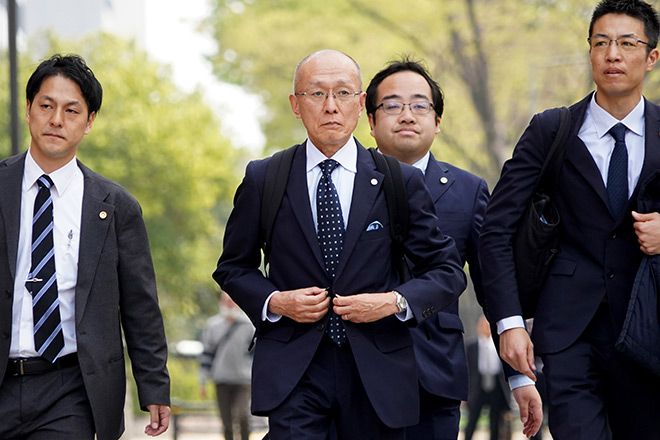
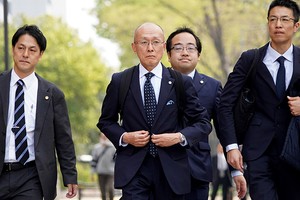
Satoru Takaba, second from left, enters the Nagoya District Court on March 30. (Shigetaka Kodama)
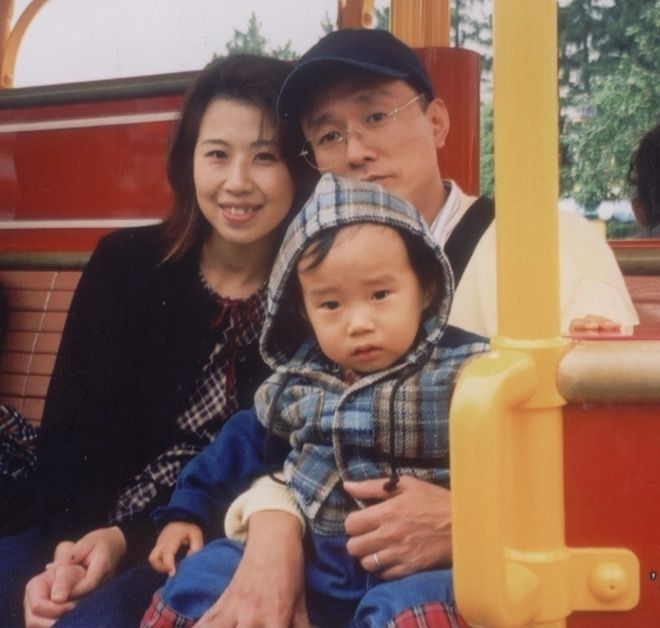
NAGOYA—The husband and son of a woman who was killed in 1999 filed a civil lawsuit against the suspected murderer, but they could encounter the same difficulty they faced during the criminal case: time.
Satoru Takaba, 69, and his son, Kohei, 28, are suing Kumiko Yasufuku, 69, for emotional distress.
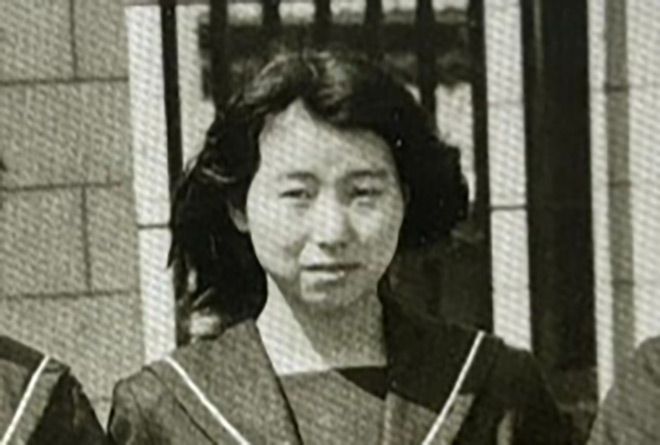
Yasufuku, a high school classmate of Takaba, was indicted on March 5 on charges of murdering Takaba’s wife, Namiko, 32, on Nov. 13, 1999.
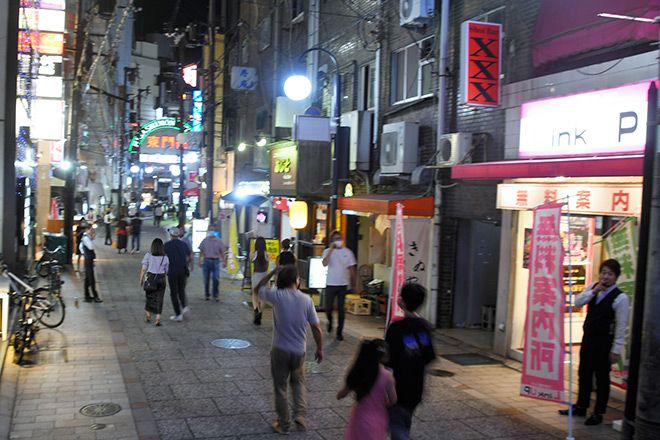
According to the indictment, Yasufuku stabbed Namiko multiple times inside the family’s apartment in Nagoya. Aichi prefectural police said she initially admitted to the allegations but has since exercised her right to remain silent.
Takaba and his lawyers announced the lawsuit at the Nagoya District Court on March 30.
However, the suit faces a significant hurdle: a legal provision known as the “exclusion period,” which extinguishes the right to claim compensation 20 years after a wrongful act.
Whether the provision applies in this case will be the central focus of the court.
“It’s not that we didn’t want to seek compensation before; we couldn’t because we didn’t know who to claim it from,” Takaba said. “To be turned away at the gate after 20 years would be contrary to social justice.”
He added, “I want a legal precedent establishing that claims for damages can still be filed even 20 years later. It’s not just for my sake. The ability of victims of unsolved cases across the country to file lawsuits depends on it.”
The murder investigation remained cold until Yasufuku’s arrest last October, nearly 26 years after Namiko’s death.
Satoru hardened his resolve to “preserve” the crime scene by continuing to pay rent on the apartment for more than two decades.
He also worked tirelessly to abolish the 15-year statute of limitations for murder.
In 2010, the Code of Criminal Procedure was revised, and the statute of limitations for murder and other crimes was eliminated.
POSSIBLE EXCEPTION
In the civil suit, the family’s argument may be supported by a Supreme Court decision in 2009, when it made an exception to the time limit.
The case involved a teacher murdered in Tokyo in 1978 whose body was not found for 26 years. Her bereaved family had sought damages from the suspected perpetrator.
The top court waived the statute of limitations and awarded damages in the case, saying it would be “grossly contrary to the principles of justice and fairness for a perpetrator to escape liability by creating the very circumstances that prevented a timely lawsuit.”
Tomomichi Watanabe, a civil law professor at Seikei University, said although the statute of limitations exists to ensure legal stability, a similar argument could be made in Takaba’s lawsuit.
“If (Yasufuku) was indeed the perpetrator, she created the circumstances that prevented the claim from being made for 26 years in this case, so it is possible that this could be treated as an exception,” Watanabe said.
FIGHT FOR ALL VICTIMS
The lawsuit highlights what victim advocacy groups call a legal contradiction.
Sora no Kai, a group of bereaved families from murder cases, said the criminal statute of limitations for murder was abolished in 2010, therefore, it is “inconsistent” for a civil time limit to remain.
The group, of which Takaba is a member, is calling for legal reforms to allow families in long-unsolved cases to sue perpetrators once they are identified.
Hiroshima court backs payouts for hibakusha living overseas
January 29, 2026Calls grow to abolish statute of limitations for hit-and-runs
December 31, 2023Court rejects yakuza statute of limitations claim in extortion suit
December 15, 2023EDITORIAL: State must pay for inhumane acts under past eugenics policy
July 4, 2024Nepal man’s life worth $7,000? Ruling called discriminatory
June 4, 2023Kumamoto court rules in favor of victims of forced sterilization
January 24, 2023A peek through the music industry’s curtain at the producers who harnessed social media to help their idols go global.
A series based on diplomatic documents declassified by Japan’s Foreign Ministry
Here is a collection of first-hand accounts by “hibakusha” atomic bomb survivors.
Cooking experts, chefs and others involved in the field of food introduce their special recipes intertwined with their paths in life.
A series about Japanese-Americans and their memories of World War II
Some articles on this website may contain content generated by artificial intelligence programs.
Copyright © The Asahi Shimbun Company. All rights reserved. No reproduction or republication without written permission.