AI agent coaching for support: how to coach your AI (and let it coach your team)


Last edited June 22, 2026
What "AI agent coaching for support" actually means
The phrase trips people up because it points in two directions at once, so let's split it cleanly.
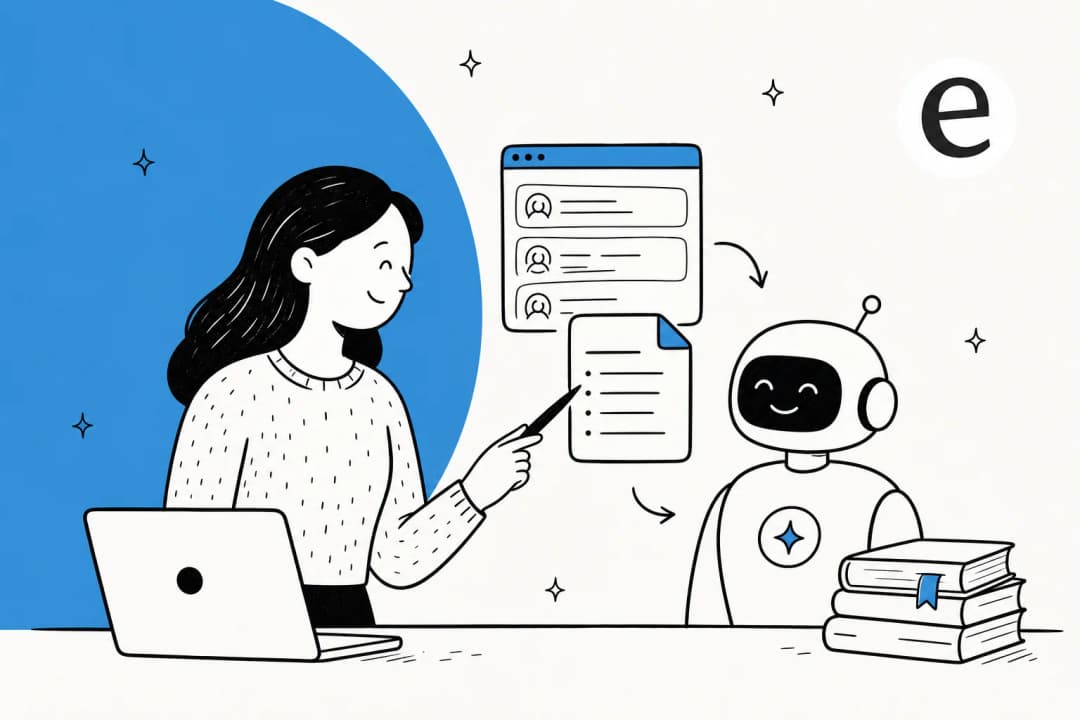
Coaching your AI agent is the work of getting an AI support agent to answer well: feeding it your real tickets and help docs, telling it your rules in plain language, watching where it goes wrong, and correcting it until it sounds like the rep you'd want answering that question. It's onboarding, except the new hire reads your entire knowledge base in an afternoon and never forgets a correction.
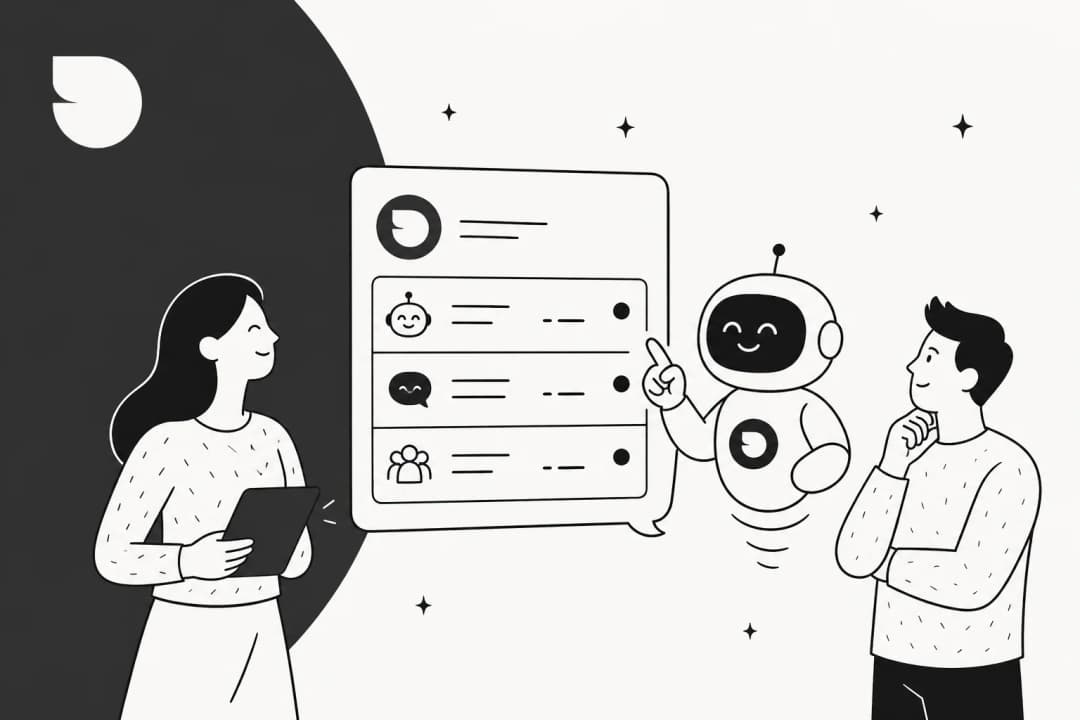
AI coaching your agents is the flip side: pointing that same intelligence at your human team. An AI copilot drafts a reply, the agent reviews and sends it, and over a few weeks the newer agents absorb how a good answer is structured. One founder of a small dog-training business put it perfectly in a G2 review, describing the tool as "a 24/7 supervisor that coaches them on how to handle inquiries."
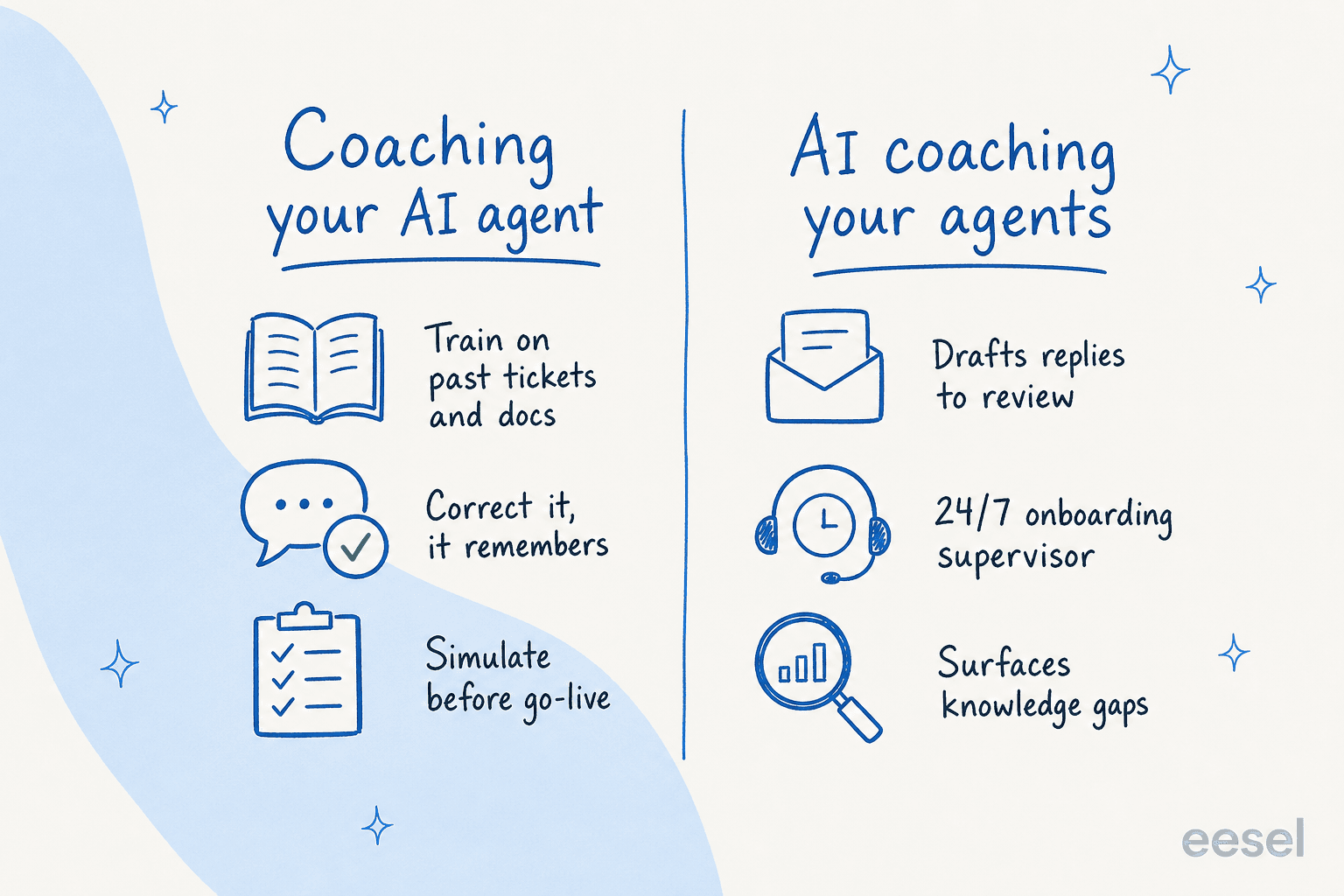
Most posts on this topic only cover one side. In practice the smart move is to run both: coach your AI agent so it can take the easy, repetitive tickets, and let it coach your humans so they get sharper on the hard ones. That's where the real leverage is.
Why coaching is the part everyone skips
Here's the uncomfortable truth from years of doing this: the model was never the bottleneck. The bottleneck is trust, and trust is earned through coaching.
The worst pattern I've seen up close is an agent that fabricates success: it narrates "searching the helpdesk" for several turns without ever hitting the API, then hands the customer a confident, wrong answer. Nothing torches a rollout faster than an AI that lies about what it did. That experience is exactly why we now simulate every rollout against historical tickets before it replies to a single customer, instead of flipping it live and hoping.
A legal-tech team I've worked with framed the stakes perfectly: in their world a wrong answer isn't a typo, it's liability, since there's a fine line between being helpful and overstepping into legal advice. The only way they'd let AI near a customer was with exact guardrails on sourcing and a transparent citation on every single answer. That's coaching as risk management.
The takeaway: an uncoached AI agent isn't a fast agent, it's a liability with good grammar. Coaching is what turns it into something you'd actually let near a customer.
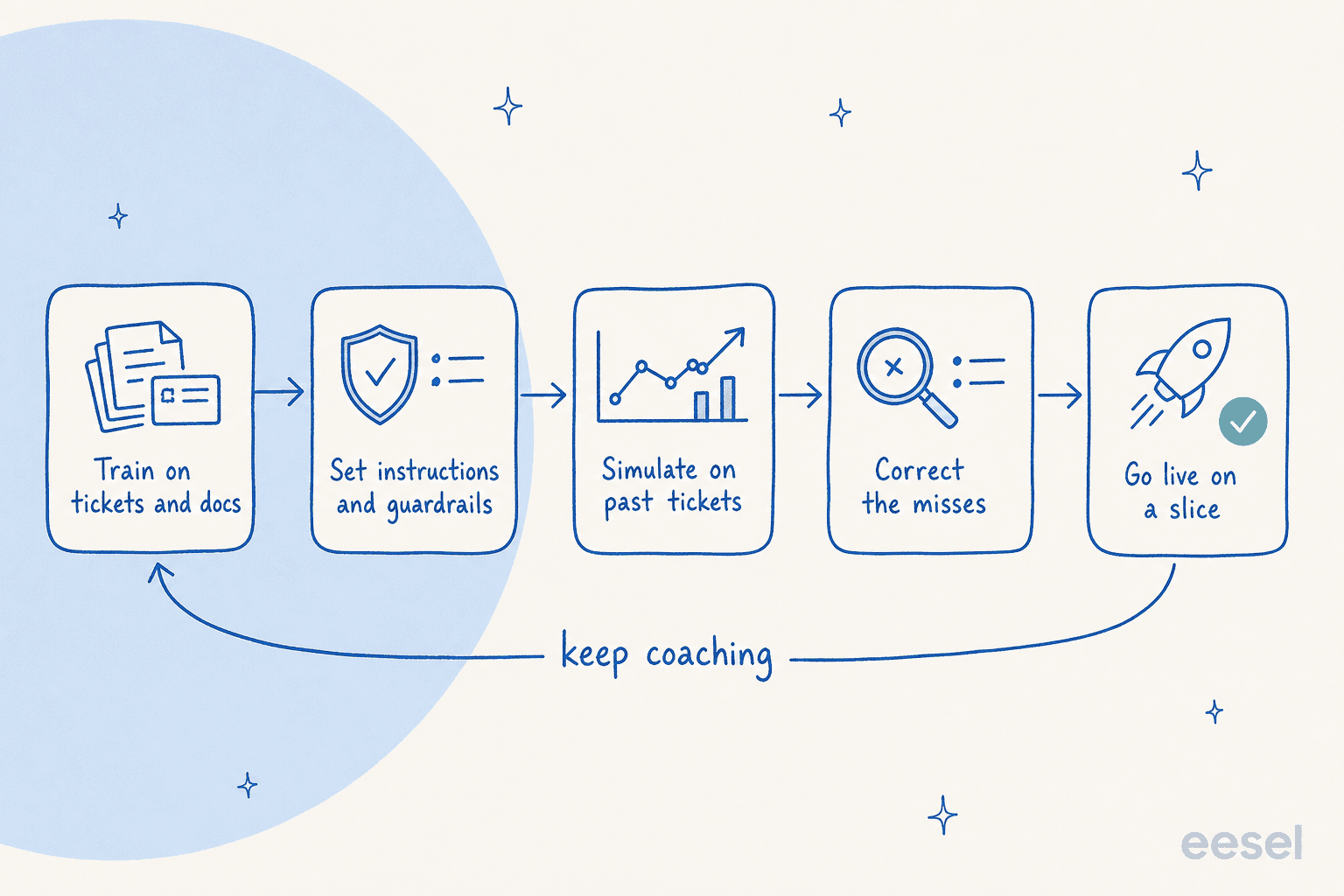
How to coach an AI support agent, step by step
This is the loop I'd run for any new agent, whether you're on Zendesk, Freshdesk, Gorgias, or Help Scout.
1. Train it on your past tickets and docs
Start where your real answers already live. Connect your historical tickets and your knowledge base so the agent learns your products, your policies, and your tone from conversations your team already resolved. Training on past tickets is, by a wide margin, the most-requested capability I hear about, and it's why a freshly-connected agent can sound like your team on day one instead of like a generic chatbot.
One French IT services firm I came across was losing two senior agents in the same year and wanted to "put their knowledge into the AI" before they walked out the door. That's coaching in its purest form: capturing tribal knowledge while you still have it.
2. Write your guardrails as plain instructions
Next, tell the agent your rules the way you'd tell a new hire. A digital-media support admin I read about taught his agent a "troubleshoot before you cancel" policy by simply correcting it in chat: "This is incorrect. You have not provided troubleshooting steps yet." He also told it to skip a known test-ticket sender entirely. No code, just plain-English coaching.
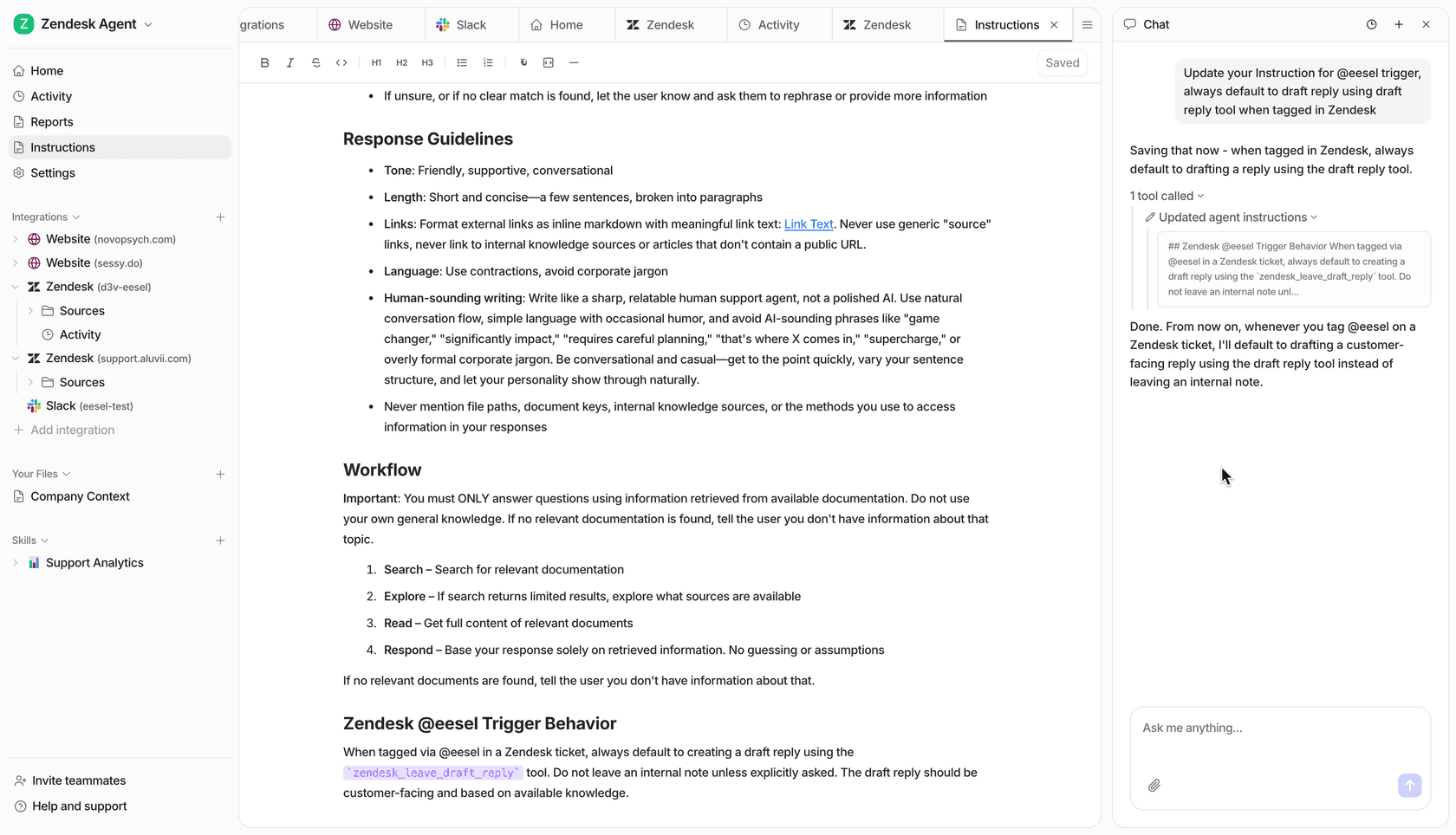
The phrasing that stuck with me came from another G2 reviewer: "It answers confidently but not too confidently, and training it has been super easy." That confidence calibration is the whole game.
3. Simulate before you go live
This is the step almost everyone skips, and it's the one that saves you. Before the agent talks to a real customer, run it against a few thousand of your past tickets and read what it would have said. You get a resolution-rate estimate and a pile of concrete misses to coach, with zero risk to a live customer. A good simulation is the difference between "we think it's ready" and "we've watched it handle 3,000 of our real tickets."
4. Correct the misses, then re-test
When the simulation surfaces a wrong answer, correct it, then re-run. The founder of that dog-training business described the loop exactly right: "when we re-test, it correctly incorporates the coaching." That's the feedback loop you're looking for, a correction that sticks and shows up in the next run.
5. Go live on a slice, with confidence-based handoff
Don't flip everything on at once. Let the agent handle only what it's confident about and route the rest to a human. The single sharpest articulation of this I've heard came from a DTC supplements CX lead: "I need an AI who is only handling the tickets that it's confident to handle and all the other ones, leave them alone."
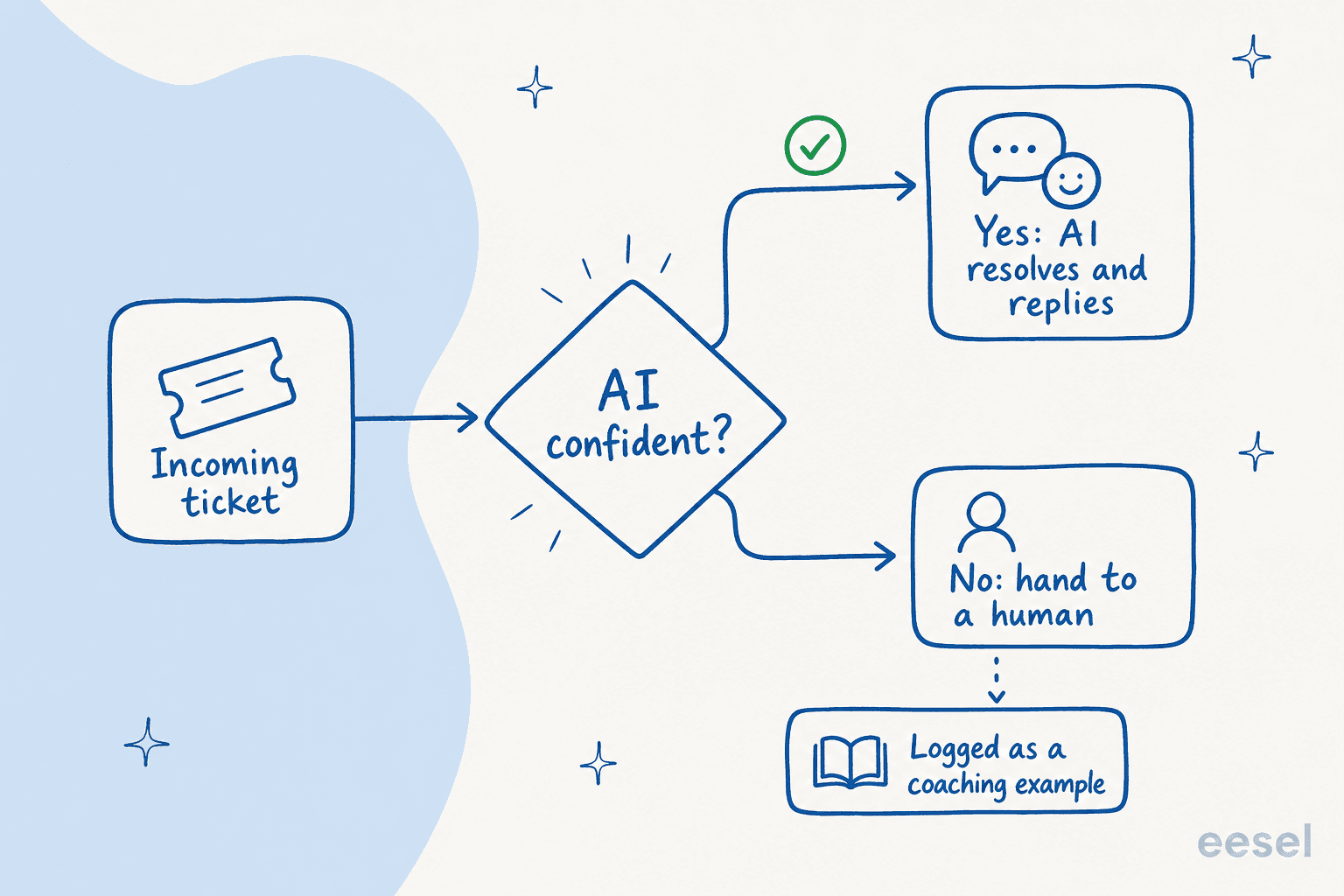
Set the confidence threshold high to start, watch the resolutions, and loosen it as trust grows. Every escalated ticket is also a free coaching example for the next round.
6. Keep coaching from your reports
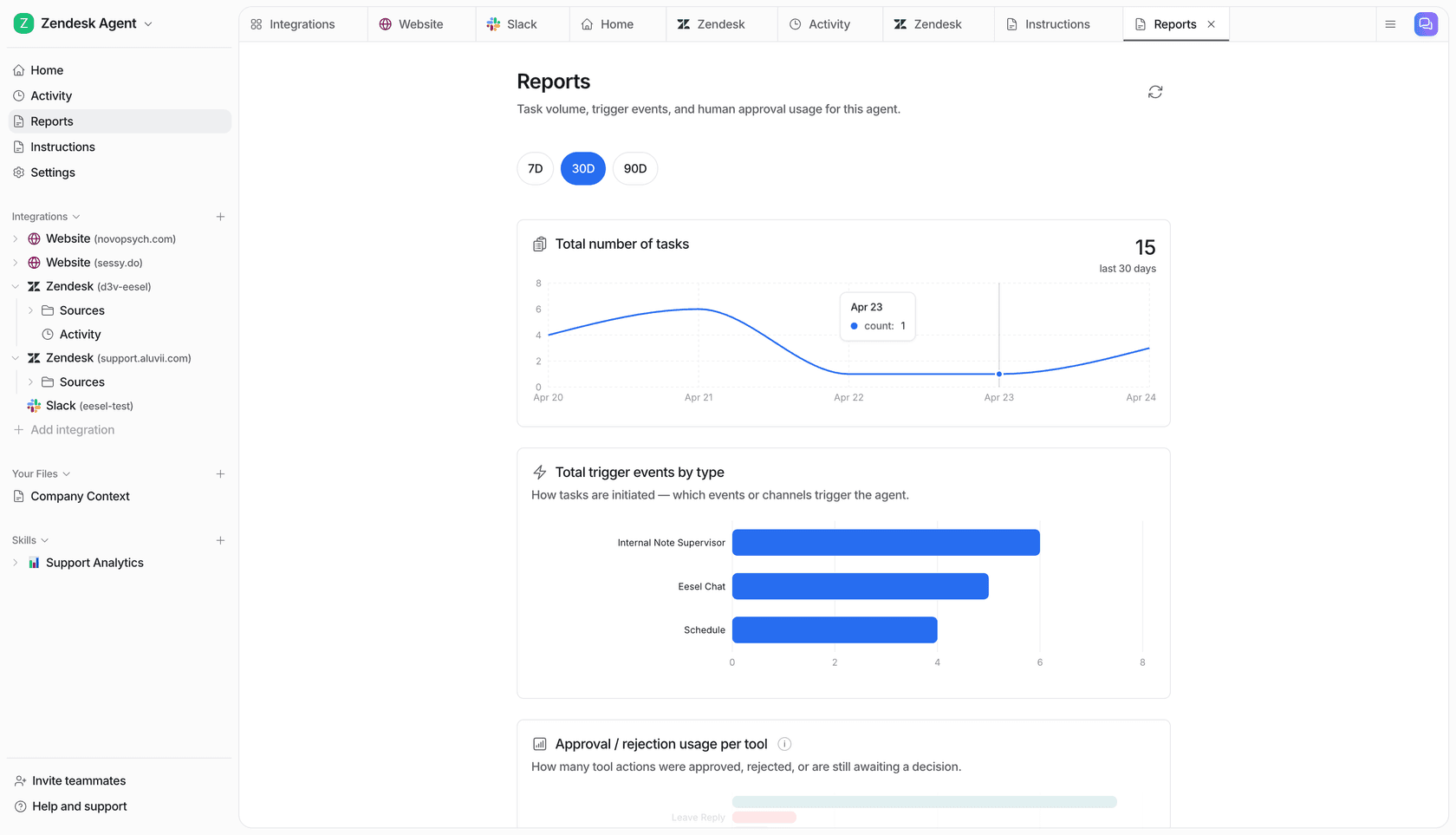
Coaching isn't a one-time setup, it's a habit. Watch your reports for the topics the agent keeps escalating or getting thumbs-down on, and feed those gaps back in as new docs or instructions. The agents that quietly climb from 30% to 60%+ resolution do it because someone keeps coaching them, not because the model got smarter overnight.
How AI coaches your human agents
Flip the lens, and the same AI becomes a coach for your team. In copilot mode it drafts a reply for every incoming ticket, pulling from your docs and past tickets, and the agent reviews, tweaks, and sends. For a new hire, that draft is a live worked example of how your team answers, every single ticket, all day.
The onboarding effect is real and measurable. One payments company using AI as an internal copilot reported up to 80% time savings on answers and onboarding, because new staff stopped pinging managers and started getting accurate answers straight from the source. Another team described how managers "are now asked the important questions" instead of the same repetitive ones, because the copilot fields the rest.
"It is getting us to the right articles really quickly and easily, as well as curating well-formed responses with consistent, on-brand tone, still keeping our own style and still keeping that human touch."
Eddie Stephens, Service Desk Lead, CartonCloud, in an eesel case study
That last phrase, "still keeping that human touch," is the point. The goal of AI coaching your agents isn't to replace them, it's to make a small team punch above its weight, which is exactly what the best customer service AI tools are for.
Common mistakes when coaching an AI agent
A few traps I see teams fall into, so you can skip them:
- Going live without simulating. If you can't tell me how the agent handled your last 1,000 tickets, it's not ready. Simulate first, every time.
- Coaching with band-aids instead of principles. Fixing one ticket at a time creates a brittle agent. Teach durable rules ("troubleshoot before cancel") and the agent generalises.
- Setting the confidence threshold too low, too soon. Let it earn its volume. A narrow, reliable agent beats a wide, wrong one in every helpdesk I've watched.
- Treating setup as the finish line. The reports are the coaching plan. Skip them and the agent plateaus.
- Forgetting the humans. If you coach the AI but never put it in copilot mode for your team, you've left half the value on the table.
Try eesel AI for AI agent coaching
If you want one tool that does both halves of this, eesel AI is built around the coaching loop. It connects to your helpdesk and learns from your past tickets and docs in minutes, you coach it in plain English, and its simulation mode replays it against thousands of your real historical tickets so you can see the resolution rate and fix the misses before a customer is involved. In the meantime it runs as a copilot, drafting replies your team reviews, so it's coaching your agents from day one.

It works like a new teammate that already read your help center: confidence-based handoff so it only answers what it's sure of, transparent citations on every reply, and a setup most teams finish the same afternoon. You can try eesel free, and check the pricing only when you're ready to scale it up.
Frequently Asked Questions

Share this article

Article by
Riellvriany Indriawan
Riell is a designer and writer at eesel AI with about two years of experience researching CX platforms, AI chatbots, and helpdesk software. She combines her design background with a sharp eye for how these tools actually look and feel in practice — making her comparisons unusually visual and user-focused.