An overview of Axelera AI: The edge AI hardware accelerator


Last edited October 8, 2025
For a long time, AI has been a "cloud-first" kind of deal. All the heavy computational work happened on huge, distant servers. But that's starting to change. More and more, we need AI to work at the "edge", processing data right on the device where it’s collected. This way is faster, more private, and works even without a steady internet connection.
And that's the exact problem a company like Axelera AI is trying to solve. They build the specialized hardware and software that make edge AI not just a neat idea, but a powerful reality. If you're curious about what they do, how their technology works, and if it might be the right piece of the puzzle for your project, you're in the right place. We're going to break down the Axelera AI platform, looking at its core tech, where it fits best, and some of the real-world things you should think about before diving in.
What is Axelera AI?
At its heart, Axelera AI is a company focused on a complete hardware and software platform for artificial intelligence. They're specifically targeting computer vision and generative AI applications that run on the edge. Their goal is pretty straightforward: make AI more accessible with powerful, low-energy solutions that don’t cost a fortune, especially when you compare them to the power-hungry GPUs we’re used to.
Axelera AI started out as an incubation project by Bitfury and the well-known nano-technology group imec. They're based in the AI Innovation Center of the High Tech Campus in Eindhoven, which seems like the perfect spot for a deep-tech startup. This isn't just a startup with a good pitch, either. The company has pulled in some serious funding, including a $68 million Series B round and major grants, which shows there's real confidence in their approach to edge computing.
The tech behind Axelera AI
Axelera AI’s performance isn’t just about using off-the-shelf components. Their whole platform is built around a custom architecture designed specifically for AI. Let's look at the key pieces that make it all work.
The Metis AI Processing Unit (AIPU)
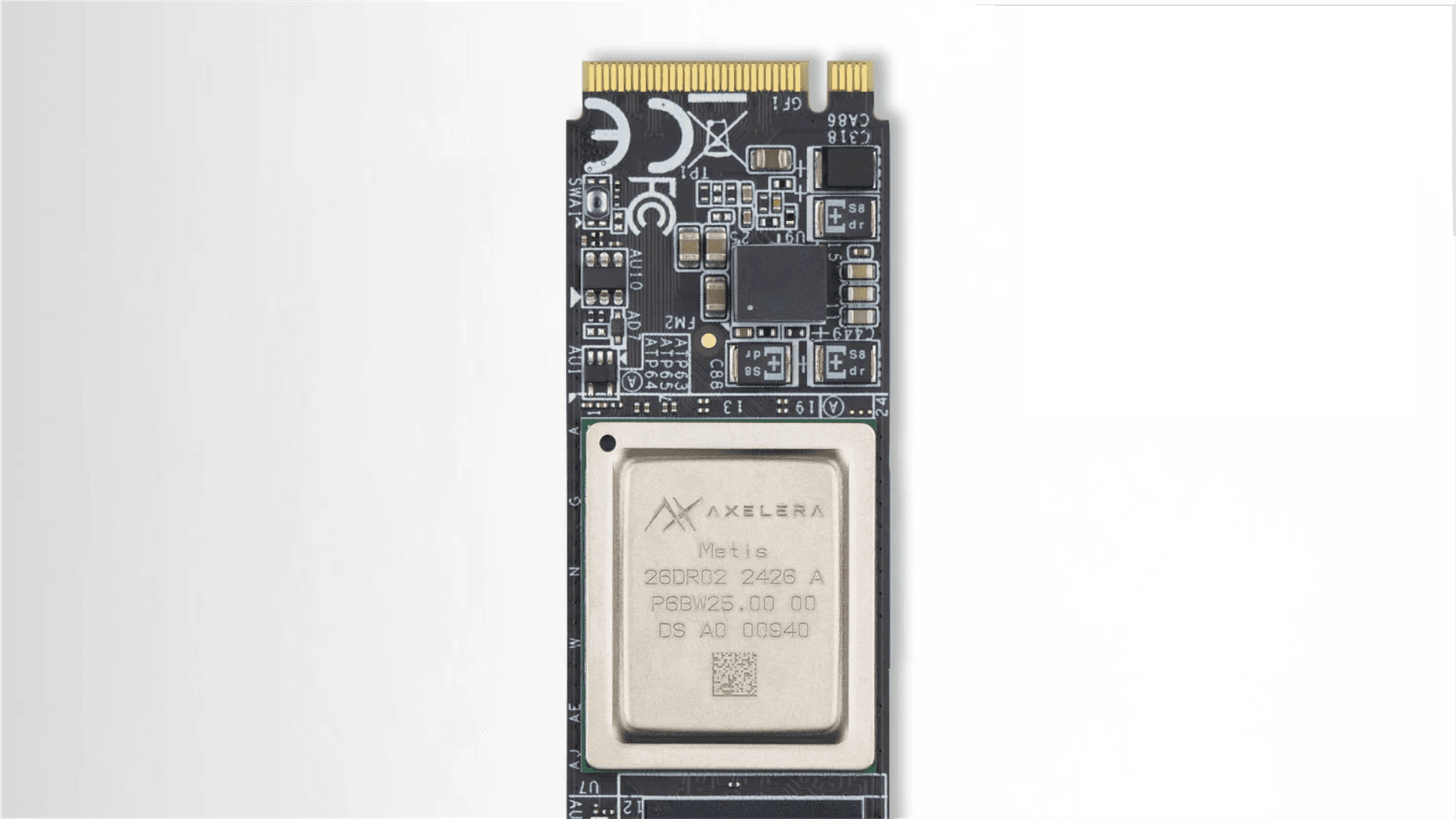
You can think of the Metis AIPU as the brains of the whole operation. It’s not just a tweaked CPU or GPU. It’s an AI-native processor built for one thing: running AI inference tasks as fast as possible. With a starting performance of 214 TOPS (Trillion Operations Per Second), a single Metis chip is powerful enough to handle several high-definition video streams at once, making it great for demanding, real-time jobs.
Digital In-Memory Computing (D-IMC)
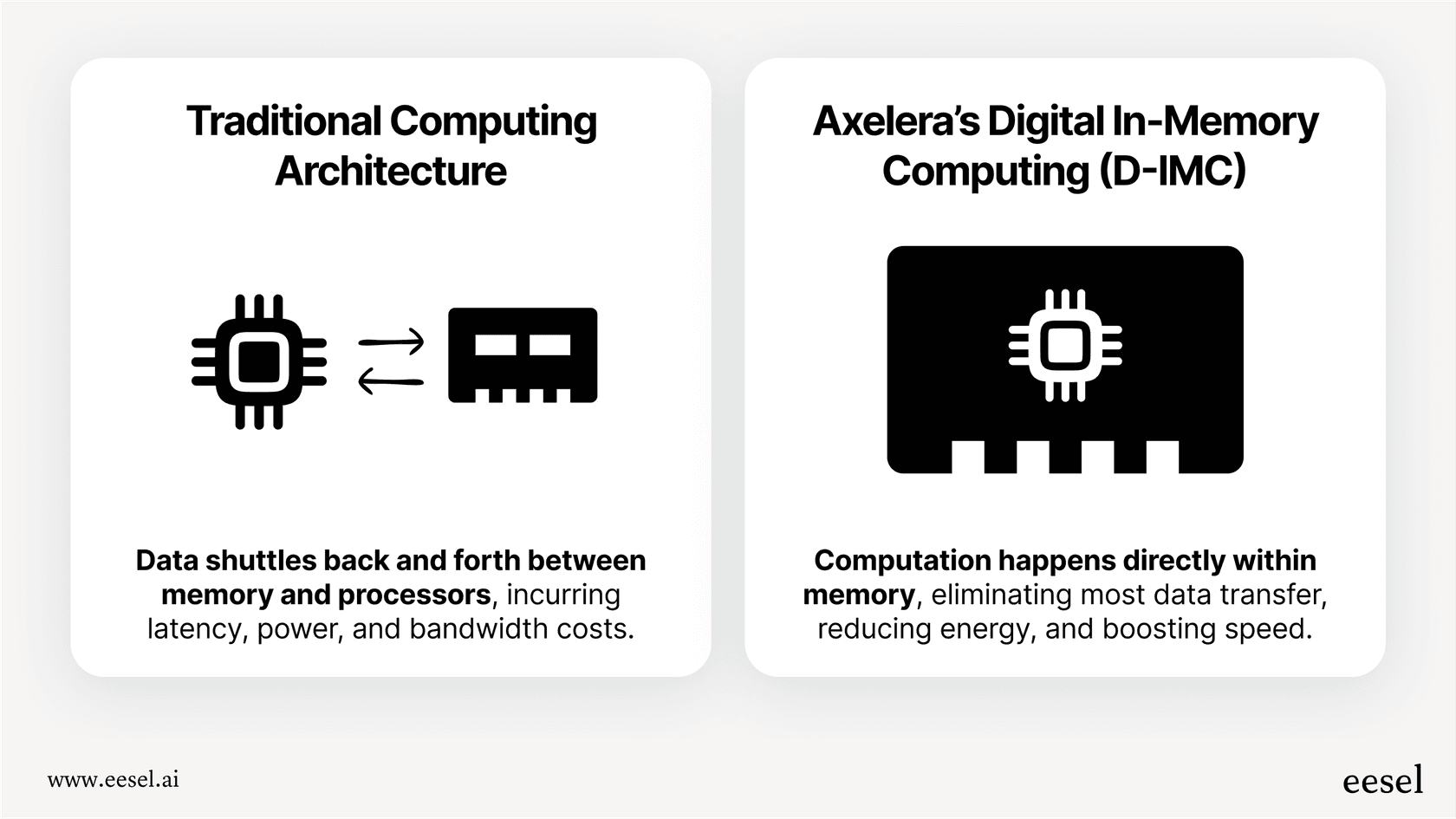
This is where things get really interesting. Traditional computers are always moving data between the processor and the memory. This constant back-and-forth slows things down and uses a lot of power. Digital In-Memory Computing changes the game by doing the calculations right where the data is stored, which cuts down on all that data movement.
The payoff? Much lower power usage, better performance, and it’s more cost-effective. It's a fundamental design choice that lets them squeeze so much processing power into a small chip that doesn't overheat.
The Voyager SDK
Great hardware is only half the story. The Voyager SDK is the software toolkit that lets developers actually get their AI models running on Axelera's hardware. To make life easier, the SDK comes with a "Model Zoo" that has over 100 pre-trained and optimized models ready to use, covering a bunch of common computer vision tasks.
Products and key use cases
So, how does all this tech turn into something you can actually use? Axelera AI packages its platform into hardware accelerators for companies that are building physical products with powerful AI baked in.
Hardware accelerators
They sell their technology in a few different forms to suit different projects. Each is designed for a specific kind of integration, from tiny embedded gadgets to big industrial computers.
| Product | Form Factor | Key Feature | Ideal For |
|---|---|---|---|
| Metis M.2 Card | M.2 | Compact, high-performance (214 TOPS) | Embedded systems, small devices, drones. |
| Metis M.2 Max | M.2 | 2x performance for LLMs/VLMs | More compute-intensive edge applications. |
| Metis PCIe Card | PCIe | Standard card for workstations/servers | Industrial PCs, multi-camera surveillance. |
Real-world applications
This kind of hardware isn't for running your accounting software; it's for giving machines the power to see and make sense of their surroundings. Here are a few industries where Axelera AI's tech is a great fit:
-
Industrial Manufacturing: On a factory floor, their cards can power systems that do real-time quality checks on an assembly line, predict when machinery needs maintenance, or monitor workplace safety (like checking if workers are wearing their hard hats).
-
Retail: Imagine smart checkout systems that automatically know what's in your cart, cameras that track shelf inventory, or analytics tools that watch foot traffic to help optimize a store's layout.
-
Security: Because it can handle so many video feeds at once, this tech is perfect for advanced surveillance systems that can spot threats, notice unusual activity, or track objects across multiple cameras in real-time.
-
Smart Cities: The possibilities are pretty wide here, from managing traffic flow and improving public safety to enabling more intelligent infrastructure across a city.
Practical considerations: Is Axelera AI right for you?
The performance numbers are definitely impressive, but this platform is built for a very specific type of user. It's not something you just install like an app; it requires some real technical know-how and planning. Before you jump in, it's worth understanding some of the challenges you might run into.
Software maturity and model support
According to a hands-on review, the software, while powerful, is still a work in progress. The current workflow is "pipeline-centric," which is similar to tools like NVIDIA DeepStream. What this means is you build a flow out of pre-made processing blocks instead of just deploying a standard PyTorch or ONNX model directly.
This works fine for common tasks, but it might feel a bit rigid if you're building a highly customized AI model with multiple stages. The review also pointed out that the "Deploy tool" for converting custom models can be a bit tricky, with documentation and error messages that aren't always super helpful. For teams that don't have a deep bench of AI engineers, this could mean a steep learning curve.
Hardware compatibility and setup
This is not a "plug-and-play" solution for every machine. The same reviewer found that the hardware worked perfectly on an Intel-based PC but wasn't even detected on an AMD or NVIDIA Jetson system. So, you can't just drop it into any old computer; you have to plan your hardware setup carefully to make sure everything is compatible.
The alternative: Software-first AI for business workflows
Axelera AI is clearly for companies building AI into hardware. But what if your problem is different? What if you just want to add AI to your business workflows, like customer support, internal IT, or sales? That’s a whole other ball game, and it needs a software-first approach.
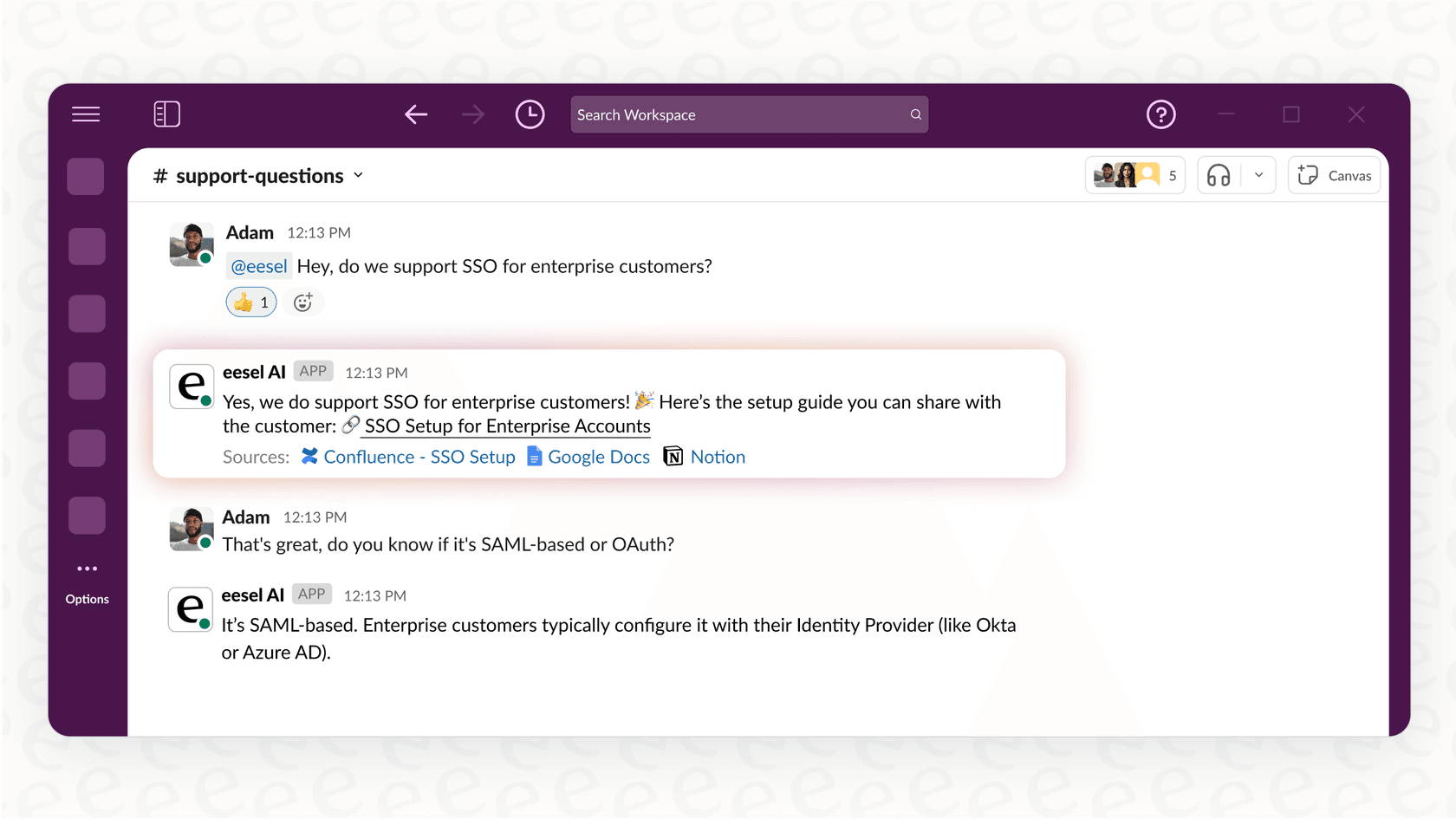
This is where a tool like eesel AI is a better fit. Instead of making you a hardware engineer, eesel plugs right into the tools your team already uses every day, like Zendesk, Slack, or Confluence. You don’t need to think about PCIe lanes or model conversion pipelines. With eesel AI, you can be up and running in minutes. It's a self-serve platform that connects to your helpdesk and knowledge bases with simple integrations, making it a much more practical choice for support and IT teams who need a solution now, not six months from now.
Pricing
Axelera AI is refreshingly open about its pricing. They sell hardware directly from their online store and through partners, which is a nice change from the usual "contact sales for a quote" model you see in the semiconductor world.
Prices can change, but you can usually find their main products available for direct purchase on their site:
-
Metis M.2 AI Edge accelerator card: Their most compact option, typically priced for embedded system developers.
-
Metis PCIe AI accelerator card: The standard card for PCs and servers.
-
Evaluation Systems: They also work with partners like Dell and Lenovo to offer complete, pre-configured systems that include the computer and the accelerator card, ready to go right out of the box.
Of course, for huge orders or custom enterprise setups, you'll probably still need to reach out to their sales team for a direct quote.
Axelera AI: Powerful hardware for the right team
So, what's the verdict on Axelera AI? It’s a seriously powerful and efficient hardware platform for companies working on the cutting edge of... well, edge computing. Its performance-per-watt is excellent, making it a fantastic choice for real-time computer vision in demanding areas like industrial automation, retail, and security.
But all that power comes with a caveat. This platform is really for experienced engineering teams who are comfortable getting their hands dirty with hardware integration and navigating a software ecosystem that's still growing. It's a specialized tool for a specialized job.
Ready to automate your workflows without the hardware headache?
If you want the benefits of AI without having to build a custom device from the ground up, there’s a much simpler path.
Frequently asked questions

Share this article

Article by
Kenneth Pangan
Writer and marketer for over ten years, Kenneth Pangan splits his time between history, politics, and art with plenty of interruptions from his dogs demanding attention.