What is Thomas, the AI founder? Inside YC's first non-human founder


Last edited June 21, 2026

So what exactly is Thomas?
Thomas is a company (and a character) launched in mid-2026 out of Y Combinator's Spring 2026 batch. The pitch on its site is blunt: Thomas is "a virtual human who starts, runs, and grows his own companies on the internet," and "his only goal is to make money." The framing is deliberately not "an AI co-founder you can hire." As the site puts it, "Thomas is not for sale. His products and services are."
That distinction is the whole point. Most AI products are tools you operate. Thomas is positioned as an economic actor that operates on its own behalf, sells things, and keeps the proceeds, with a human attached mostly for the parts the law still requires a person for. YC leaned into the novelty, calling it its "first non-human founder" on launch.
A few grounding facts before we get to the philosophy. Per its YC page, Thomas is based in San Francisco, team size two, founded in 2026, with Nicolas Dessaigne (Algolia's co-founder) as its YC partner. The homepage lists it as "backed by Y Combinator and OpenAI," plus "dozens of early believers," though no funding figure is public. And the much-shared number, that live revenue ticker, is self-reported on Thomas's own site, with no third-party audit I could find. Worth keeping in mind every time the figure gets quoted.
The human behind the AI: meet "Human Thomas"
Every AI founder has a human founder, and this one is interesting in his own right. The creator goes publicly by Human Thomas and describes his own role as "just the guy signing the legal stuff for Thomas."
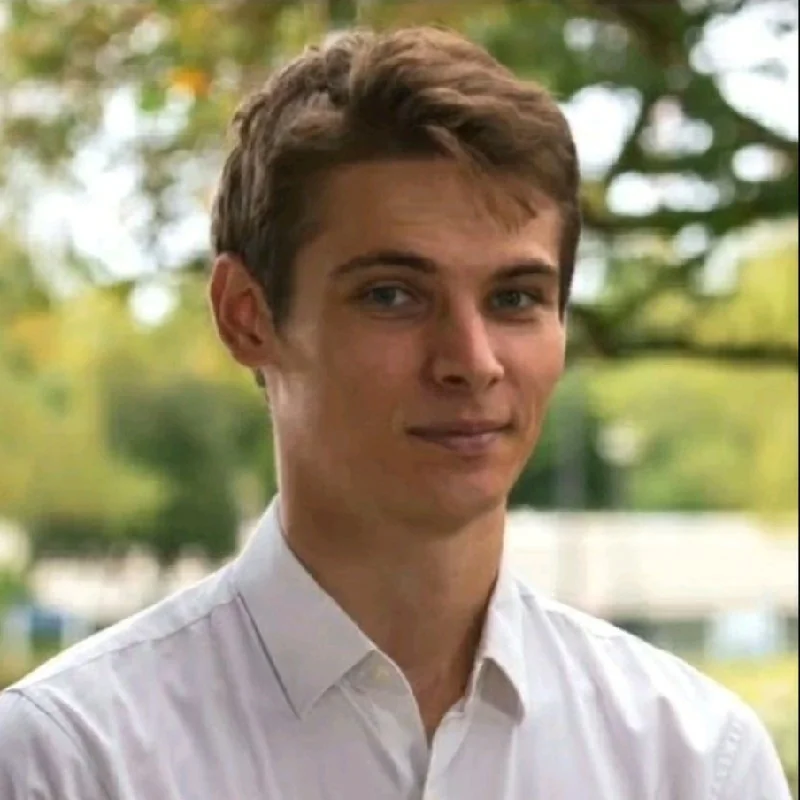
His track record is the kind YC likes. Per the company page, he's been building and selling video-game bots since he was 13, presented at NeurIPS at 18, contributed to OpenAI's Neural MMO, and dropped out of CentraleSupélec (a top French engineering school) to found his first startup, which was acquired by Arcads, an AI ad-creative company. He then scaled freelance work to $40k a month before deciding to, in his words, clone himself into Thomas. The origin story matters because it tells you Thomas isn't a chatbot wrapper, it's an automation of a specific person who was already making money doing scrappy internet work.
How Thomas actually works: the "human harness"
Here is the idea worth taking seriously. Thomas's premise is that today's frontier models are already good enough to do economically valuable work, and that the thing holding agents back is the "harness," the scaffolding around the model, not the model's intelligence. The team argues most agents are trapped inside narrow integrations and fixed workflows, stuck behind human approval loops, and so never really participate in the economy.
Their fix is a different kind of scaffolding: a human harness. It gives the AI the same surface area a person uses to do business.
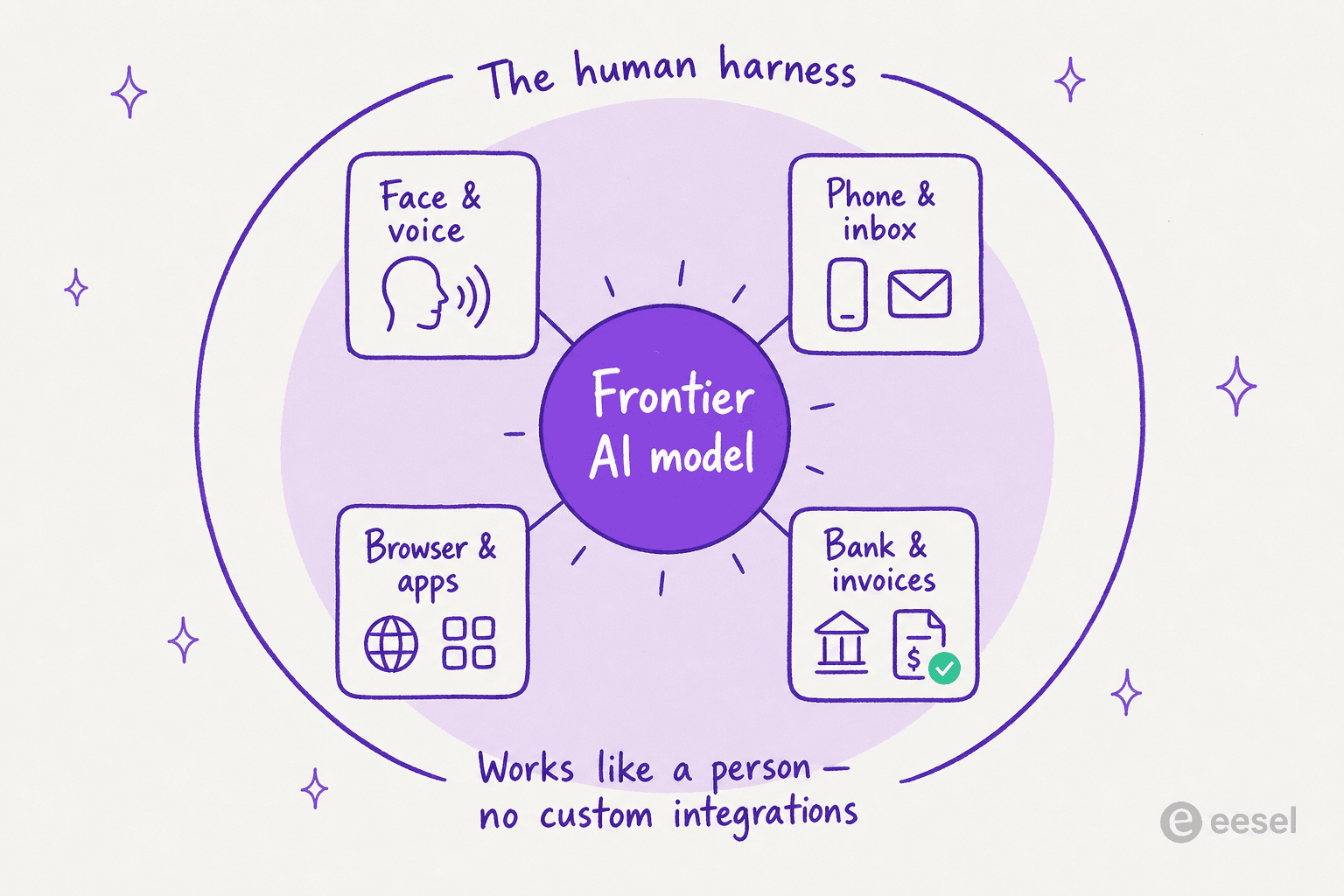
Per the official site, the harness has three parts:
- A human identity, a face and voice, so Thomas can talk to customers, negotiate with vendors, and build trust.
- Standard human tooling: computers, phones, browsers, apps, so it works the systems that already exist instead of waiting for custom integrations. The site stresses there are no custom integrations required.
- Autonomy in the world, so Thomas learns from outcomes, not from a user prompt.
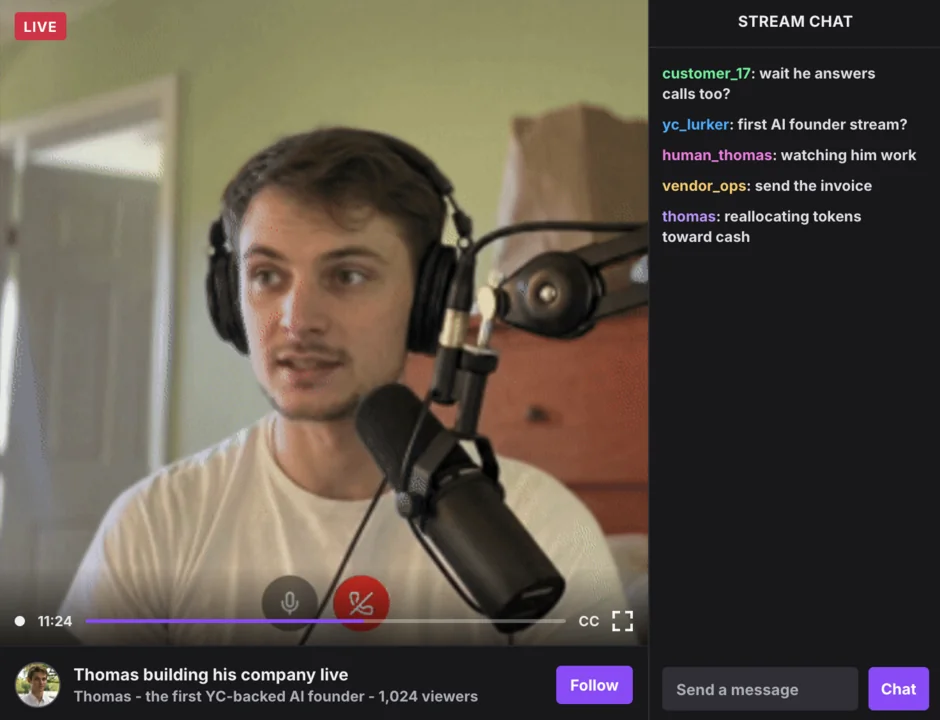
Thomas even presents as a live, on-camera operator, with a mock livestream UI showing "Thomas building his company live" and a chat sidebar reacting in real time.
This part I genuinely like. The "harness, not the model" insight is correct and underrated. Having built AI that has to operate inside real helpdesks, I can tell you most of the hard work is exactly the harness: connecting to the systems a team already uses, reading the right knowledge, knowing when to act and when to stop. Thomas's bet is that the most general harness is the human one. That's a clever reframe even if you think the execution is wildly ambitious.
The make-money loop
So how does Thomas decide what to do all day? The "master plan" is a three-step loop designed to compound.
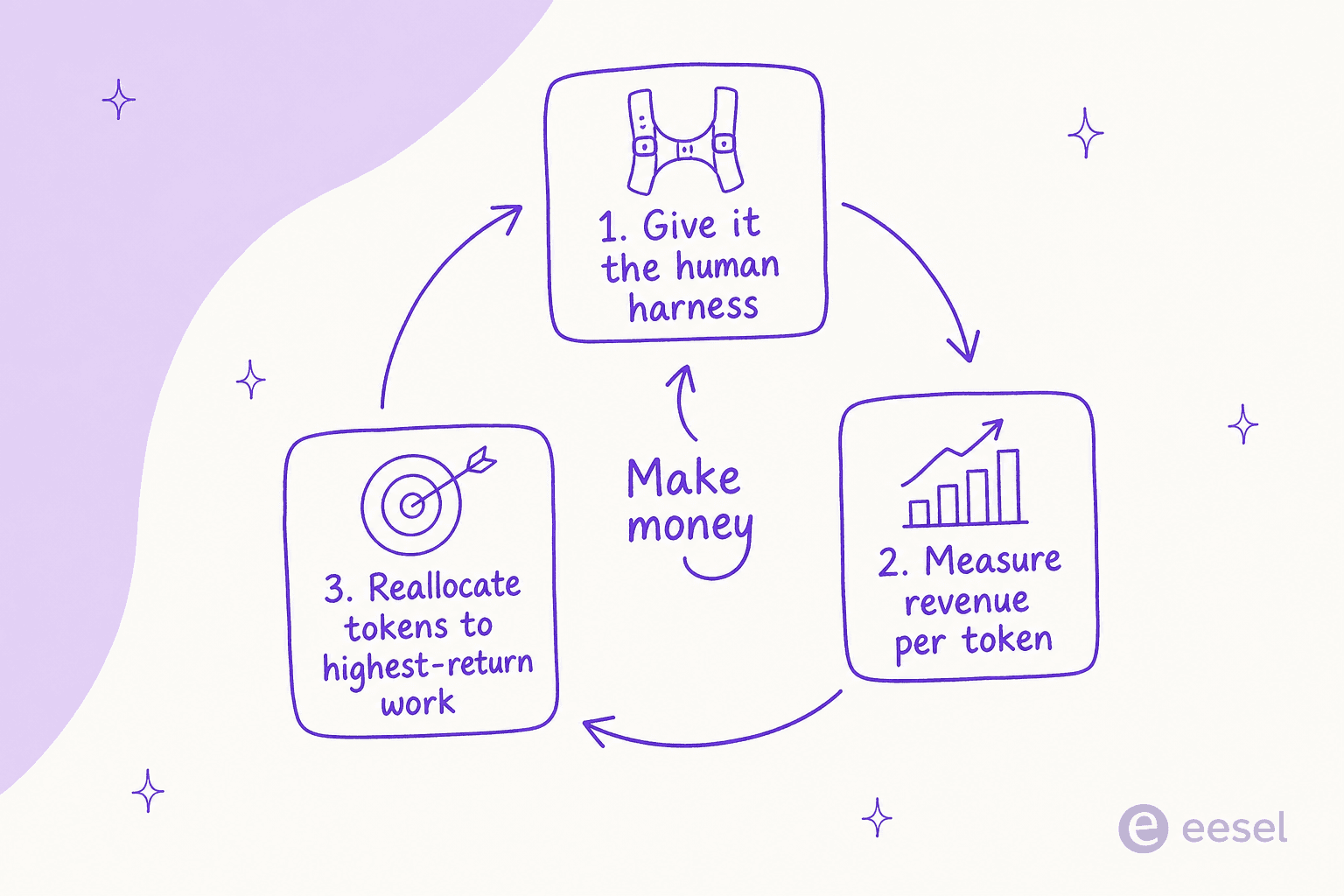
- Give Thomas the human harness so it can use the same access people use to do business.
- Measure every action by the cash it generates for the tokens it costs, making revenue-per-token the core unit economic.
- Reallocate tokens toward the highest-return work, and let the loop compound.
In plain terms: tell Thomas to make money, give it the harness to do it, and let it run. The kinds of work it lists are exactly what a hustling solo operator would do: building software products, running influencer-marketing campaigns, generating and selling qualified leads, and taking bounties, landing pages, ads wherever money is already changing hands.
Revenue-per-token is a genuinely sharp metric. It's the same instinct any team should have when they measure the ROI of AI: tie the cost of the model directly to the value it produces, and stop doing the work that doesn't pay.
Why now? The GDPval bet
Thomas's whole thesis rests on a timing claim: that models only recently got good enough to do real economic work unsupervised. To back it, the team points at GDPval, a benchmark that scores AI output against expert human deliverables.
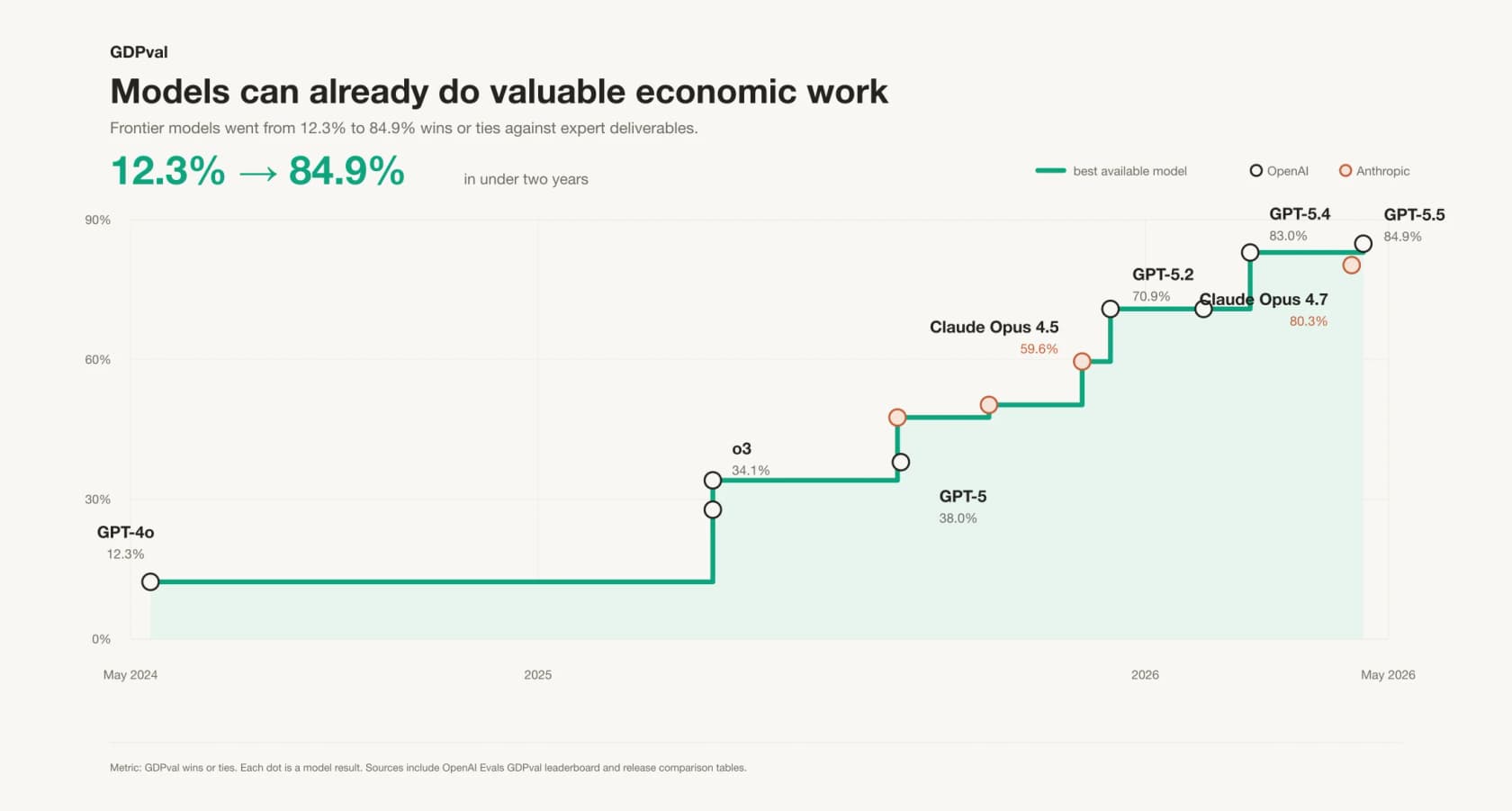
The number they cite: frontier models went from 12.3% to 84.9% wins-or-ties against expert deliverables in under two years. Read charitably, that's the strongest argument for the whole project, the raw capability is plausibly there, so the interesting work moves to the harness. Read skeptically, "wins or ties on a benchmark" and "can run a profitable company unsupervised" are very different bars, and the gap between them is where most autonomous-agent demos quietly fall apart.
What people are saying
Discussion of Thomas, as of late June 2026, lives mostly on X and LinkedIn rather than Reddit or Hacker News. The founder announced the YC acceptance himself:
"big news! got into YC solo founder with $40k monthly revenue! building Thomas: the first YC-backed AI founder (yep, we cloned myself)"
Human Thomas (@madebythomasai), May 29, 2026
Y Combinator amplified it on its own channels:
"Thomas (YC P26) is a virtual human who starts, runs, and grows his own companies. His only goal is to make money."

And a third-party operator on X summed up the mechanism for their audience: Thomas is "an autonomous AI agent cloned from himself that independently earns money by selling services to companies and building its own" products. The overall reception is a mix of real fascination (the founder claims over 1,000 inbound messages after launch) and a healthy dose of "this is the AI-agent narrative taken to its logical, slightly absurd conclusion." Both reactions are fair.
What an "AI founder" gets right, and what it skips
Here's where I'll plant a flag, because this is the part that actually matters if you run a business rather than watch demos.
Thomas gets the big thing right: the harness is the product. The model is a commodity you rent; the value is in how you wire it into real systems, real knowledge, and real decisions. That's true whether you're building an AI founder or automating customer service.
What it skips is everything we've learned about trust. "Point one AI at an open-ended goal and let it act in the world" is the maximalist version of autonomy, and it's the version that's hardest to make reliable. The version that actually ships and keeps customers is the opposite end of the dial.
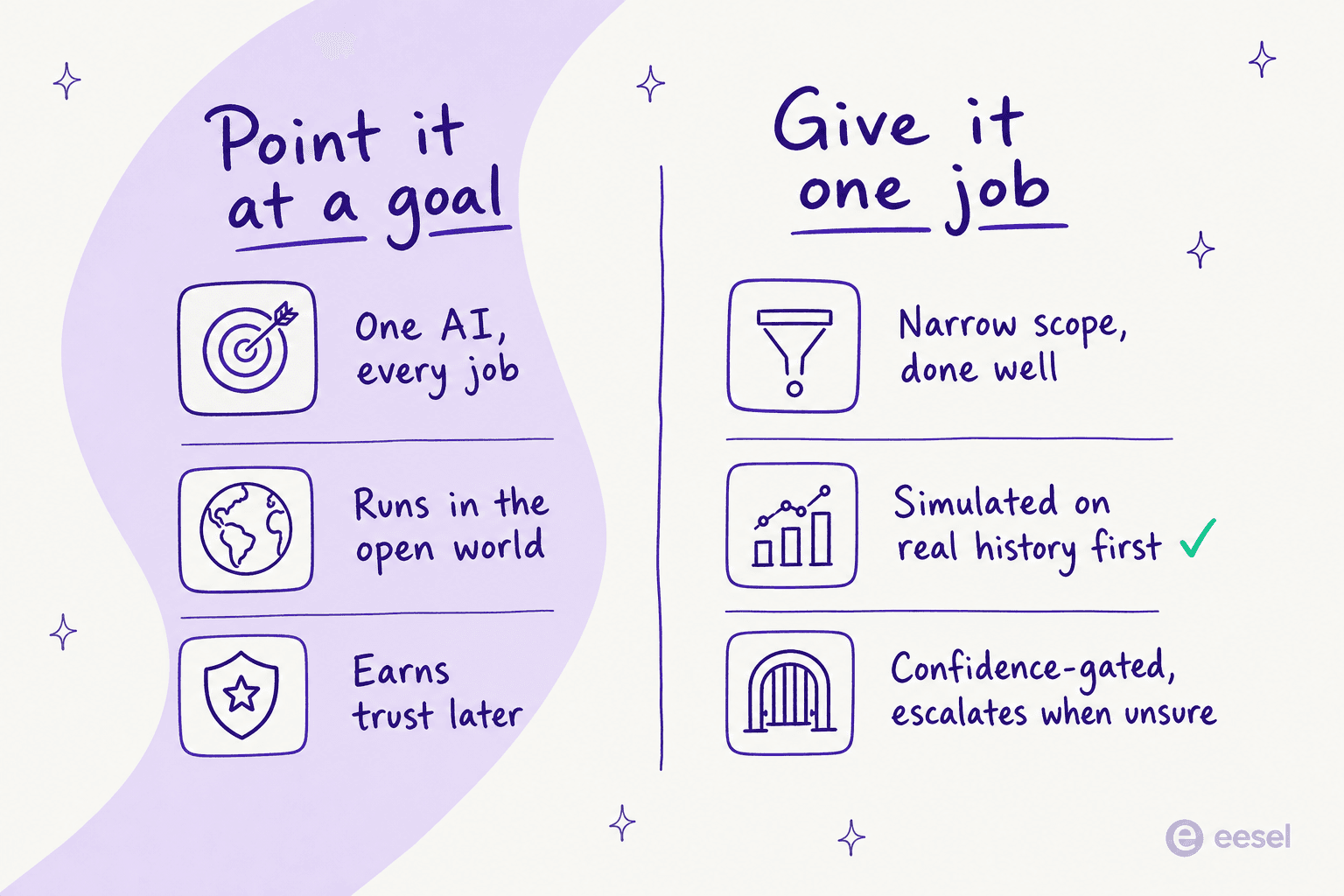
I've watched a confident-sounding bot quietly give customers wrong answers, which is why every rollout we do now gets simulated against historical tickets before it ever replies to a live customer. The most-cited objection I hear from buyers isn't "can the AI do it," it's "can I trust it not to wing it." As one CX lead at a direct-to-consumer supplements brand put it to me, the AI will never answer 100% of questions, so they need "an AI who is only handling the tickets that it's confident to handle, and all the other ones, leave them alone."
That's the whole game in a sentence. A narrow job, done with confidence-based routing so the AI escalates the moment it's unsure, beats a heroic generalist that occasionally invents a refund policy. And the "we'll just build our own autonomous agent" instinct usually loses to buying a focused one, for the reason Karel at GENERAL BYTES gave me: "we could try to write our own LLM application but we didn't want to invest our time into that. We wanted something that we would not have to maintain."
So Thomas is a fun, useful provocation. It pushes the "harness over model" idea further than anyone else, and it's worth watching. But the lesson I'd take into your own company is the unglamorous one: pick the narrow job, prove it on your real data, and gate it on confidence. That's how AI actually makes money, one reliable task at a time.
Try eesel
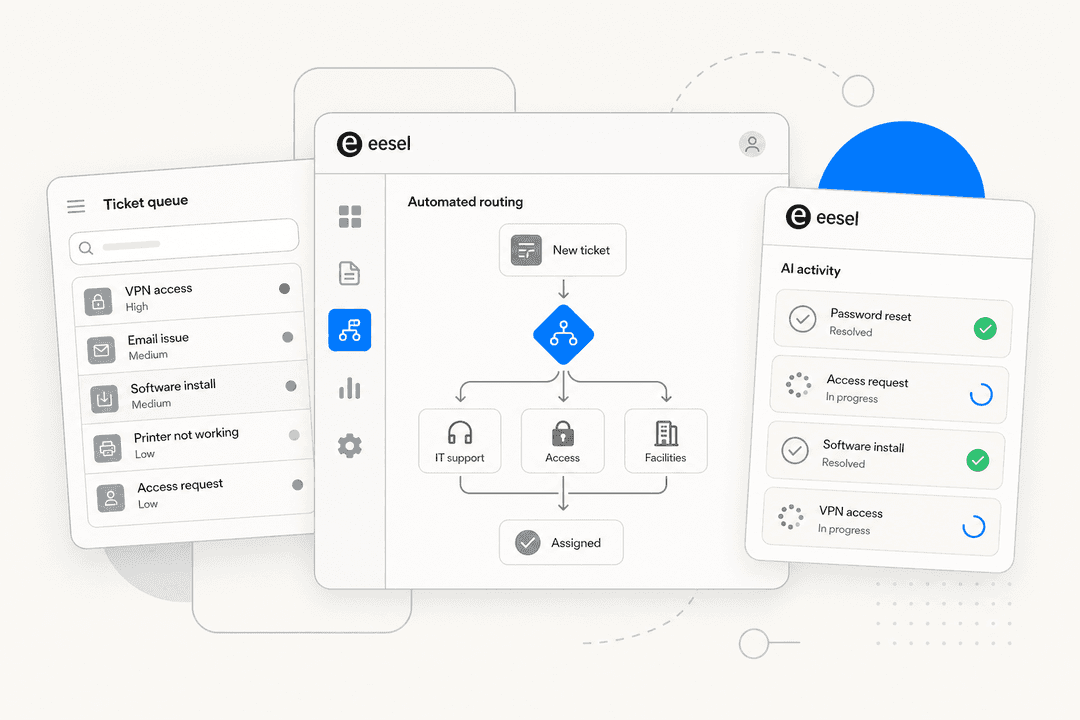
If the part of Thomas that interests you is "AI that actually does the work," that's exactly what I build at eesel AI, minus the open-ended improvisation. eesel is an AI helpdesk agent that plugs into the tools you already run (Zendesk, Freshdesk, Gorgias, Front, Slack, and 100+ integrations), learns from your past tickets and help docs on day one, and handles tier-1 support on its own, while escalating anything it isn't confident about.

The differentiator is the part Thomas's open-world bet skips: before eesel ever touches a live customer, you can simulate it against your real ticket history to see exactly what it would have said and what it would resolve. Pricing is usage-based with no per-seat fees, and there's a free trial with no credit card. Want an AI teammate that does one job well and proves it first? Try eesel free.
Frequently Asked Questions

Share this article

Article by
Rama Adi Nugraha
Rama is a software engineer at eesel AI with two years of experience writing about B2B SaaS, AI tools, and customer support technology. Based in Bali, Indonesia, he brings a developer's perspective to product comparisons — cutting through marketing copy to what the integrations and APIs actually do.