|
VOOZH | about |
|
VOOZH | about |
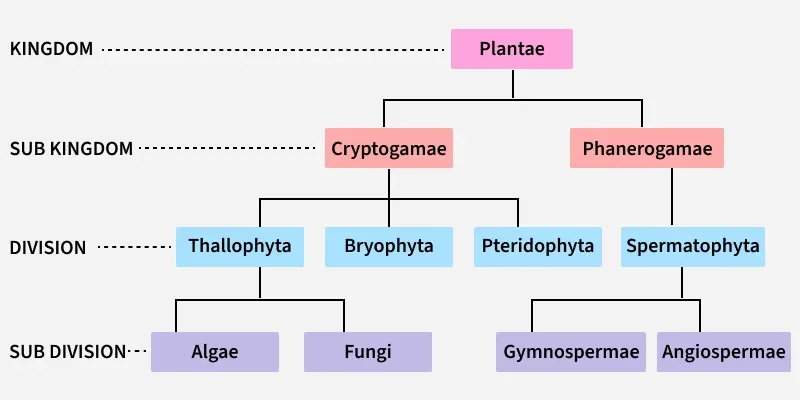
The Plant Kingdom, also known as Kingdom Plantae, is one of the five kingdoms in the classification system proposed by R. H. Whittaker. It includes a wide variety of organisms such as algae, mosses, ferns, gymnosperms, and angiosperms. All members of this kingdom are multicellular, eukaryotic, and primarily autotrophic, meaning they are capable of preparing their own food through photosynthesis.
The classification of plants is based on their structural features and modes of reproduction, which helps in understanding the diversity and complexity within the plant kingdom.
All the organisms of the plant kingdom consist of herbs, shrubs, and trees, which can manufacture their food. They have a chloroplast organelle containing chlorophyll, which is the main pigment for the process of photosynthesis. The plants help release oxygen and absorb carbon dioxide, and they utilize it to make food. Plants also play a major role in the water cycle, where they release water vapor from the tips of their leaves through transpiration.
The plant kingdom is classified into major groups based on their structure, level of organization, and mode of reproduction.
Algae are the sole members of the division Thallophyta. These are simple, autotrophic, and mostly found in aquatic habitats.
The following are some of its characteristics:
Examples: Volvox, Ectocarpus, Red algae, Chlamydomonas, etc.
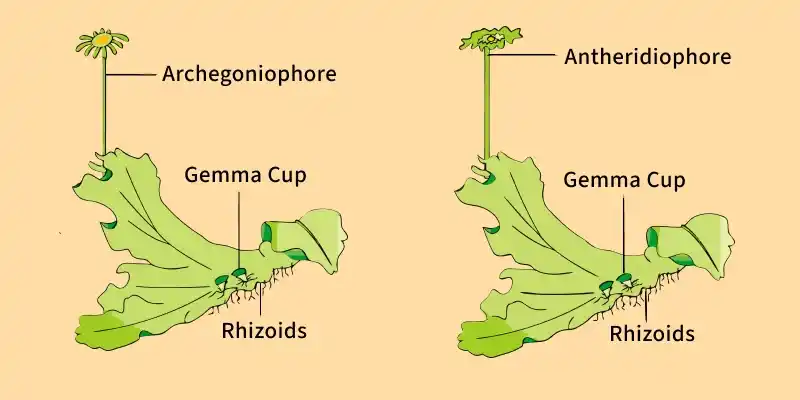
Bryophytes are called amphibians of the plant kingdom because they require water for fertilization. These include mosses and liverworts.
Some of its characteristics are:
Examples: Sphagnum, Marchantia, Funaria, etc.
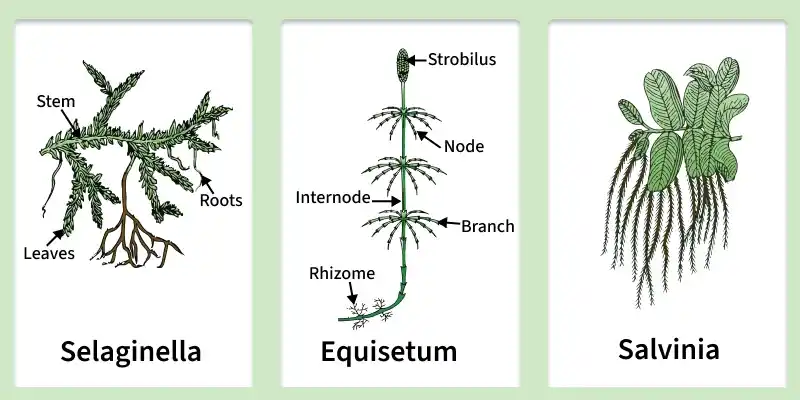
Pteridophytes are the first land plants to possess a welldeveloped vascular system. They commonly grow in moist and shady environments and include plants like ferns and horsetails. Many pteridophytes are used for ornamental purposes, and some also have medicinal value.
Some of its characteristics are:
Examples: Salvinia, Selaginella, Equisetum, etc.
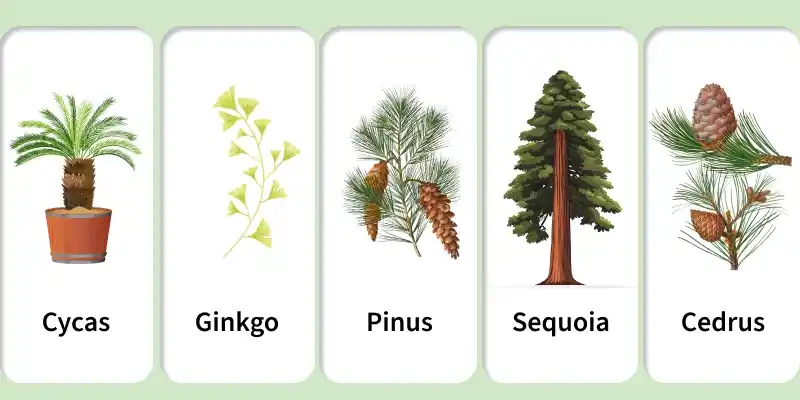
Gymnosperms are naked-seeded plants. The plants are woody and perennial and range from tall trees to dwarf shrubs.
Some of its characteristics are:
Examples: Pinus, Ginkgo, Cycas, etc.
Angiosperms are highly developed and the most advanced plants in the plant kingdom. They are plants with sporophytes organized into flowers.
Some of its characteristics are:
Examples: Wheat, Apple, Mango, Lotus, etc.
The following is the difference between monocots and dicots:
Monocots | Dicots |
|---|---|
These possess a single cotyledon. | These have two cotyledons. |
These show parallel venation. | These show reticulate venation. |
These possess trimerous flowers. | These have tetramerous or pentamerous flowers. |
Examples: Wheat, Lily, Palm | Examples: Rose, Sunflower, Pea |