Web development has grown rapidly since it began in the late 20th century. It started with basic, static pages used to share information and has evolved into dynamic, interactive websites used by billions. Today, over 95% of websites use modern web technologies to enhance user experience. This article gives a quick look at the key milestones and tools that have shaped web development over the years.
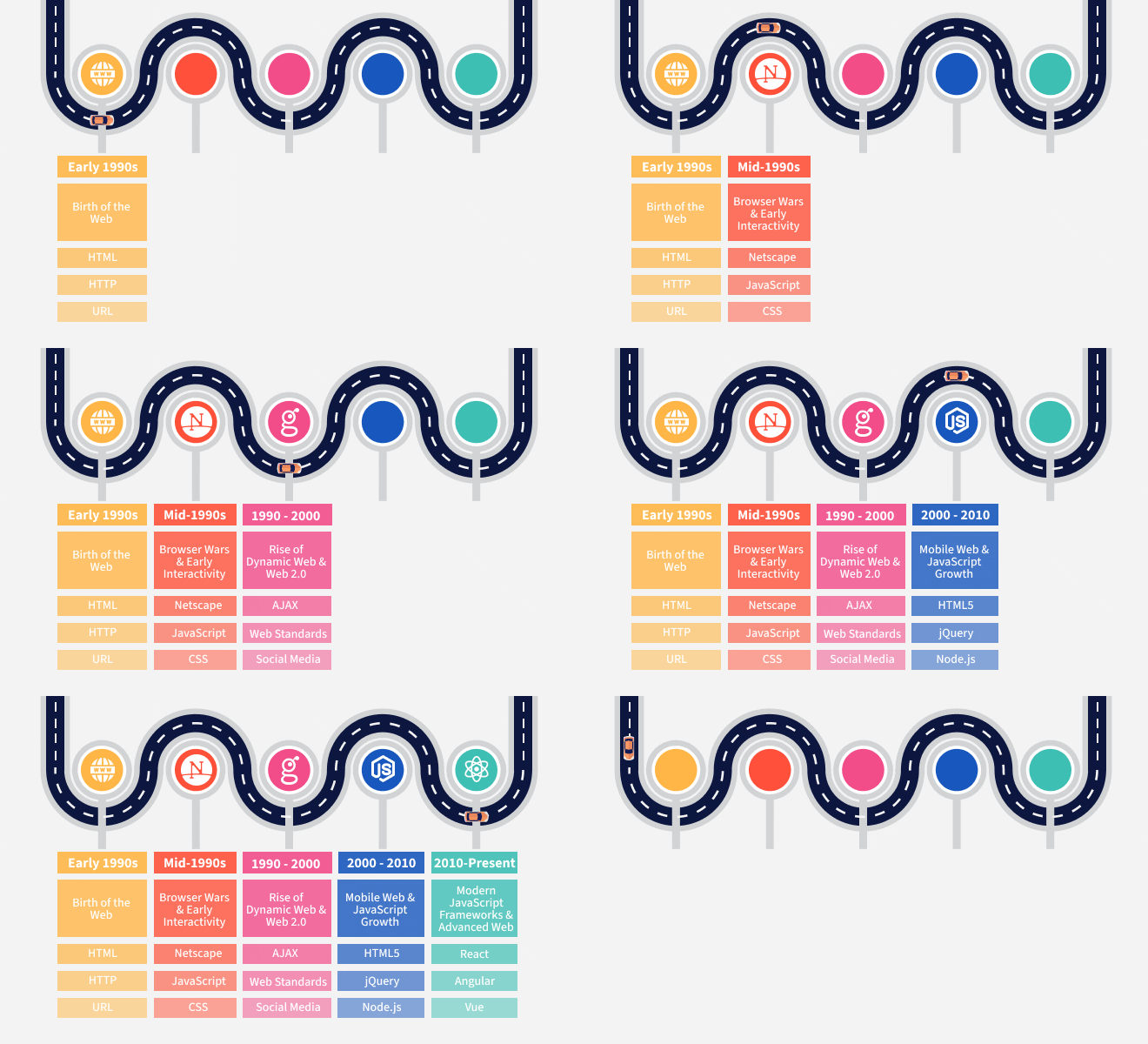
In 1990, Berners-Lee developed the first web browser (WorldWideWeb, later Nexus) and the first web server. The early web was primarily static and text-based, used mostly for academic and research information sharing.
The Browser Wars & Early Commercialization (Mid-1990s)
The mid-1990s saw rapid growth and competition:
NCSA Mosaic(1993): The release of NCSA Mosaic, the first browser to display images inline, made the web more appealing.
Netscape Navigator(1994): Netscape Navigator dominated the browser market.
Internet Explored(1995): Microsoft launched Internet Explorer, igniting the "Browser Wars" with Netscape, driving rapid innovation.
JavaScript (1995): Created by Brendan Eich at Netscape, it introduced client-side interactivity to web pages.
CSS (1996): Cascading Style Sheets separated content from presentation, allowing more flexible design.
The Rise of Dynamic Web & Web 2.0 (Late 1990s - Mid 2000s)
This period marked a shift from static to dynamic, interactive websites:
Server-side scripting: Languages like PHP, ASP, and ColdFusion enabled websites to generate dynamic content based on user input.
Web Standards Movement: The Web Standards Project pushed browsers to follow W3C standards, improving consistency.
Dot-com Boom and Bust: A surge in web-based companies followed by a market crash.
Web 2.0: Term coined by Tim O'Reilly, describing interactive, social web applications with user-generated content.
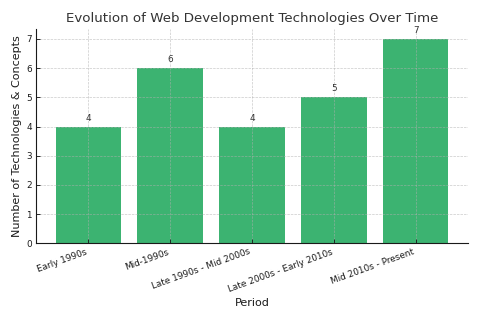
Key Insights: The evolution of web development shows steady progress from the early 1990s to today. It began with basic tools like HTML and HTTP, followed by the rise of JavaScript and server-side scripting in the late ’90s. The 2000s saw mobile-friendly design and libraries like jQuery gain traction. However, the mid-2010s to present stands out as the most impactful era, driven by powerful frameworks like React, Angular, and emerging technologies like PWAs,WebAssembly, serverless, and AI integration—making it the peak of innovation in web development.
Conclusion
The history of web development shows how creative and smart people have been in building the internet. It started with simple HTML pages and has grown into powerful, interactive websites using CSS, JavaScript, and modern web frameworks. Today,responsive designhelps websites look good on all screen sizes, and front-end, back-end, and full-stack development make websites fast and easy to use. As technology keeps changing, web developers will keep improving the web, creating new features and solving new problems.