|
VOOZH | about |
|
VOOZH | about |
Decision making in programming is similar to decision making in real life. In decision making, a piece of code is executed when the given condition is fulfilled. Sometimes these are also termed as the Control flow statements. Golang uses control statements to control the flow of execution of the program based on certain conditions. These are used to cause the flow of execution to advance and branch based on changes to the state of a program.
The Decision making statements of Go programming are:
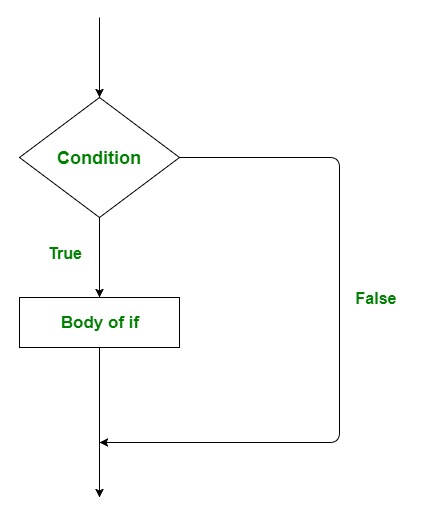
This is the most simple decision-making statement. It is used to decide whether a certain statement or block of statements will be executed or not i.e if a certain condition is true then a block of statement is executed otherwise not.
Syntax:
if condition {

 // Statements to execute if
 // condition is true
}
Flow Chart:
Example:
Output:
v is less than 1000
value of v is : 700
Time Complexity: O(1)
Auxiliary Space: O(1)
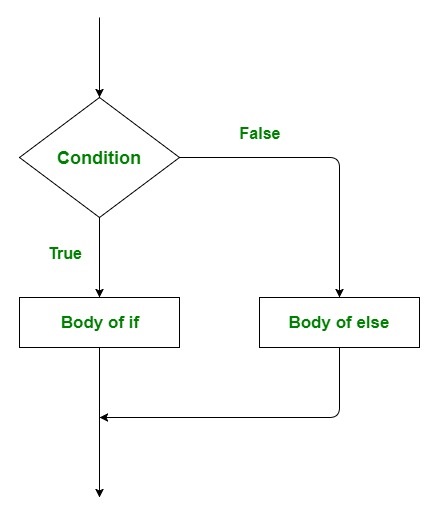
The if statement alone tells us that if a condition is true it will execute a block of statements and if the condition is false it won’t. But what if we want to do something else if the condition is false. Here comes the else statement. We can use the else statement with if statement to execute a block of code when the condition is false.
Syntax:
if condition {

 // Executes this block if
 // condition is true
} else {

 // Executes this block if
 // condition is false
}
Flow Chart:
Example:
Output:
v is greater than 1000
Time Complexity: O(1)
Auxiliary Space: O(1)
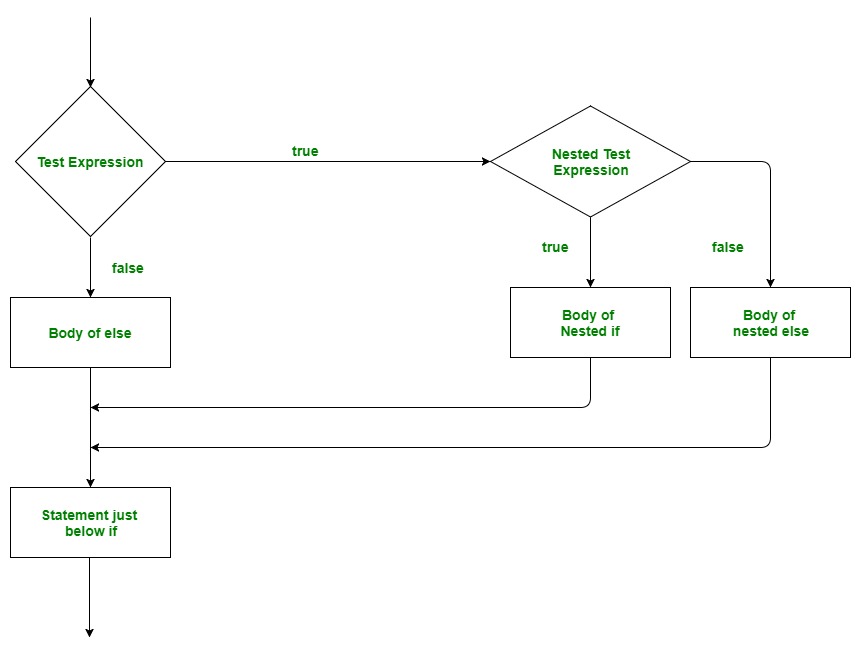
In Go Language, a nested if is an if statement that is the target of another if or else. Nested if statements mean an if statement inside an if statement. Yes, Golang allows us to nest if statements within if statements. i.e, we can place an if statement inside another if statement.
Syntax:
if condition1 {

 // Executes when condition1 is true

 if condition2 {

 // Executes when condition2 is true
 }
}
Flow Chart:
Example:
Output:
Value of v1 is 400 and v2 is 700
Time Complexity: O(1)
Auxiliary Space: O(1)
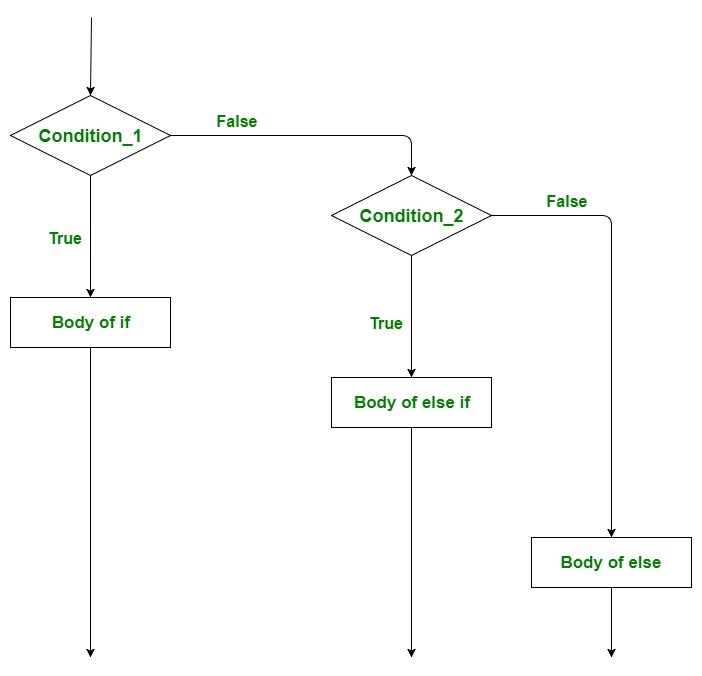
Here, a user can decide among multiple options. The if statements are executed from the top down. As soon as one of the conditions controlling the if is true, the statement associated with that if is executed, and the rest of the ladder is bypassed. If none of the conditions is true, then the final else statement will be executed.
Important Points:
Syntax:
if condition_1 {

 // this block will execute
 // when condition_1 is true

} else if condition_2 {

 // this block will execute
 // when condition2 is true
}
.
.
. else {

 // this block will execute when none
 // of the condition is true
}
Flow Chart:
Example:
Output:
None of the values is matching
Time Complexity: O(1)
Auxiliary Space: O(1)