|
VOOZH | about |
|
VOOZH | about |
Cloud computing provides on-demand access to virtualized computing resources over the internet. Instead of owning and maintaining physical infrastructure, organizations use a pay-as-you-go model (via providers like AWS, GCP, or Azure) to store data, run applications, and scale dynamically.
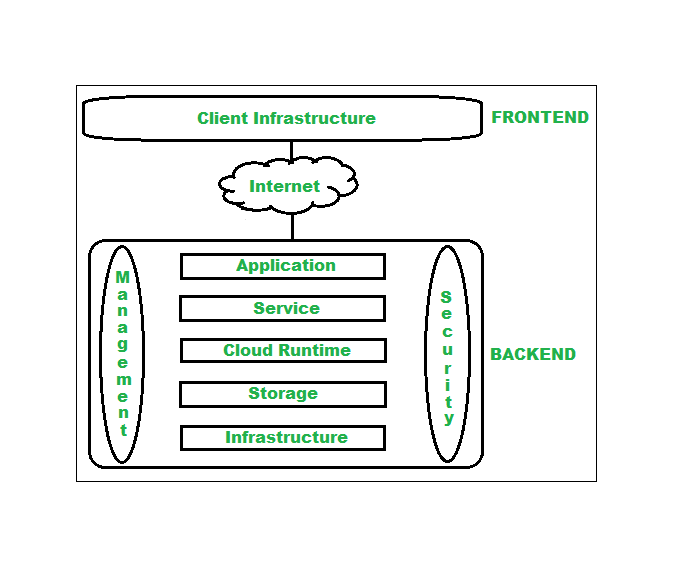
At its core, cloud computing architecture is a combination of Service-Oriented Architecture (SOA) and Event-Driven Architecture (EDA). It is broadly divided into two main sections that communicate via the internet: the Frontend and the Backend.
The frontend is the visible side of the cloud computing system. It contains all the user interfaces and client infrastructure required for end-users to interact with the cloud.
The backend is the "cloud" itself. Managed by the service provider, it houses the core resources, manages traffic, deploys models, and enforces security.
| Component | Description |
|---|---|
| Application | The actual software or platform the client accesses, running in the backend to fulfill user requests. |
| Service | Manages the specific type of cloud service being delivered to the user (e.g., SaaS, PaaS, IaaS). |
| Runtime Cloud | Provides the execution environment for virtual machines. Modern setups often utilize container orchestration platforms like Kubernetes to dynamically manage and scale these runtime workloads. |
| Storage | Provides flexible, scalable storage for data management (e.g., object storage, block storage). |
| Infrastructure | The foundational hardware and virtualization software (servers, network devices). Modern environments typically manage this layer using Infrastructure as Code (IaC) to automate provisioning and scaling. |
| Management | The control plane responsible for allocating resources, monitoring performance, and managing all other backend components. |
| Security | Implements robust mechanisms (like Identity and Access Management) to secure cloud resources, networks, and data from unauthorized access. |
| Database | Provides managed environments for storing structured or unstructured data, such as SQL (Amazon RDS) or NoSQL databases. |
| Networking | The infrastructure that directs traffic, including load balancers, DNS, and Virtual Private Networks (VPNs/VPCs). |
| Analytics | Built-in capabilities for data warehousing, business intelligence, and machine learning pipelines. |
Note: The Internet acts as the crucial bridge establishing communication between the frontend client and the backend cloud resources.
Here is how these architectural components work together in everyday platforms:
1. Online Learning Platforms (e.g., GeeksforGeeks) Behind the scenes of educational platforms, strong DevOps and Site Reliability Engineering (SRE) practices ensure high availability for students worldwide.
2. E-Commerce Websites (e.g., Amazon, Flipkart) When you browse an online store, you are interacting with the frontend GUI.
3. Mobile Food Delivery Apps (e.g., Zomato, Swiggy) When you order food via the frontend mobile app, complex cloud routing happens instantly.
Implementing a well-designed cloud architecture yields significant operational advantages: