|
VOOZH | about |
|
VOOZH | about |
Virtualization is the fundamental technology that powers Cloud Computing. It allows you to create multiple simulated environments (Virtual Machines or VMs) from a single physical hardware system. Before virtualization, a physical server could only run one Operating System (OS) and often one task. This wasted massive amounts of resources if your app only used 10% of the CPU, the other 90% was idle.
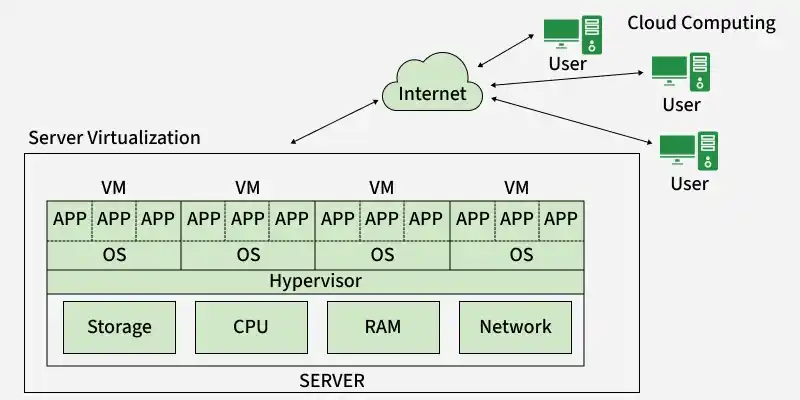
At the heart of virtualization is a piece of software called the Hypervisor.
The hypervisor enables multiple VMs to share the same physical hardware while remaining isolated from each other.
Virtualization uses a software layer called a Hypervisor to create multiple virtual computers, known as Virtual Machines (VMs), on a single physical computer. These virtual machines behave like independent computers while sharing the resources of the same physical machine.
Understanding the difference between Type 1 and Type 2 hypervisors is critical for system architects.
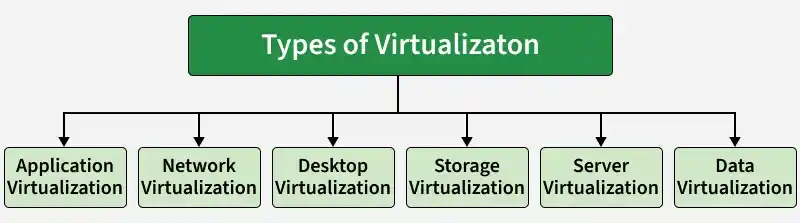
Application Virtualization allows applications to run independently of the underlying operating system. Users can access and use applications without installing them directly on their devices.
Key Features
Example: Using Microsoft App-V or Citrix Virtual Apps, a user can run Microsoft Excel on an iPad. The application executes on a remote server, while the user interacts with it through their device.
Use Cases
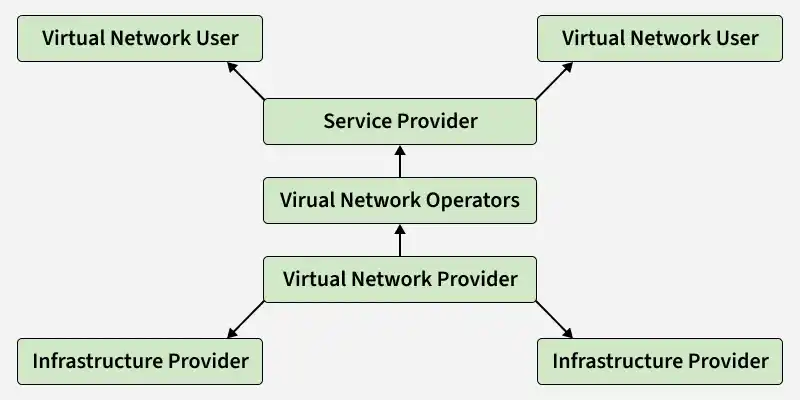
Network Virtualization separates network services such as routing, switching, and firewall management from the underlying physical network hardware. This enables networks to be managed and configured through software, forming a Software-Defined Network (SDN).
Key Features
Example: AWS Virtual Private Cloud (VPC) allows users to create virtual networks, subnets, route tables, and security groups through software without configuring physical routers or switches.
Use Cases
Desktop Virtualization is a technology that hosts a user's desktop environment on a centralized server instead of a local computer. Users access their desktops remotely through devices known as thin clients or other endpoint devices.
Key Features
Example: Amazon WorkSpaces provides cloud-based virtual desktops. An employee can log in from a Chromebook, tablet, or laptop and access a full-featured Windows 11 desktop running in the AWS Cloud.
Use Cases
Storage Virtualization combines physical storage resources from multiple storage devices into a single virtual storage pool that can be managed centrally. Users see a single storage system, while the data may be distributed across many physical disks and servers.
Key Features
Example: A Storage Area Network (SAN) or Amazon S3 presents storage as a single system. For example, when using an Amazon S3 bucket, users see one storage location, but the data is actually distributed across many physical servers and hard drives behind the scenes.
Use Cases
Server Virtualization is the process of dividing a single physical server into multiple virtual servers, known as Virtual Machines (VMs). Each VM operates independently with its own operating system, applications, and resources.
Key Features
Example: Using VMware vSphere, a company can run a Linux Web Server, a Windows Database Server, and a Linux Mail Server on the same physical machine.
Use Cases
Data Virtualization is a technology that creates an abstract layer between users and data sources, allowing data from multiple systems to be accessed as if it were stored in a single location. The data remains in its original source and is not physically moved or copied.
Key Features
Example: Using Denodo or Oracle Data Service, a dashboard can retrieve Sales Data from both a SQL database and a cloud data lake, presenting it as a single dataset to the user.
Use Case
These terms are often confused, but they are not the same.
| Feature | Virtualization | Cloud Computing |
|---|---|---|
| Definition | Technology that creates virtual versions of hardware. | Service that delivers shared computing resources via the internet. |
| Relationship | The Tool. Virtualization is the software technology. | The Service. Cloud Computing is the result or service built using virtualization. |
| Ownership | You usually own/manage the hardware (unless using Cloud). | You rent resources; the provider owns the hardware. |
| Focus | Maximizing hardware efficiency. | Maximizing user agility and scalability. |