|
VOOZH | about |
|
VOOZH | about |
Google Compute Engine is a core compute service of Google Cloud Platform that delivers Infrastructure as a Service (IaaS). It enables users to create, configure, and manage virtual machines on Google’s global infrastructure.
The service follows a pay-per-use pricing model, ensuring users pay only for the resources they consume.
A Virtual Machine is a software-based emulation of a physical computer that runs its own operating system and applications on shared cloud hardware. With the help of a Virtual Machine, a user can deploy various applications on the cloud, host a website, create and manage APIs as well as Microservices and many more cloud services.
In this article, I will walk you through a step-by-step guide on how to use a computing engine to Launch and Manage Virtual Machines.
Step 1: Goto GCP Cloud Console
Step 2: Create a project
If you haven't created a GCP account or a project in GCP, you can refer to this article.
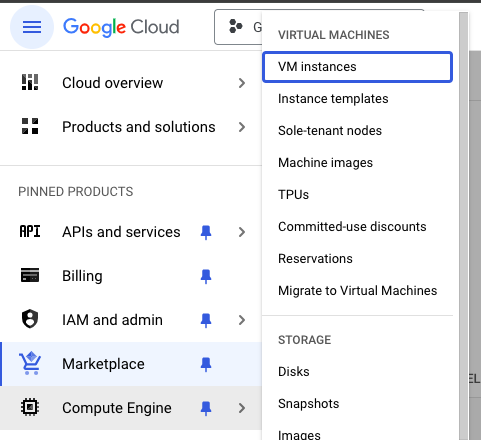
Step 3: Navigate to Compute Engine -> VM Instances
Step 4: Enable Compute Engine API if not done already
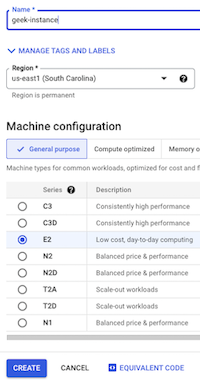
Step 5: Create a new instance
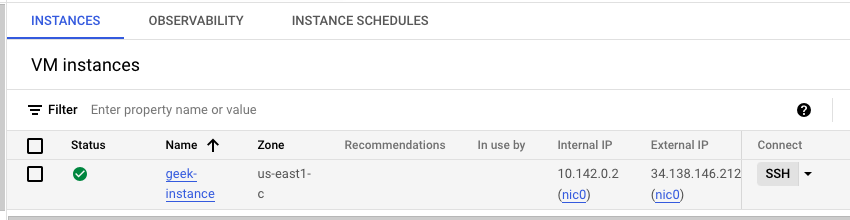
Step 6: Connect to the VM instance
Step 7: (Optional) Connect to VM instance from local computer.
ssh YOUR_USERNAME@VM_EXTERNAL_IP
You can get the username and VM_EXTERNAL_IP from the GCP console.
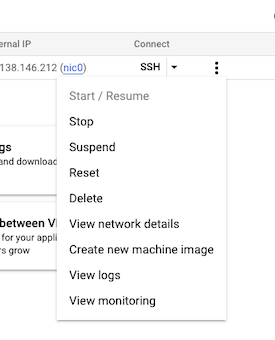
Step 1: Start, Stop or Resize the VM instance
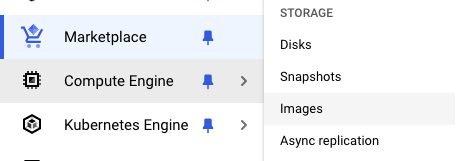
Step 2: Create a custom image or snapshot.
Step 3: Creating health checks
Navigate to Compute Engine -> Health Checks same as above. Health checks are used to check whether applications in VMs respond to requests. You can create health checks for the applications in your VM instance.
Congratulations, you have successfully launched and managed a VM instance using GCE. In this way, you can easily launch and manage VM instances using the Compute Engine option. Do explore and experiment with various options provided by GCE.