|
VOOZH | about |
|
VOOZH | about |
A data center consumes the power that can otherwise be used to power thousands of homes, that huge level of power consumption is what makes data center and environmentalists look for ways to reduce power usage and make data centers for more energy-efficient than they currently are. Virtualization is the answer to resolving the power consumption of data centers. One of the primary goals of almost all forms of virtualization is to make efficient use of resources including energy. Simply defining virtualization is to make a single piece of hardware function as multiple parts. Different user interfaces isolate different parts of hardware thereby making each one behave and function as an individual, separate entity.
In the context of data centers, virtualization is installing virtual infrastructure that allows several operating systems and applications to sum on a lesser number of servers, helping to reduce overall energy used for data centers. Once the number of servers is reduced it also means that data centers can reduce the building size as well. Some of the advantages of virtualization which directly impacts efficiency and contribute to the environment include:
The energy saved per server would translate into approximately 700 kilowatt-hour per year which is big with such tremendous potential for energy saving, virtualization is the best to practice green computing especially data centers in India.
It allows a logical and abstract view on the physical resource and individual server, datastore, network, and software. The basic concept of virtualization is to pool physical resources and manage them in a single unit. Simply, we can say that virtualization is the process that provides the facility to create different views of the services available to a different user.
Virtualization process can be classified into 5 types:
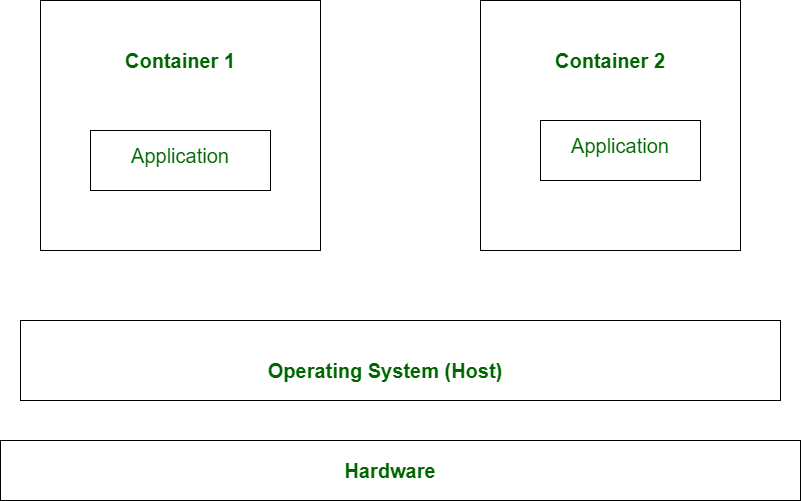
1. Operating system Virtualization: The use of OS virtualization is to help solve security problems. For this type of virtualization, the OS plays a major role, in these multiple identical systems that can run under one OS kernel.
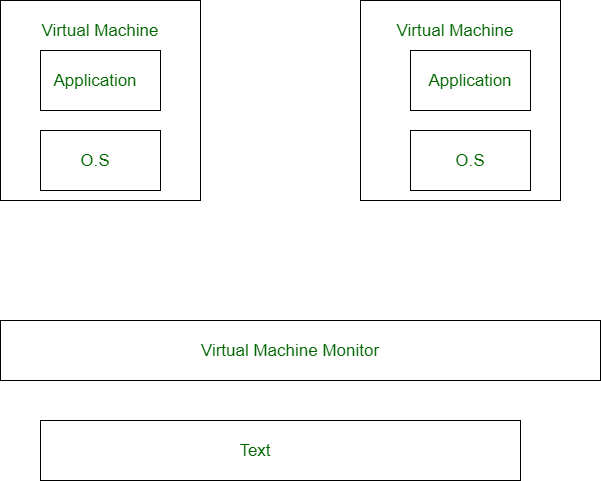
2. Platform Virtualization: This type of virtualization allows us to run any desired OS and application in a virtual environment. There are two different methods for platform virtualization:
3. Storage Virtualization: Cloud systems also offer dynamically scalable storage space as a service. In this context storage virtualization has several advantages. To separate the datastore from the classical file server and to pool the physical storage system is the basic criteria of storage virtualization.
4. Network Virtualization: The technique such as load balancing is required in this environment because it must be possible to dynamically scale the services offered. Network Virtualization is also used by local networks and virtual services.
5. Application Virtualization: It encapsulates computer programs from the underlying operating system on which they are executed. Its advantages are: