Mobile Application Security is the practice of protecting mobile apps, user data, backend services and mobile devices from cyber threats, unauthorized access, malware, reverse engineering and data breaches.
Secure coding practices to prevent common vulnerabilities.
App integrity checks to detect tampering or unauthorized changes.
Protection against malware and reverse engineering (e.g., obfuscation, anti-debugging).
Defense against network-based attacks (e.g., TLS, certificate pinning).
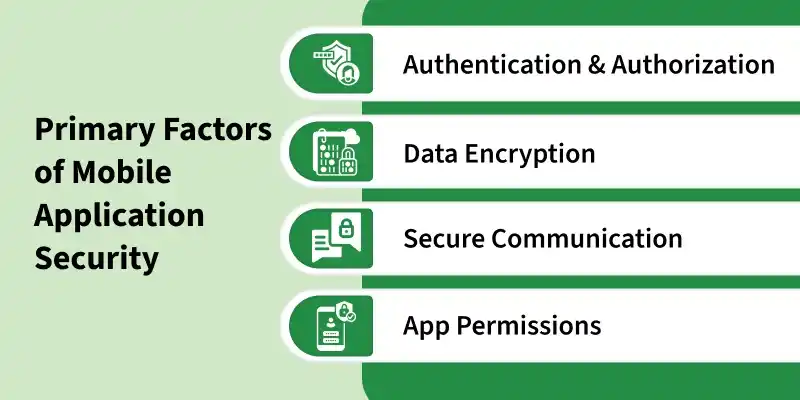
Encryption protects sensitive information stored on devices and transmitted across networks. AES-256 encryption, TLS/HTTPS communication, Secure cryptographic key management.
Data at Rest: Protects locally stored information
Data in Transit: Secures communication between app and server
3. Secure Communication
Applications constantly exchange data with APIs and cloud infrastructure. Secure communication channels prevent attackers from intercepting or manipulating traffic.
HTTPS enforcement
TLS implementation
Certificate pinning
API authentication
4. App Permissions
Applications should request only the permissions required for core functionality.
Camera access
Location services
Contacts
Microphone usage
5. Secure Code Practice
Secure development reduces the possibility of exploitable vulnerabilities.
Input validation
Secure API usage
Proper exception handling
Dependency management
Regular code reviews
5. Secure Storage Mechanisms
Sensitive data should never be stored insecurely on mobile devices.
Android Keystore
iOS Keychain
Encrypted local storage
Token-based authentication systems
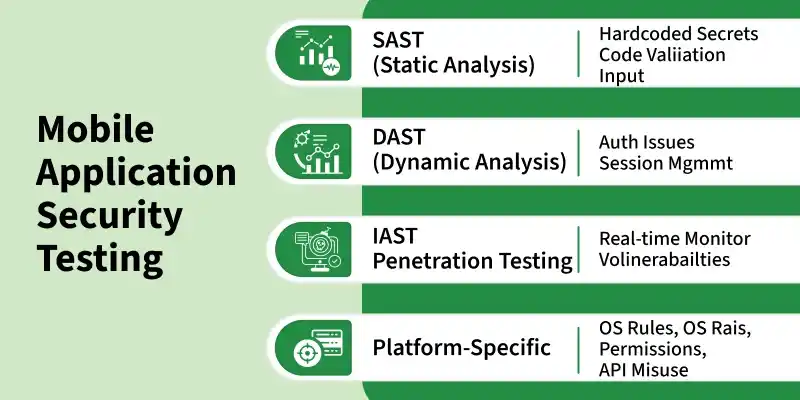
Types of Security Testing
Security testing helps identify weaknesses before attackers exploit them.