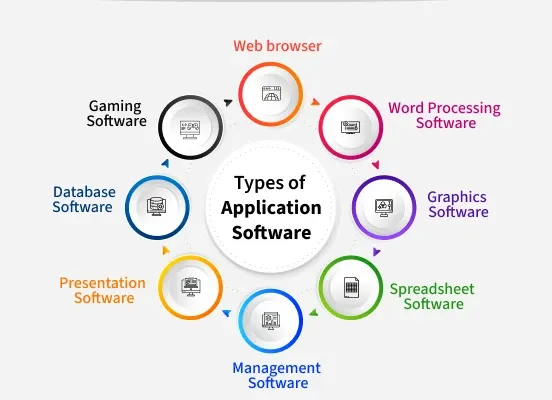
Application software is a type of computer program designed to help users perform specific tasks or functions. These tasks can range from writing documents and editing photos to managing finances or browsing the internet.
Unlike system software (which runs the computer itself), application software focuses on what the user wants to do.
Examples include Microsoft 365 for work, Google Chrome for browsing, and mobile apps like WhatsApp. New tools like Grammarly for writing and Canva for design use AI to make tasks easier and improve the user experience in many fields.
Functions of Application Software
Application software in 2025 is more versatile than ever, leveraging AI, machine learning, and cloud integration to streamline tasks.
Data Management and Analytics: Tools like Microsoft Excel, Tableau, and Power BI enable users to organize, analyze, and visualize massive datasets with AI-driven insights.
Document and Workflow Management: Software like Google Docs and Notion supports real-time collaboration, document automation, and cross-platform syncing.
Multimedia and Content Creation: Adobe Creative Cloud, Figma, and CapCut offer advanced tools for designing graphics, editing videos, and creating immersive AR/VR content.
Communication and Collaboration: Platforms like Zoom, Slack, and Microsoft Teams integrate AI transcription, virtual avatars, and cross-device compatibility for seamless teamwork.
Financial Operations: QuickBooks, Xero, and blockchain-based platforms like RippleNet automate accounting, payroll, and secure transactions.
Business Optimization: ERP systems (SAP S/4HANA) and CRM platforms (Salesforce, HubSpot) use predictive analytics to streamline operations and customer engagement.
Project Management: Tools like ClickUp and Asana incorporate AI to automate task prioritization and resource allocation.
Education and Training: Learning Management Systems (LMS) like Canvas and AI-driven platforms like Duolingo personalize learning experiences.
Healthcare Solutions: Epic Systems and AI-powered telehealth apps like Teladoc optimize patient care, diagnostics, and medical record management.
These functions reflect how application software adapts to 2025’s tech trends, prioritizing automation, personalization, and scalability.
Need for Application Software
End-users can use "application software" to conduct single or many tasks. Following are a few reasons to need application software in computers:
Helps the user in completing specified tasks: Application software is designed with the user in mind. They help the end-user with specialized tasks in a variety of industries, including education, business, and entertainment.
Manages and manipulates data: Business companies utilize application software to manage and manipulate employees, customers, and other databases. Enterprise resource management systems and customer relationship management systems are two common examples of application software.
Allows users to effectively organize information: Individual users can use application software to efficiently create and handle large amounts of data. Microsoft Excel, for example, is popular application software that allows users to manage datasheets.
Types of Application Software
Application software is categorized by its purpose, accessibility, and licensing model. Below are the main types in 2025:
By Purpose
Word Processing Software: Creates and edits documents with advanced formatting. Examples: Microsoft Word, Notion.
Spreadsheet Software: Manages numerical data with AI-enhanced calculations. Examples: Google Sheets, Microsoft Excel.
Presentation Software: Designs interactive, multimedia-rich presentations. Examples: Microsoft PowerPoint, Prezi.