Amazon SageMaker is a fully managed Machine Learning service provided by AWS that helps developers and data scientists build, train, and deploy machine learning models quickly and efficiently in the cloud.
Provides tools for building, training, and deploying ML models. Supports real-time and batch predictions. Integrates with AWS services like Lambda, S3, and API Gateway. Helps automate Machine Learning workflows. Reduces infrastructure management for developers. This project demonstrates how to deploy a Machine Learning model using Amazon SageMaker and integrate it with a custom web application using AWS services.
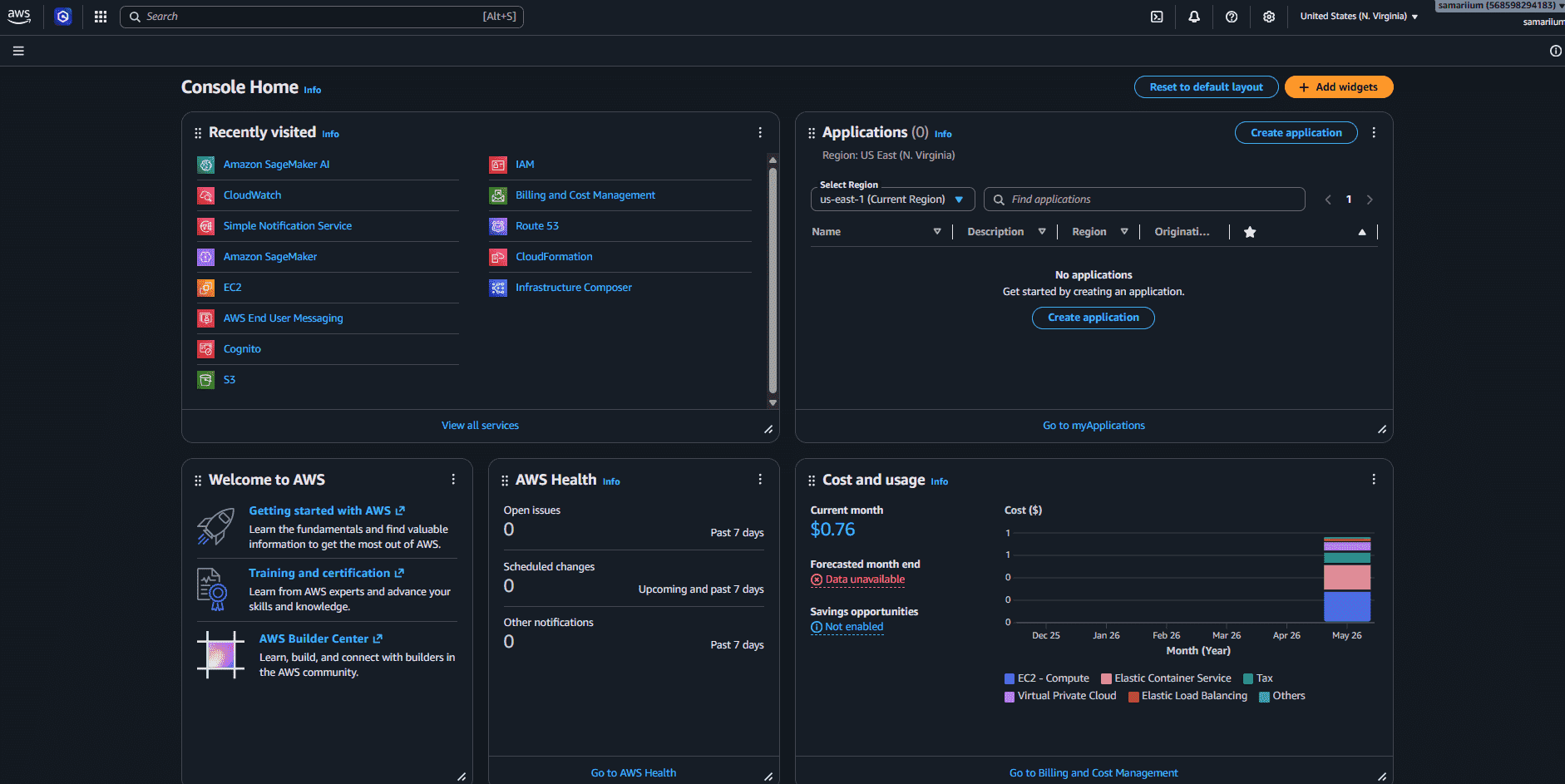
Steps Step 1: Create a SageMaker Notebook 1. Open AWS Console.
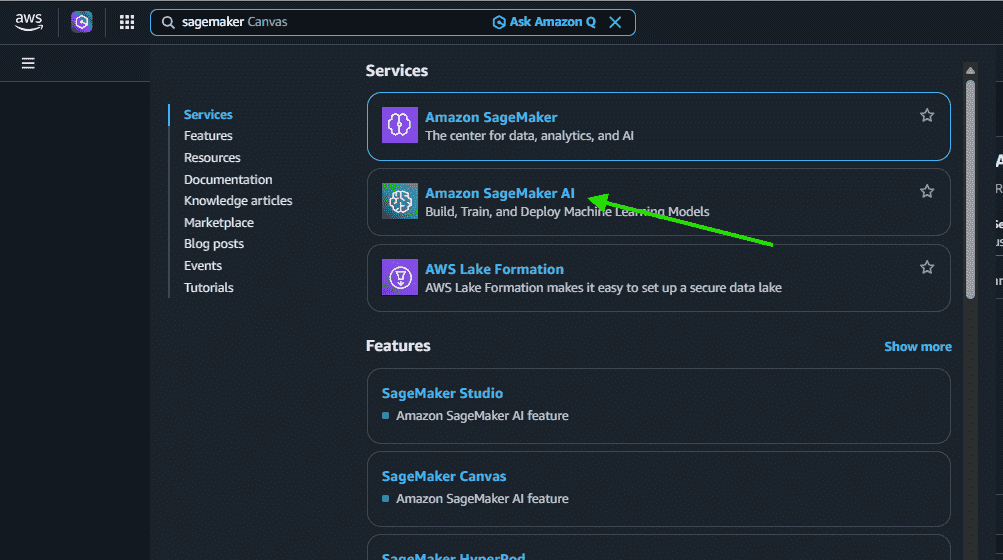
👁 Screenshot-2026-05-28-102337 2. Search for Amazon SageMaker AI in the AWS search bar and open the service.
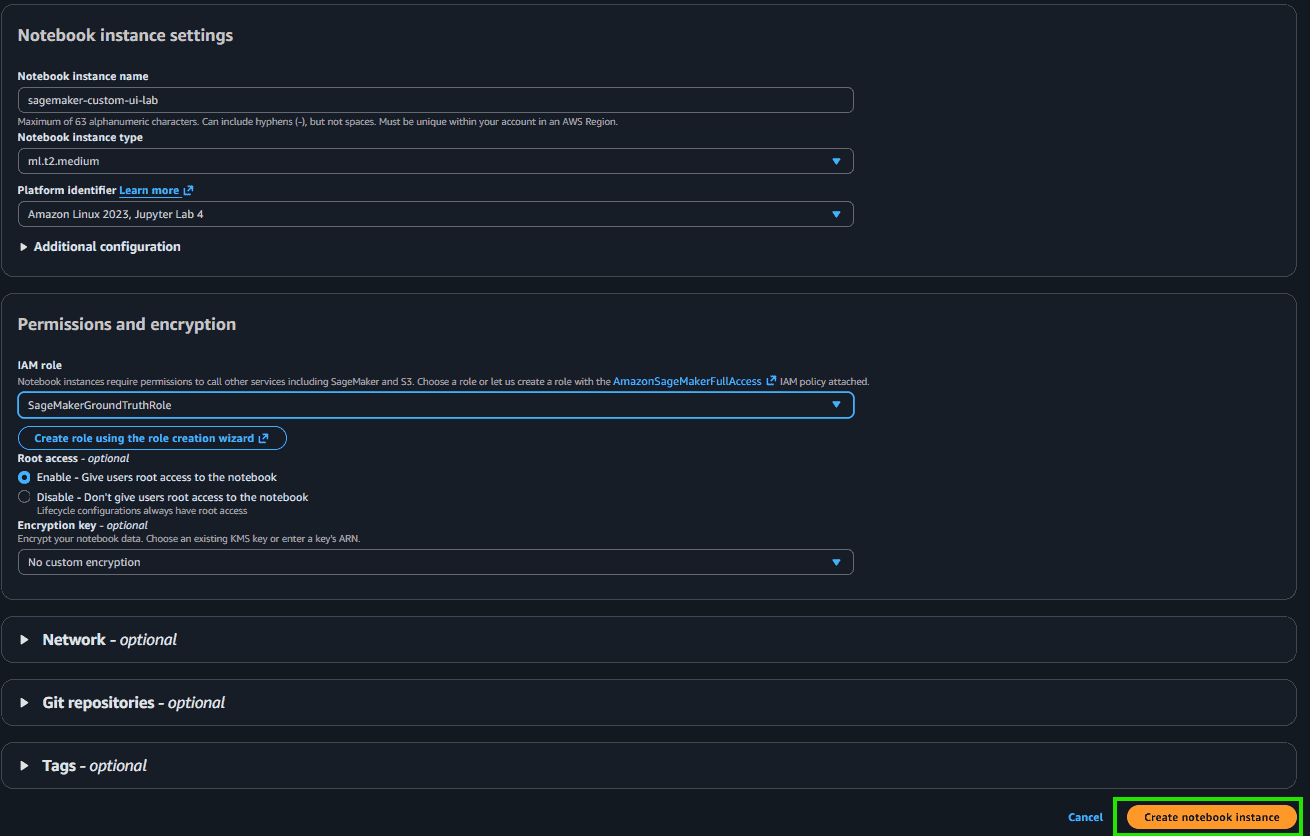
👁 Screenshot-2026-05-28-102458 3. Create a Notebook Instance
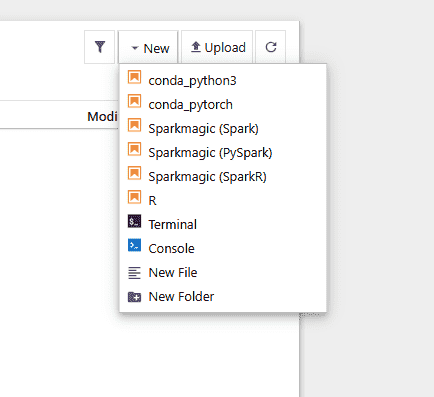
Enter the notebook instance name as “sagemaker-custom-ui-lab”. Choose notebook instance type “ml.t2.medium”. Select an existing IAM role or create a new IAM role. Click “Create notebook instance”. Wait until status becomes "InService". 👁 Screenshot-2026-05-28-102954 Step 2: Train a Simple Machine Learning Model in SageMaker 1. Open Jupyter Notebook.
Click new and choose "conda_python3". 👁 Screenshot-2026-05-28-103720 2. Run This Model
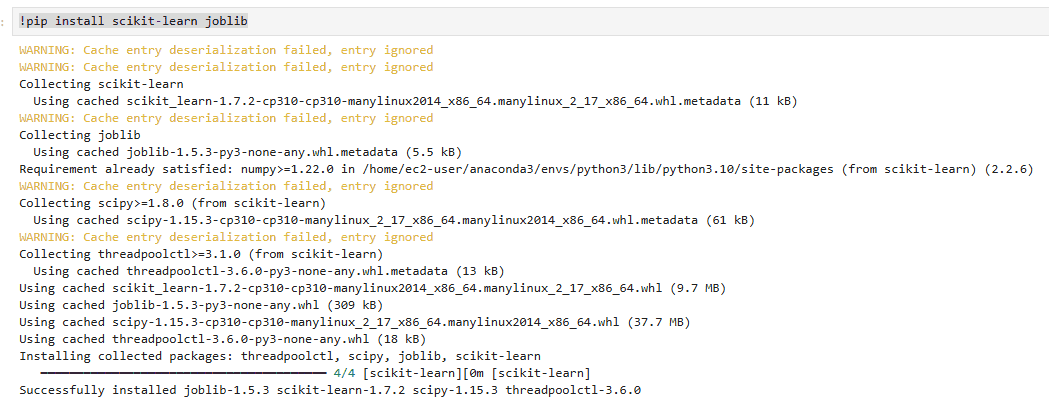
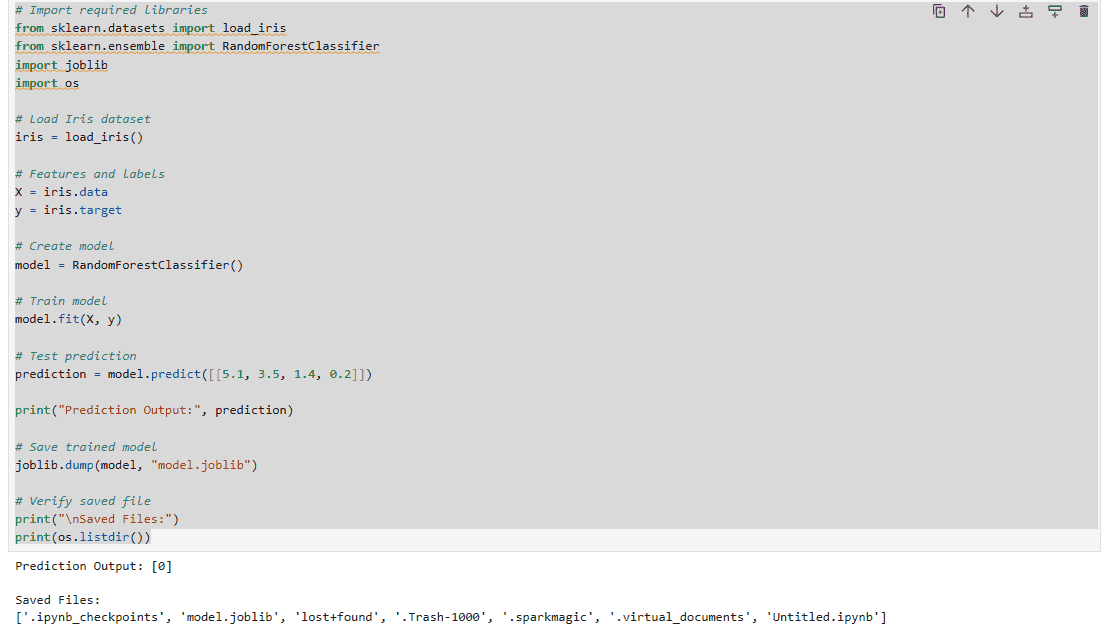
First, run the following command in a new notebook cell to install the required libraries. 👁 Screenshot-2026-05-28-104447 Add a new Cell and Run this. 👁 Screenshot-2026-05-28-104516 3. Download the Model file
Click the Jupyter logo to open the file explorer. Locate the file named “model.joblib”. Select the file by checking the checkbox beside it. Click “Download” to save the file to your system. Step 3: Upload the Model file to Amazon S3 Open Amazon s3. Create a Bucket. Configure Bucket. Choose Name “sagemaker-custom-ui-username”. Keep default setting. Click on “Create bucket”. Open the Bucket. Upload Model file. Verify Upload. 👁 Screenshot-2026-05-28-105455 Step 4: Deploy Model to SageMaker Endpoint Important Note
SageMaker deployment requires:
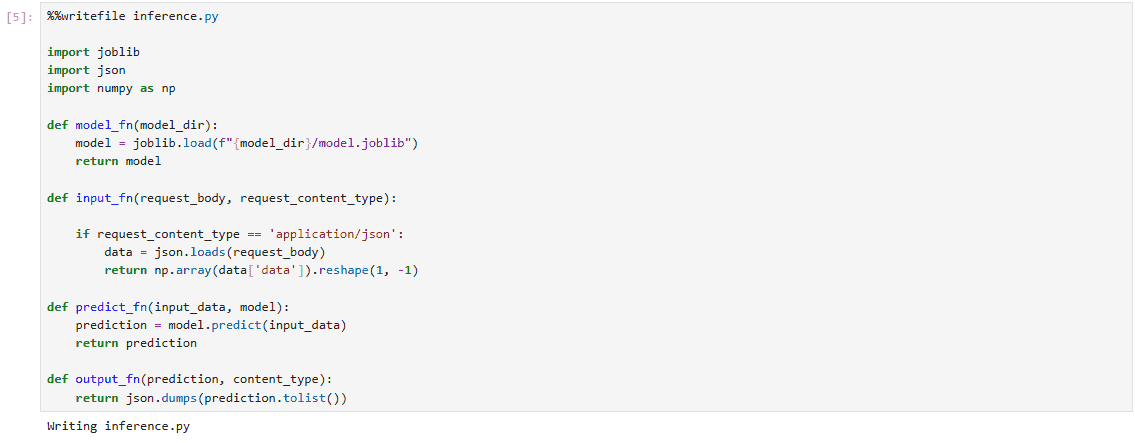
A model archive (model.tar.gz) An inference script (inference.py) So first we will create these files inside Jupyter.
1. Create inference.py in a New Cell.
👁 Screenshot-2026-05-28-105823 2. Create model.tar.gz
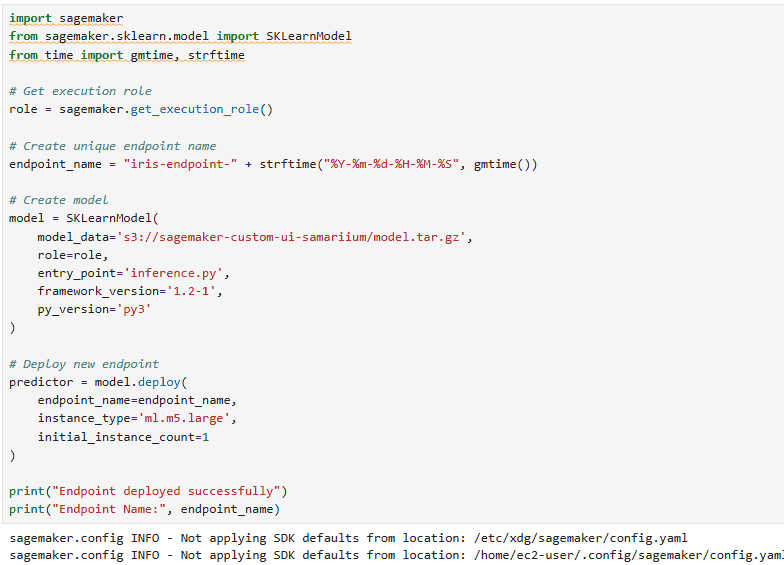
Create another new cell and run. 👁 Screenshot-2026-05-28-144007 Download the model.tar.gz file. Upload the model.tar.gz on S3. Copy the S3 URI of model.tar.gz "s3://your-bucket-name/model.tar.gz". 3. Deploy Endpoint
Create another new cell and run. Replace: "YOUR_S3_PATH" with the S3 URI that you copied. 👁 Screenshot-2026-05-28-145035 4. Endpoint Testing
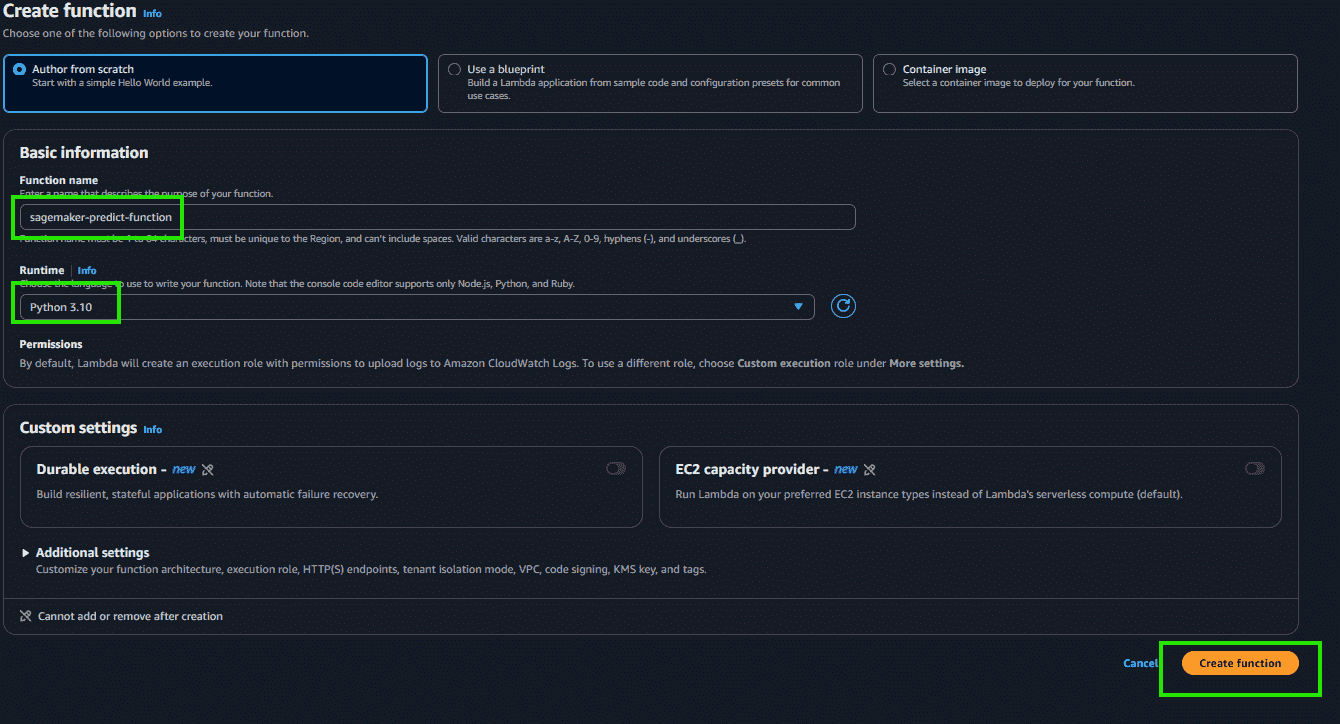
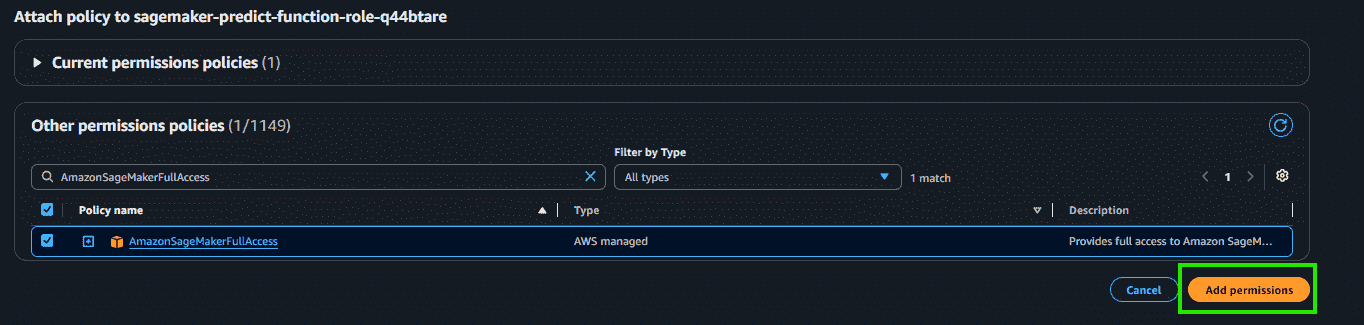
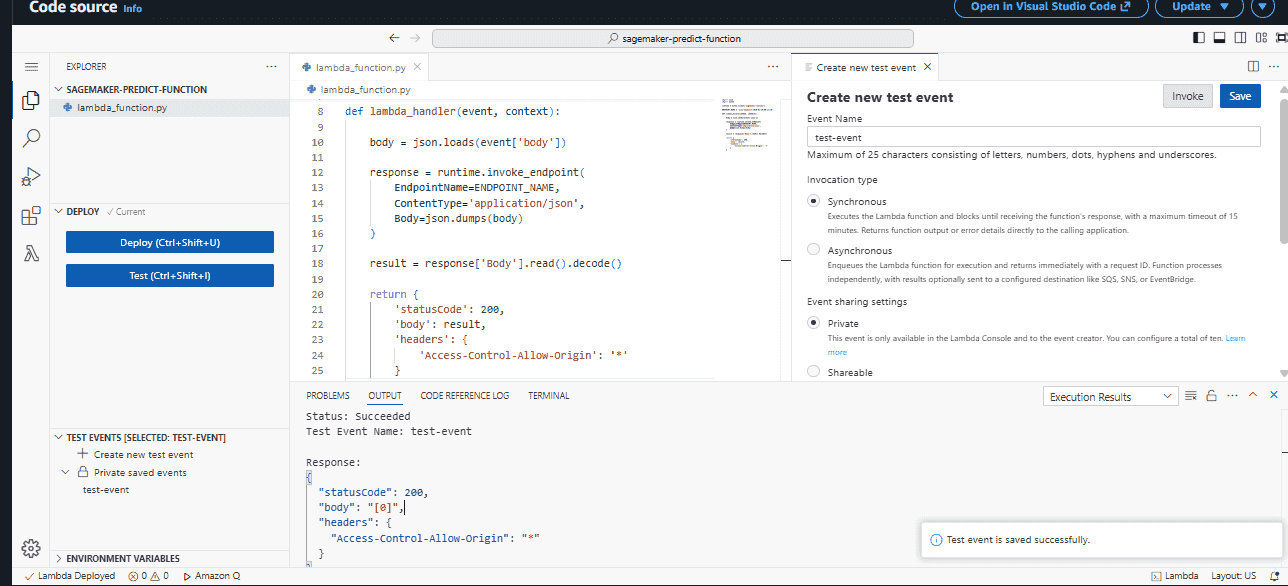
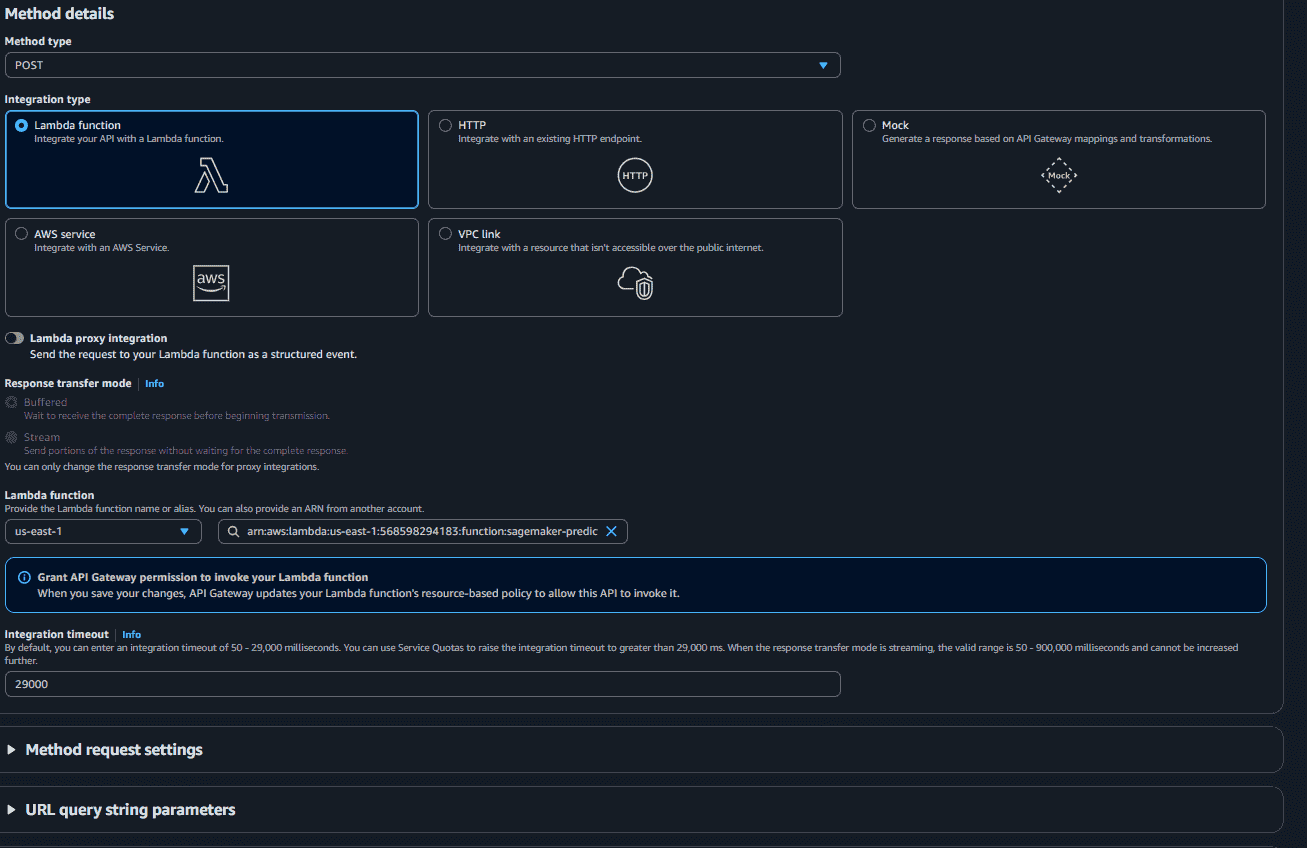
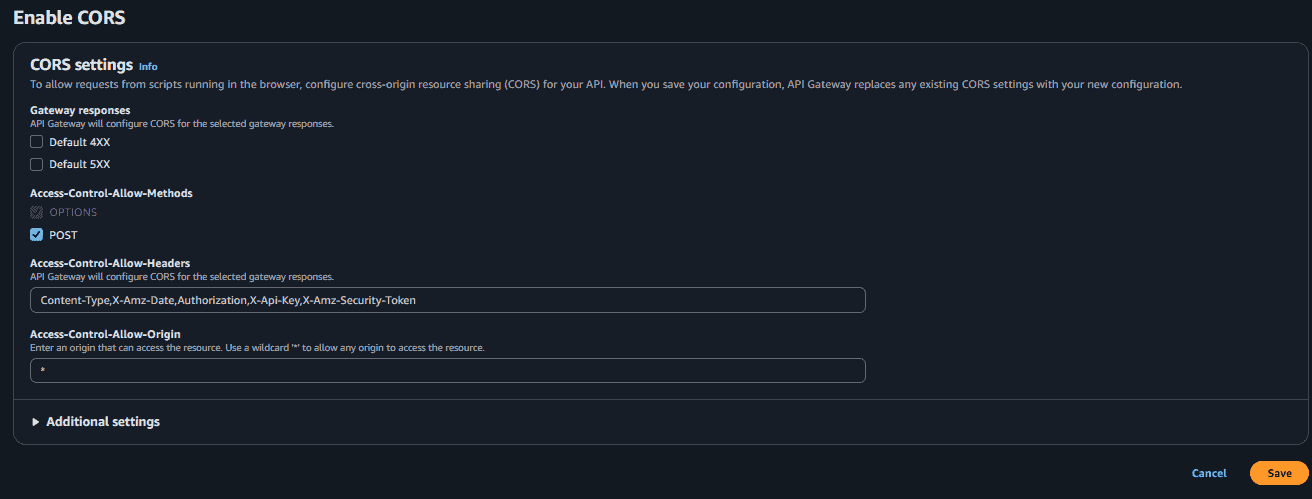
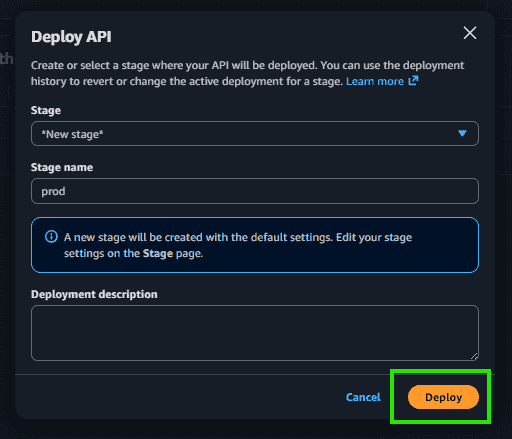
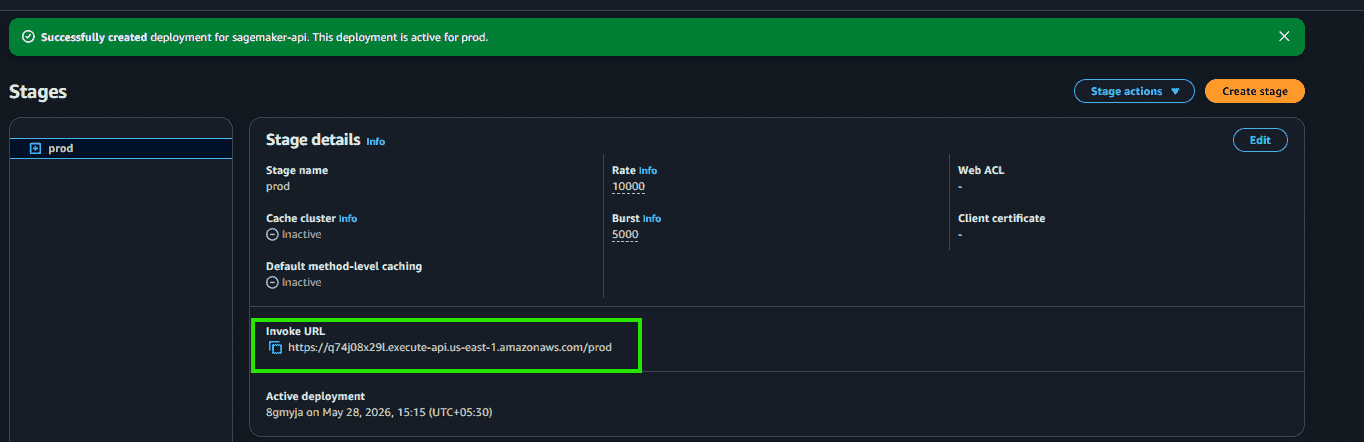
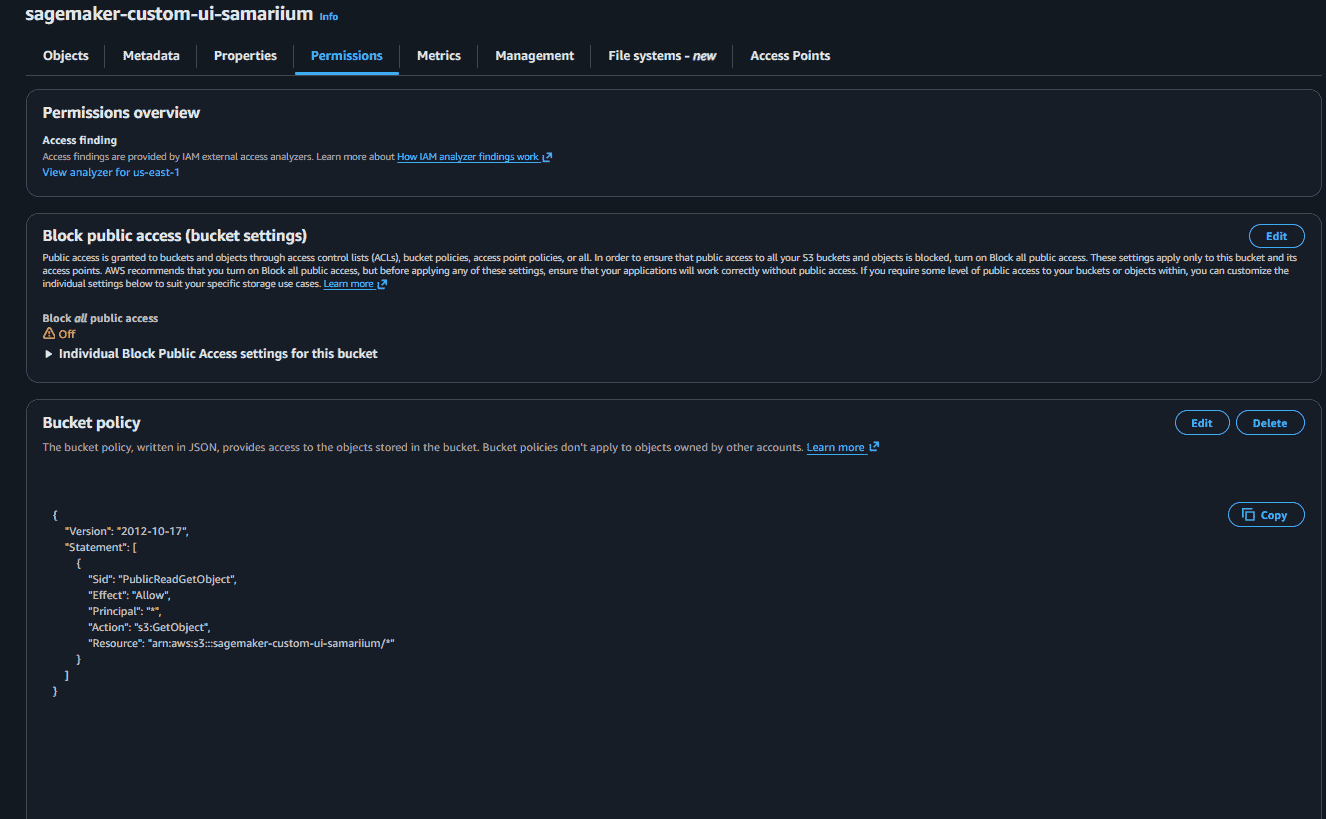
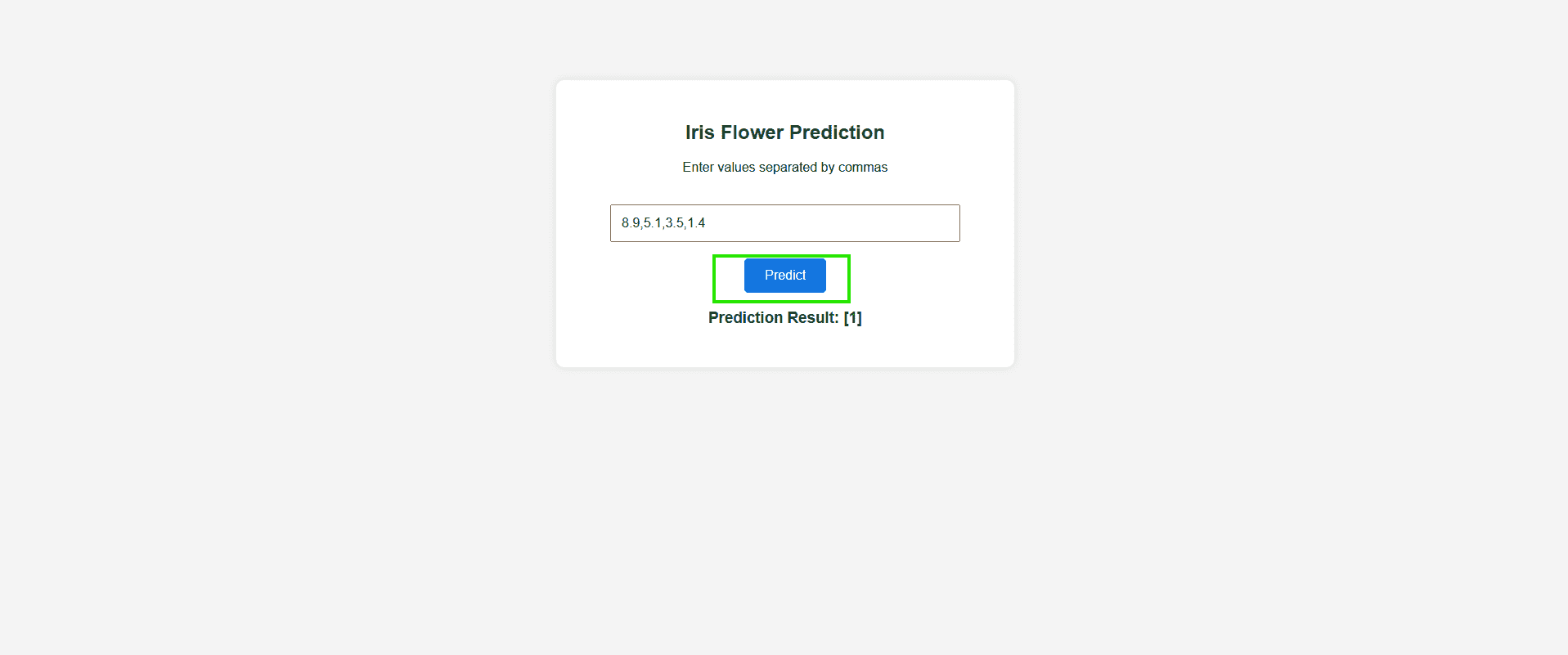
Create another new cell and run. Step 5: Create AWS Lambda function Open AWS lambda. Create function. 👁 Screenshot-2026-05-28-121028 Go to the “Configuration” tab and select “Permissions”. Click on the IAM Role name link under Execution Role. Click “Add permissions”. Select “Attach policies”. Search for “AmazonSageMakerFullAccess”. Select the policy and click “Add permissions”. 👁 Screenshot-2026-05-28-121611 Go back to Lambda function page. Replace the default code. 👁 Screenshot-2026-05-28-122045 Click “Deploy” and wait until the message “Successfully updated the function sagemaker-predict-function” appears. Click “Test”. Enter the Event Name as “test-event”. Paste the following test event code. Click “Save”. Click “Test” again to execute the Lambda function. Step 6: Create API Gateway Open API Gateway. Click on “Create API”. Choose API type “Rest API”. API name “sagemaker-api”. Click “Create API”. 👁 Screenshot-2026-05-28-122327 Step 7: Create POST Method Go to Resources and click “create resources”. Resource Name “predict”. Click “Create Resource”. Select /predict. Click “Create method”. Select POST. Choose Lambda function. Choose "sagemaker-predict-function". 👁 Screenshot-2026-05-28-122846 👁 Screenshot-2026-05-28-123021 Click on “Deploy API”. Stage “new stage”. Stage Name “prod”. Click on “Deploy”. 👁 Screenshot-2026-05-28-123251 👁 Screenshot-2026-05-28-151555 Step 8: Create Custom HTML UI Open Notepad or VS Code. Create a index.html file. Replace YOUR_API_URL with your actual API Gateway invoke URL. Upload this index.html in your s3 bucket. Go to properties. Scroll down to Static Website Hosting and enable it. Go to permissions and disable “Block all public access”. Scroll to bucket policy and edit it. Paste this code. 👁 Screenshot-2026-05-28-134543 Step 9: Test Application Go to properties of S3. Scroll to static website hosting. Copy the Bucket website endpoint. Pate the URL in your browser. Enter Input. Click “Predict”. 👁 Screenshot-2026-05-28-140036 In the Iris dataset:
[0] = Iris-setosa [1] = Iris-versicolor [2] = Iris-virginica Related Articles