|
VOOZH | about |
|
VOOZH | about |
Hyperledger Fabric is an open-source platform for developing blockchain applications. It is designed to support the development of scalable and secure blockchain applications and is suitable for a wide range of use cases, including supply chain management, identity management, and financial services.
Some key features and capabilities of Hyperledger Fabric include:
Hyperledger Fabric SDK is a software development kit (SDK) that provides a set of tools and libraries for building applications that interact with a Hyperledger Fabric blockchain. The Hyperledger Fabric SDK is available for a variety of programming languages, including Java, Go, Node.js, and Python.
The Hyperledger Fabric SDK provides developers with a range of capabilities and features for building blockchain applications, including:
The Hyperledger Fabric SDK for Java is a set of Java libraries that provides a Java API for interacting with a Hyperledger Fabric blockchain. It allows Java developers to build applications that can interact with a Hyperledger Fabric network, such as by submitting transactions or querying the blockchain.
Prerequisites: To use the Hyperledger Fabric SDK for Java, you will need to have the following prerequisites installed:
Approach: Once you have these prerequisites installed, you can start using the Hyperledger Fabric SDK for Java by following these steps:
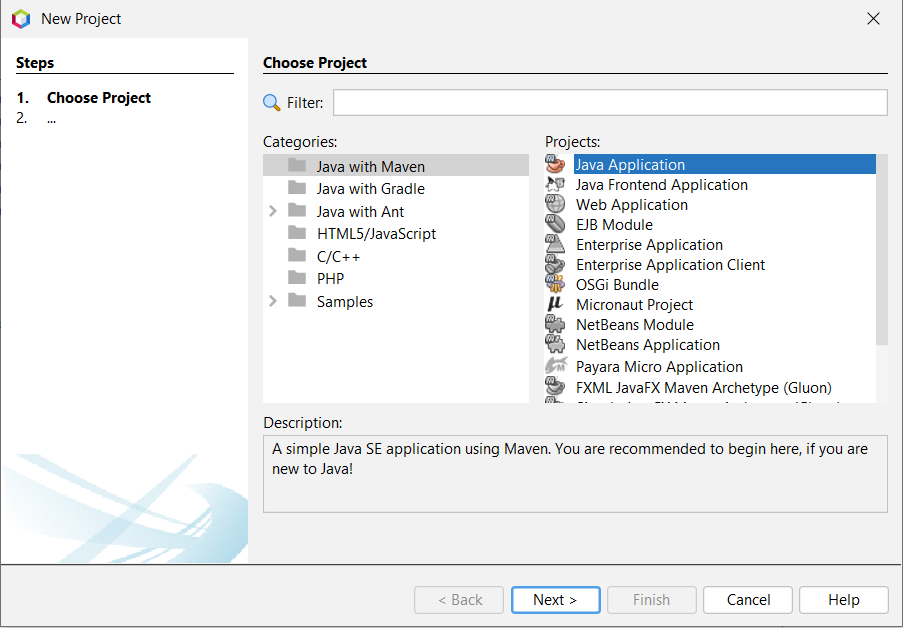
1. Create a new project: Create a new Maven project in your preferred Java development environment. In this example am using NetBeans. Go to Create Project -> Java Application -> Project Name -> Finish.
2. Add the Hyperledger Fabric dependencies: Add the necessary dependencies to your project's pom.xml file to include the Hyperledger Fabric SDK for Java. Below are examples of pom.xml
3. Import the Hyperledger Fabric classes: In your Java code, import the necessary Hyperledger Fabric classes and interfaces to use in your application.
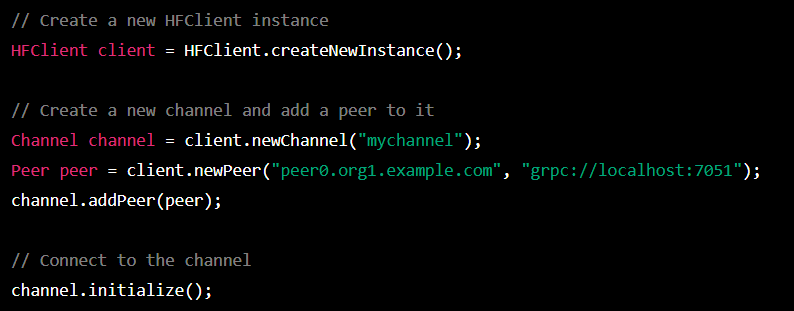
4. Set up a connection to the Hyperledger Fabric network: Use the Hyperledger Fabric API to establish a connection to the network and authenticate with the necessary credentials.
5. Interact with the Hyperledger Fabric network: Use the Hyperledger Fabric API to submit transactions, query the blockchain, and perform other actions on the network. The below example will illustrate this point.
Overall, using the Hyperledger Fabric SDK for Java involves setting up a project, importing the necessary dependencies, and using the API to interact with a Hyperledger Fabric network. There are many resources available online, including documentation and tutorials, that can help you get started with the Hyperledger Fabric SDK for Java.
Example: The Hyperledger Fabric SDK for Java allows you to build Java applications that interact with a Hyperledger Fabric blockchain.
Here is an example of how you can use the Hyperledger Fabric SDK for Java to create, submit, and endorse a transaction to a Hyperledger Fabric network:
Output:
This output is produced when the endorsement of the transaction is successful. The status field of the ProposalResponse object will contain the string "SUCCESS" if the endorsement was successful, and the message field will contain a message indicating that the endorsement succeeded.
If the endorsement of the transaction fails, the status field will contain an error code and the message field will contain an error message explaining the reason for the failure.
Like any software, the Hyperledger Fabric SDK for Java has some limitations that developers should be aware of when using it to build applications. Some of the limitations of the Hyperledger Fabric SDK for Java include:
Note: Hyperledger Fabric SDK for Java is a powerful tool for building blockchain applications, but it is important for developers to be aware of its limitations and ensure that they are using it in a way that meets their needs and requirements.