Object-oriented programming: As the name suggests,
Object-Oriented Programming or OOPs refers to languages that use objects in programming. Object-oriented programming aims to implement real-world entities like inheritance, hiding, polymorphism etc in programming. In this article, we will discuss how this OOP's concept is implemented in real world scenario.
Let's consider an example of a Geek who wants to learn the
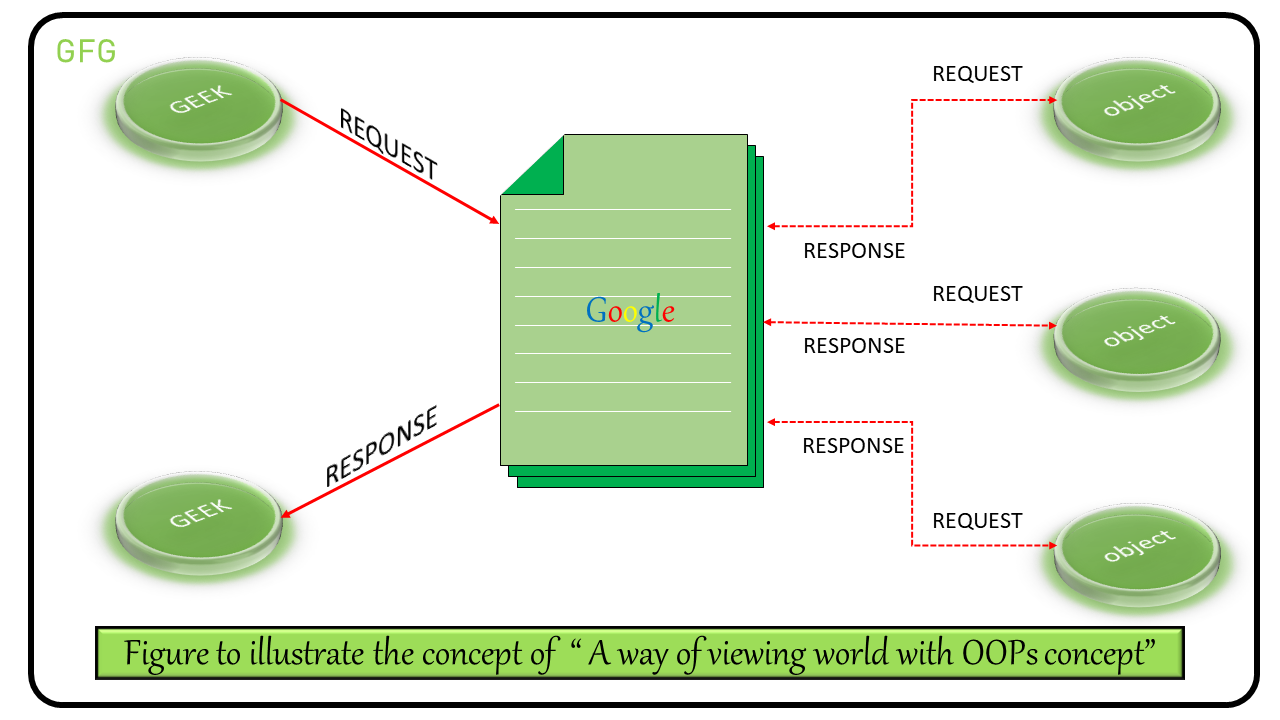
Java full course online. He chooses one of the sources to know about various platforms which are offering Java Course. Let's say he chooses Google and he searches for the course. Once Google accepts the request, it will perform various actions to carry out the request until the request has been served. The following illustration demonstrates the steps performed:
👁 A way of viewing world with OOPs concept
Below is the implementation of the demo class which demonstrates the steps mentioned in the above image:
Output:
Geek Requested: Java
Google Searched: Java
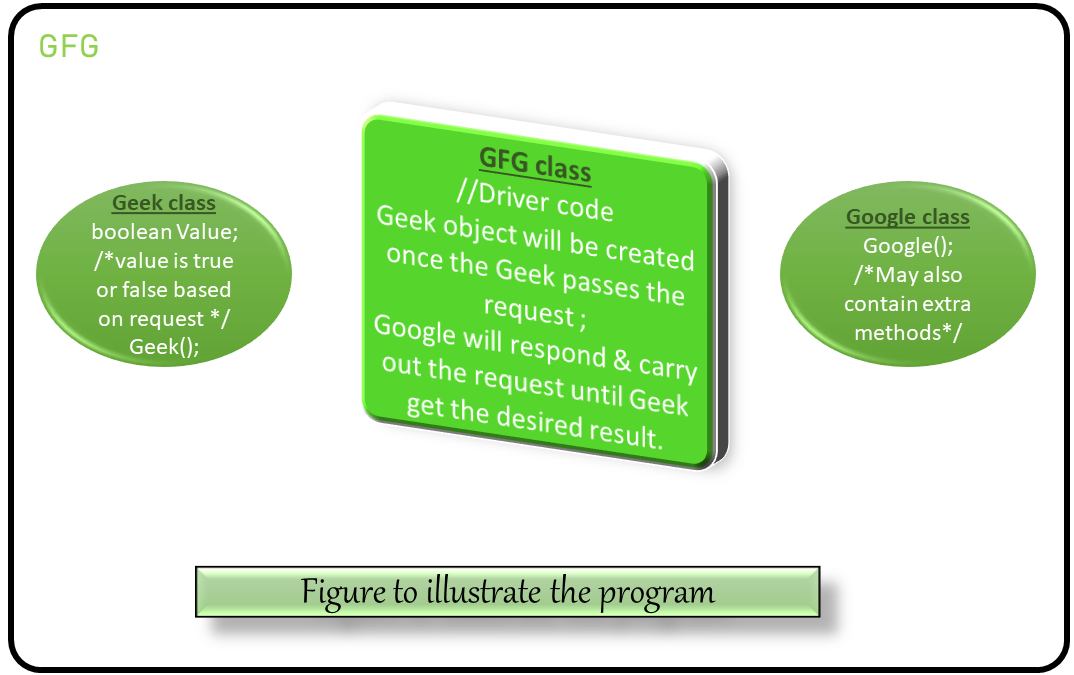
An illustrative figure of the above program:
👁 Program
From the above example, lets understand the different terminology used in the
Object-Oriented Design:
- Agents and Community:
- Agent: Every object in the community acts as an agent (i.e.) from the above example, we can say that Geek, Google, and the other extra objects are known to be agents. Every agent performs some actions and those actions are being utilized by other members of the community to solve the problem.
- Community: It is created by actions. In the above example, we can say that the search engine community has been formed.
Therefore, in the above example:
Agents: Geek, Google, and other objects
Community: Search engine community
- Messages and Methods:
- Messages: Every message may be a request or response that is being passed to other members of the community.
- Methods Every method is used to perform an action in the community, that action will be used by other members of the community to solve various problems.
- Responsibilities: From the above example, we can observe that once the Geek passes a request to Google, it will accept the request and it performs various actions to give him the desired result. It means if the request accepted by an agent, it is the responsibility of the agent to carry out the request until the problem is solved.
Finally, we can conclude that we have achieved hiding of the data or
Abstraction by implementing the system in such a way that when the Geek passes the request, the actions performed by Google are hidden from him to get the desired result.