 |
VOOZH | about |
|
VOOZH | about |
Object-oriented design (OOD) is a programming technique that solves software problems by building a system of interrelated objects. It makes use of the concepts of classes and objects, encapsulation, inheritance, and polymorphism to model real-world entities and their interactions. A system architecture that is modular, adaptable, and simple to understand and maintain is produced using OOD.
A number of fundamental ideas are included in object-oriented design (OOD), which makes it easier to create software that is reliable, scalable, and maintainable. These are the main ideas, supported by examples and explanations.
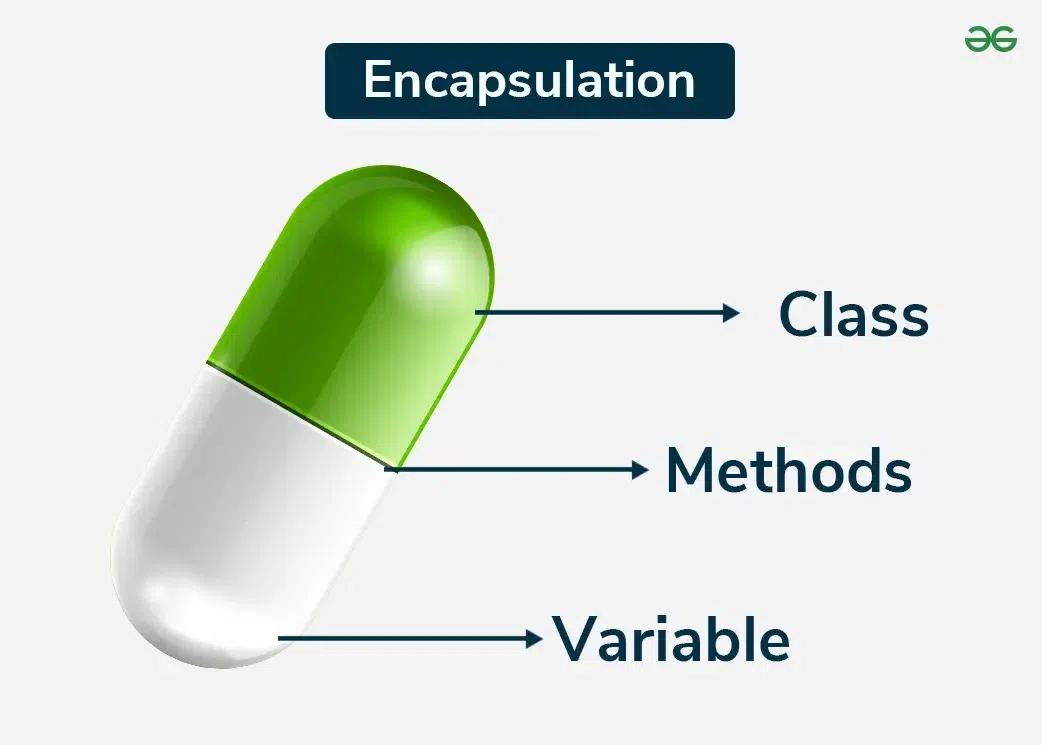
Encapsulation is the bundling of data (attributes) and methods (functions) that operate on the data into a single unit called a class. It restricts direct access to some of the object's components, which is a means of preventing accidental interference and misuse of the data.
Example:
Consider a
Carclass with private attributesspeedandfuelLeveland public methodsaccelerate(),brake(), andrefuel(). The internal state ofspeedandfuelLevelcan only be modified through these methods, ensuring controlled access.
Speed: 0, Fuel Level: 119
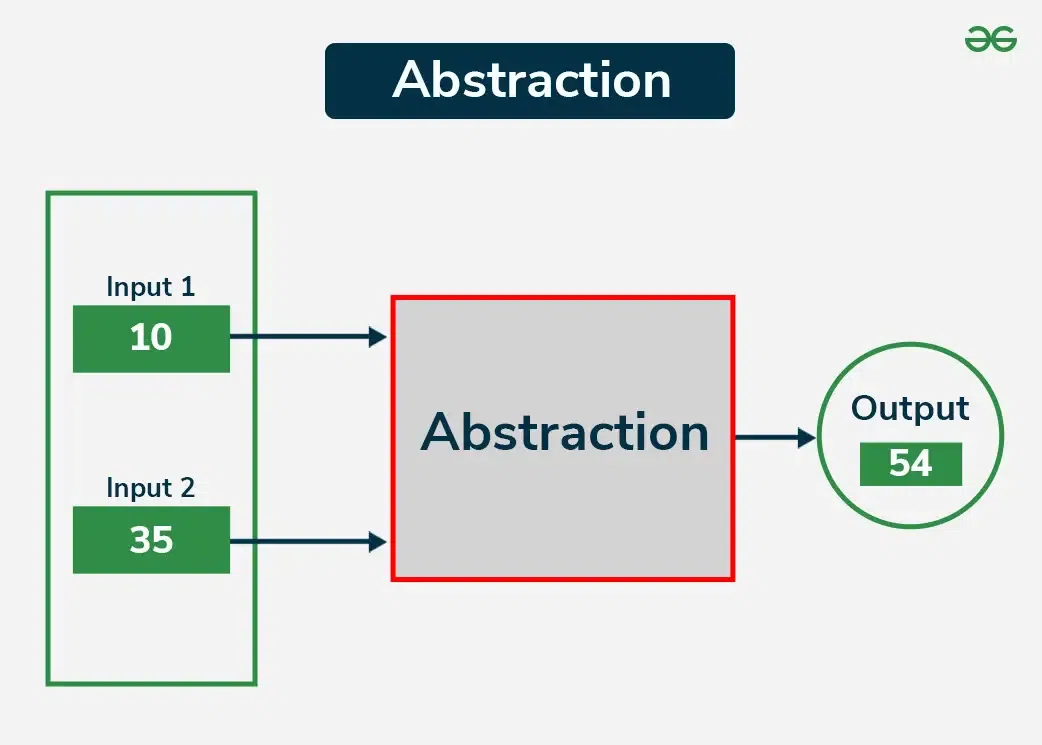
Abstraction involves hiding the complex implementation details and showing only the essential features of the object. This helps in managing complexity by allowing the designer to focus on the interactions at a higher level.
Example:
An
Animalclass can represent general properties and behaviors common to all animals without detailing the specific implementation for each type of animal.
Bark
Meow
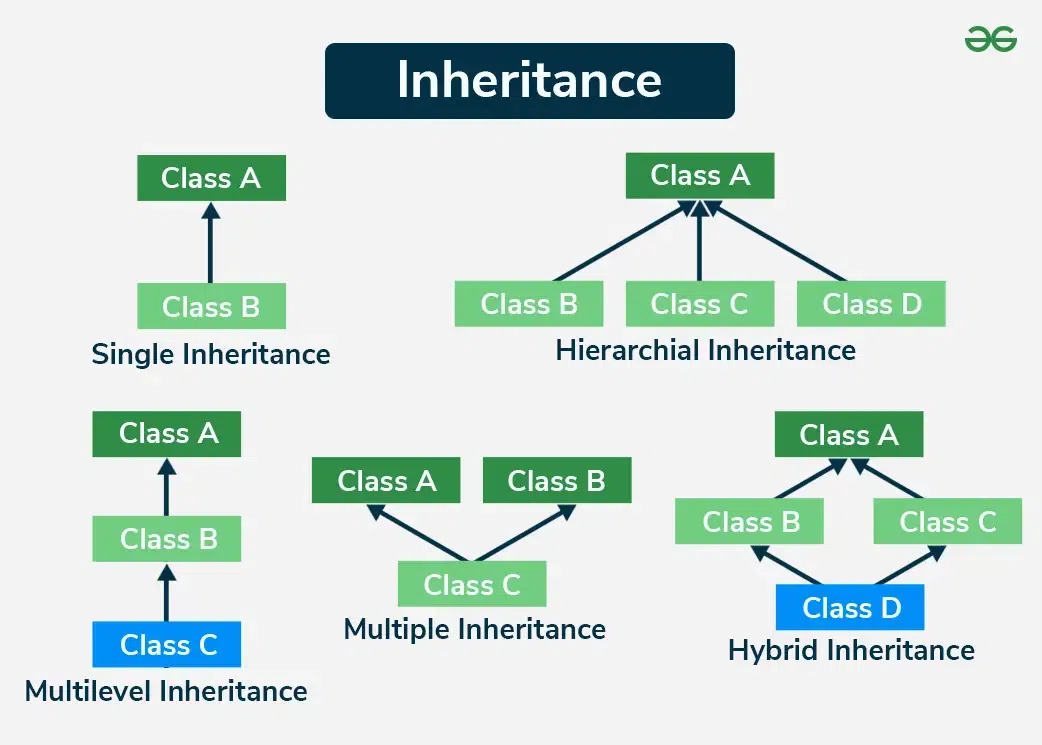
Inheritance is a mechanism where a new class inherits properties and behaviors (methods) from an existing class. This promotes code reuse and establishes a natural hierarchy between classes.
Example:
A
Vehicleclass can be a parent class with common attributes likemakeandmodel, and child classes likeCarandBikecan inherit these attributes and have additional specific properties
Make: Toyota, Model: Corolla, Doors: 4
Make: Yamaha, Model: MT-07, Type: Sport
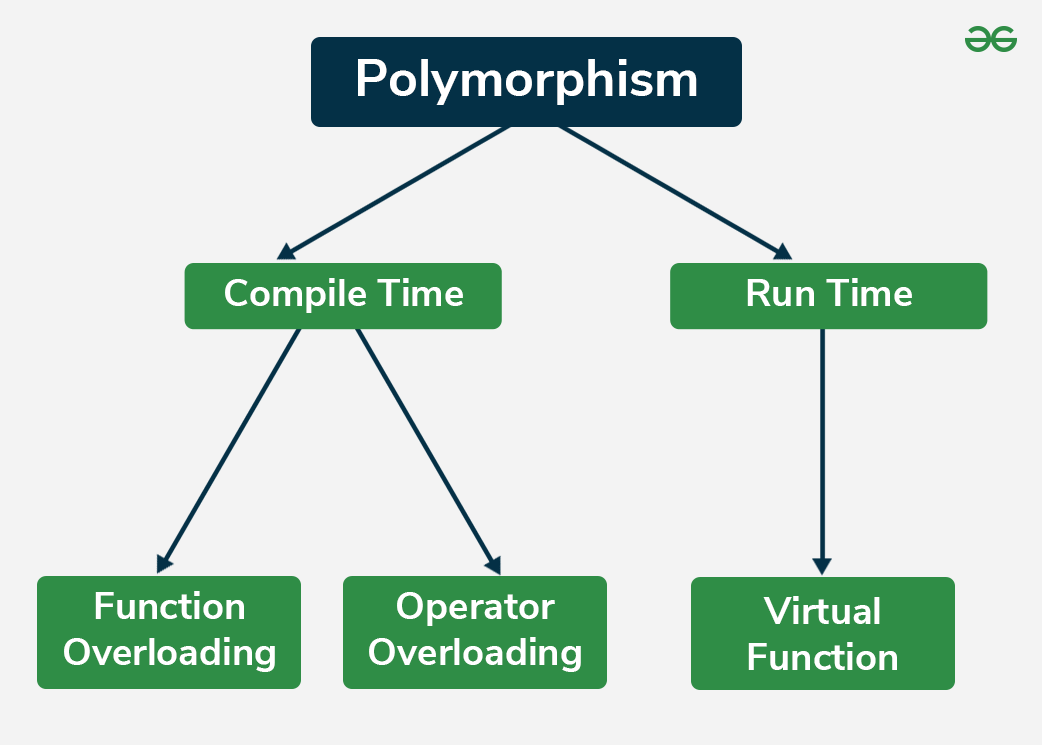
Polymorphism allows objects of different classes to be treated as objects of a common super class. It enables a single interface to represent different underlying data types and allows methods to use objects of various types.
Example:
Both
DogandCatclasses inherit fromAnimaland implement themake_soundmethod. A function can take anAnimalobject and callmake_sound, regardless of whether it's aDogorCat.
Bark
Meow
Composition is a design principle where a class is composed of one or more objects of other classes, rather than inheriting from them. This promotes flexibility and reusability.
Example:
A
Libraryclass can be composed ofBookobjects. Instead of inheriting fromBook, theLibraryclass contains multipleBookinstances.
1984 by George Orwell
To Kill a Mockingbird by Harper Lee
By understanding and applying these core concepts, developers can create well-structured, maintainable, and efficient software systems.
Design patterns in Object-Oriented Design (OOD) are proven solutions to common problems that arise in software design. These patterns provide templates that help to structure code in an efficient and maintainable way.
Here are some of the most commonly used design patterns in OOD:
1. Creational Patterns: Creational patterns deal with object creation mechanisms, trying to create objects in a manner suitable to the situation. Some key creational patterns include:
2. Structural Patterns: Structural patterns deal with object composition or structure, ensuring that if one part changes, the entire structure does not need to do so. Some key structural patterns include:
3. Behavioral Patterns: Behavioral patterns deal with communication between objects, making it easier and more flexible. Some key behavioral patterns include:
Diagrams created using the Unified Modeling Language (UML) are useful tools for understanding and clarifying object-oriented system structure. They serve as a blueprint, showing the interactions between many components of a system, which makes difficult concepts simpler to understand and communicate.
Here are some common UML diagrams and how they contribute to object-oriented design:
By using these diagrams, developers can make sure everyone has a clear picture of the system’s structure and behavior, making it easier to collaborate and avoid misunderstandings.
While it offers strong software development concepts, object-oriented design (OOD) is not without its challenges and drawbacks. For systems to be productive and maintained, it is essential to recognize these difficulties and stay clear of typical anti-patterns.
These are a few common OOD challenges and anti-patterns:
1. Designing for potential future needs that may never arise, which adds needless complexity.
2. Not foreseeing future demands and modifications, which leads to an inflexible system.
3. Ensuring that encapsulation does not excessively degrade performance.
4. Determining the right level of abstraction to balance simplicity and functionality.

.png)