|
VOOZH | about |
|
VOOZH | about |
18 min
read
Bubble pricing plans explained with actual costs to build Bubble apps, plan limits, workload usage, scaling factors, and what founders really pay.
By
Jesus Vargas
Updated on
May 29, 2026
.
Reviewed by
Douglas Noldor
Bubble Developer
Real-World Experience with No-Code Tools: With over 320 apps built, we know firsthand what works—and what doesn't—when using no-code platforms like Glide, Bubble, FlutterFlow and Webflow.
Expert Team with 40+ Years of Combined Experience: Our team has deep technical knowledge, with experts who use no-code tools to solve real-world problems for clients every day, ensuring our advice is actionable and reliable.
Detailed Guides Based on Actual Projects: We don’t just talk about no-code; we use it daily to solve real business problems for our clients, from MVPs to complex automations.
Take a deeper look at our editorial guidelines
| Plan | Best For | Monthly Cost (Web + Mobile) | Editors | Workload (WUs) | Key Limits to Watch |
|---|---|---|---|---|---|
| Free | Learning, testing ideas | $0 | 1 | Very limited | No custom domain, not for live apps |
| Starter | Early MVPs, small live apps | $59 | 1 | ~175K | Hits WU limits fast with real users |
| Growth | SaaS, marketplaces, real users | $209 | 2 | ~250K | Limited team size, WUs still matter |
| Team | Scaling products, larger teams | $549 | 5 | ~500K | Cost rises with heavy usage |
| Enterprise | Mission-critical, regulated apps | Custom | Custom | Custom | Longer setup, higher commitment |
Bubble App Development
Bubble Experts You Need
Hire a Bubble team that’s done it all—CRMs, marketplaces, internal tools, and more
Before looking at Bubble pricing plans, you need the right mental model. Bubble pricing is based on how your app runs and scales, not just on features.
Many teams choose the wrong bubble pricing plan because they treat pricing like a simple subscription, then hit limits later. Understanding how Bubble charges helps you avoid forced upgrades and performance issues.
Bubble pricing makes sense when you see it as infrastructure, not just software access. Once you understand how your app consumes resources, picking the right plan becomes much easier.
Read more | Bubble.io Capabilities and Limitations
Bubble offers multiple pricing plans designed around how your app is built, launched, and scaled. Each plan unlocks different levels of performance, capacity, and production readiness.
The right choice depends on whether you are experimenting, launching, or supporting real users.
The Free Bubble plan is meant for learning and early experimentation, not for running a real product. It gives access to the core building experience but restricts anything related to production use or scaling.
The Free Bubble plan works best as a testing ground. Any serious web app, MVP, or business system will need a paid plan to run reliably and grow.
Read more | Bubble Pros and Cons
The Bubble Starter plan is designed for projects that are ready to launch but do not yet need high scale or large teams. It unlocks production features while keeping costs relatively low, making it suitable for early MVPs and small live apps.
The Starter plan is ideal for launching, but not for scaling. Most serious products eventually need more capacity and control as real users arrive.
Read more | Can I Build a Mobile App with Bubble?
The Bubble Growth plan is built for apps that have real users and active teams. It adds better collaboration, security, and higher capacity, making it the most commonly used plan for growing products and SaaS apps.
The Growth plan balances cost and capability. It is a strong choice once your app moves beyond a simple launch and starts to grow steadily.
Read more | How to choose a Bubble agency
The Bubble Team plan is designed for scaling products with growing teams and higher usage demands. It adds stronger collaboration tools, higher capacity, and better control, making it suitable for mature apps that support daily operations or revenue-generating users.
The Team plan supports serious growth. It is often chosen when Bubble becomes a core part of business operations rather than just a product experiment.
Read more | How to hire Bubble developers
The Bubble Enterprise plan is built for organizations that need maximum security, control, and scalability. It is designed for mission-critical applications, regulated environments, and large teams that require custom infrastructure and dedicated support.
The Enterprise plan removes most platform limits. It is best chosen when Bubble is a core system and uptime, security, and control are business-critical.
Read more | How we build an AI-powered app with Bubble
Bubble pricing plans unlock features gradually as your app moves from testing to real-world use and then to scale. Understanding what each plan includes helps you choose based on operational needs, not just price. Below is a clear breakdown of what actually changes as you move up plans.
Each Bubble pricing plan is designed for a different stage. The right choice depends on how live your app is, how many people work on it, and how critical stability and security are to your business.
Read more | Bubble MVP app development
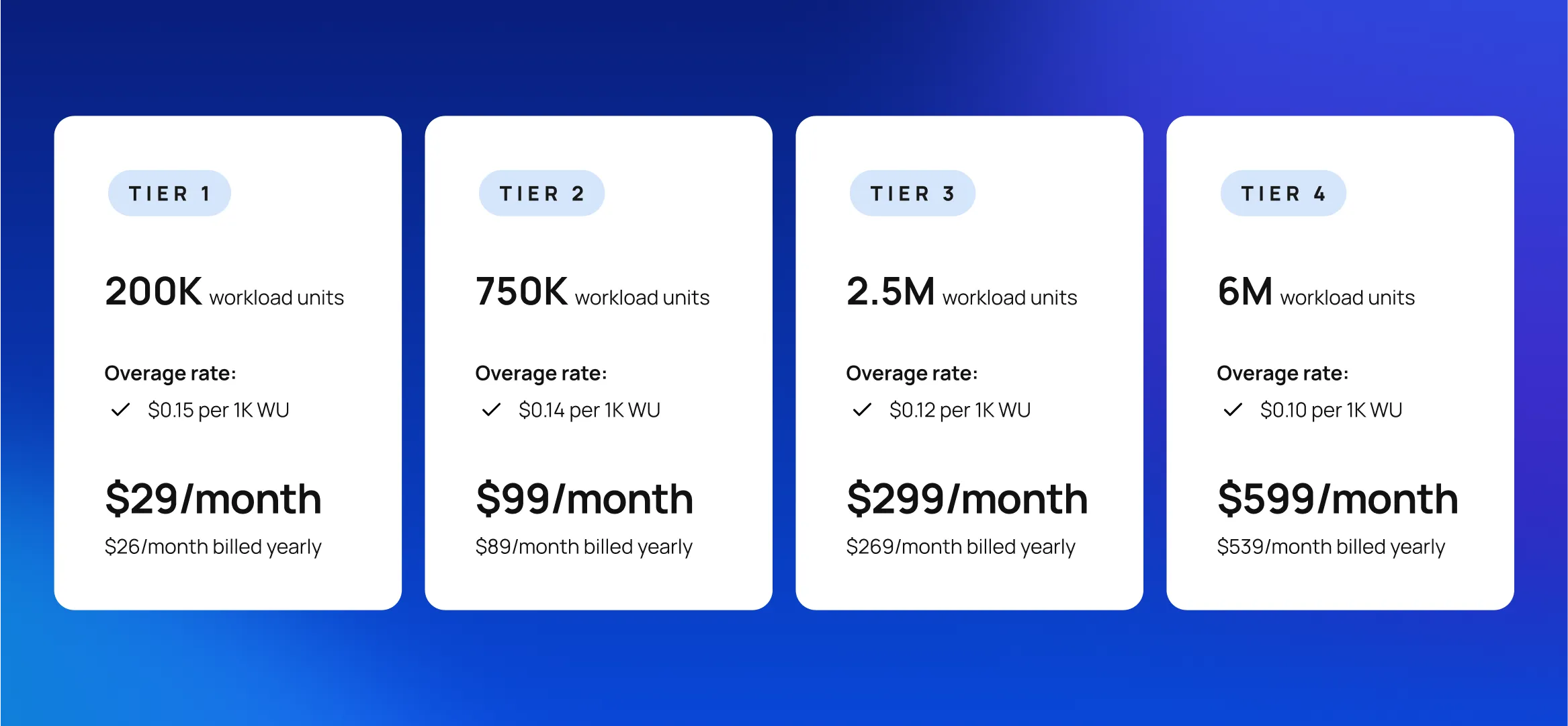
Workload Units are the real engine behind Bubble pricing. They decide how much traffic, automation, and complexity your app can handle each month. Many teams worry about plan prices, but WUs are what actually control cost and scalability as usage grows.
Imagine a marketplace app where each page load runs several database searches, loads long lists, and triggers backend workflows for analytics.
Even with moderate traffic, this can quickly consume the bundled WUs. In this case, upgrading to a workload tier like 750K or 2.5M WUs may be cheaper than upgrading the entire app plan.
Understanding WUs helps you plan smarter. Optimized workflows and clean data design reduce costs and delay expensive upgrades as your app grows.
Read more | Best Backends for Bubble
Bubble pricing goes beyond the plan headline. The real cost depends on how your app is built, how many users it serves, and how much automation runs behind the scenes. Looking at realistic ranges helps you budget properly and avoid surprises later.
The real monthly cost of Bubble often lands between $300 and $1,500 per month for active business apps, depending on scale, usage patterns, and optimization quality.
Read more | Bubble App Examples
Beyond platform costs, building the app itself is the largest investment. This depends on who builds it and how complex the product is.
The true cost of Bubble is a combination of platform pricing, usage growth, and build quality. Investing in clean architecture early usually keeps both monthly costs and rebuild risk much lower over time.
Read more | Types of apps you can build with Bubble.io
Bubble pricing makes more sense when you map it to real use cases. Different products consume very different resources, even if they look similar at first. Below is a realistic view of how Bubble costs usually break down by app type and how they change as usage grows.
Bubble pricing scales with usage, not just ambition. Matching your plan to your use case and building efficiently keeps costs predictable as your product grows.
Read more | Bubble vs FlutterFlow for AI App Development
Upgrading a Bubble plan is usually driven by usage and operational needs, not by time. Many teams wait too long and experience slow performance or blocked workflows, while others upgrade too early and overpay. Knowing the right signals helps you upgrade at the right moment.
Upgrading should be a strategic move, not a reaction to failures. Monitoring usage and planning ahead keeps your app stable as it grows.
Read more | Bubble vs FlutterFlow
Bubble pricing is transparent, but real costs can still surprise teams if they are not planned for. Most pricing issues come from usage growth, design decisions, or overlooked limits rather than sudden price changes. Knowing these pitfalls early helps you stay in control as your app scales.
Most hidden costs come from growth and design choices, not Bubble itself. Apps built with clean architecture and realistic scaling plans stay predictable and easier to budget over time.
Read more | Bubble vs Outsystems
Choosing the right Bubble pricing plan is about aligning cost with how your product actually behaves, not just where you are today. The goal is to stay flexible early, avoid forced upgrades, and scale costs in a controlled way as usage grows.
The right Bubble plan supports growth without stress. Good planning keeps pricing predictable while your app scales.
Read more | Bubble Alternatives
Bubble costs are mostly driven by how an app is designed, not just which plan you choose. Many teams overpay because of inefficient workflows, poor data structure, or lack of planning for scale. LowCode Agency focuses on building Bubble apps that stay cost-efficient as usage grows, without cutting corners.
Our goal is simple: help you ship fast without paying a hidden tax later. If you want a Bubble app that scales predictably and stays affordable, let’s discuss your product and see how we can help.
Bubble App Development
Bubble Experts You Need
Hire a Bubble team that’s done it all—CRMs, marketplaces, internal tools, and more
Bubble pricing is predictable when you understand how your app actually uses resources. Plan names matter less than workload usage, automation, storage, and team needs. Teams that plan only for launch often hit limits early, while those that plan for growth stay in control of costs.
Choosing the right Bubble pricing plan means matching it to real usage patterns and scaling gradually. With proper planning, Bubble supports growth without adding friction or surprise expenses.
Last updated on
May 29, 2026
.
Jesus Vargas
-
Founder
Jesus is a visionary entrepreneur and tech expert. After nearly a decade working in web development, he founded LowCode Agency to help businesses optimize their operations through custom software solutions.
Custom Automation Solutions
Save Hours Every Week
We automate your daily operations, save you 100+ hours a month, and position your business to scale effortlessly.
Our AI — trained on 300+ shipped products — tells you what to build, what to skip, and what it'll actually cost. No fluff.
Assess My Idea"Working with LowCode Agency was the best decision I made in 2025"
Franklin Frith
CEO at HRM
Yes, Bubble has a Free plan, but it is only for learning and testing. You cannot properly launch a live product on it. Free apps run on a Bubble subdomain and have limited capacity. Any real startup or business app needs a paid plan.
Most live Bubble apps cost between $200 and $1,500 per month. This includes the base plan, workload usage, plugins, storage, and third-party tools. Simple MVPs stay cheaper, while SaaS apps and marketplaces cost more as users and automation grow.
Workload Units measure how much processing your app uses. Page loads, workflows, database searches, and backend jobs all consume WUs. Apps with heavy logic or poor optimization use more WUs, which often matters more than the plan price itself.
Bubble pricing does not increase suddenly, but costs can rise if usage spikes. More users, automation, file uploads, or inefficient workflows increase workload usage. Without monitoring, teams may need to add WUs or upgrade plans faster than expected.
Most startups start with the Starter or Growth plan. Starter works for early MVPs with low traffic. Growth is better once users, payments, or recurring workflows are active. The right choice depends on usage, not company size.
Yes, Bubble pricing separates web and mobile. Web-only and mobile-only plans are cheaper, while web plus mobile costs more. Even mobile apps still use the same backend and workload units, so usage affects pricing regardless of platform.
Bubble
What is Bubble.io? | Features, Limits & Alternatives (2026)
Read our Bubble.io review covering key features, limits, pricing factors, and top alternatives to help you decide if Bubble fits your app in 2026.
Bubble
How to Build a Scholarship Management App with Bubble
Build a scholarship management app with Bubble no code required. Manage applications, track awards, and notify students fast with this no-code guide.
Bubble
How to Build an Assessment Platform App with Bubble
Create an assessment platform with Bubble no coding required. Build quizzes, track results & evaluate learners step-by-step using no-code tools.
Bubble
How to Build a HIPAA Compliance App with Bubble
Eliminate scheduling gaps with a Bubble staff scheduling app. Built without coding manage shifts, availability, and coverage step-by-step.
Bubble
How to Build a Job Site Management App with Bubble
Manage job sites smarter with a no-code Bubble app. Track progress, teams, and tasks without coding your step-by-step build guide is here.
Bubble
How to Build a Supplier Portal App with Bubble
Launch a supplier portal app with Bubble no coding needed. Manage orders, share documents, and collaborate with vendors fast with this no-code guide.