|
VOOZH | about |
|
VOOZH | about |
TrueFoundry recognized in Gartner Hype Cycle for Platform Engineering 2026. Read the full report →
Join our VAR & VAD ecosystem — deliver enterprise AI governance across LLMs, MCPs & Agents. Become a Partner →
Get instant access to a live TrueFoundry environment. Deploy models, route LLM traffic, and explore the full platform — your sandbox is ready in seconds, no credit card required.
Blazingly fast way to build, track and deploy your models!
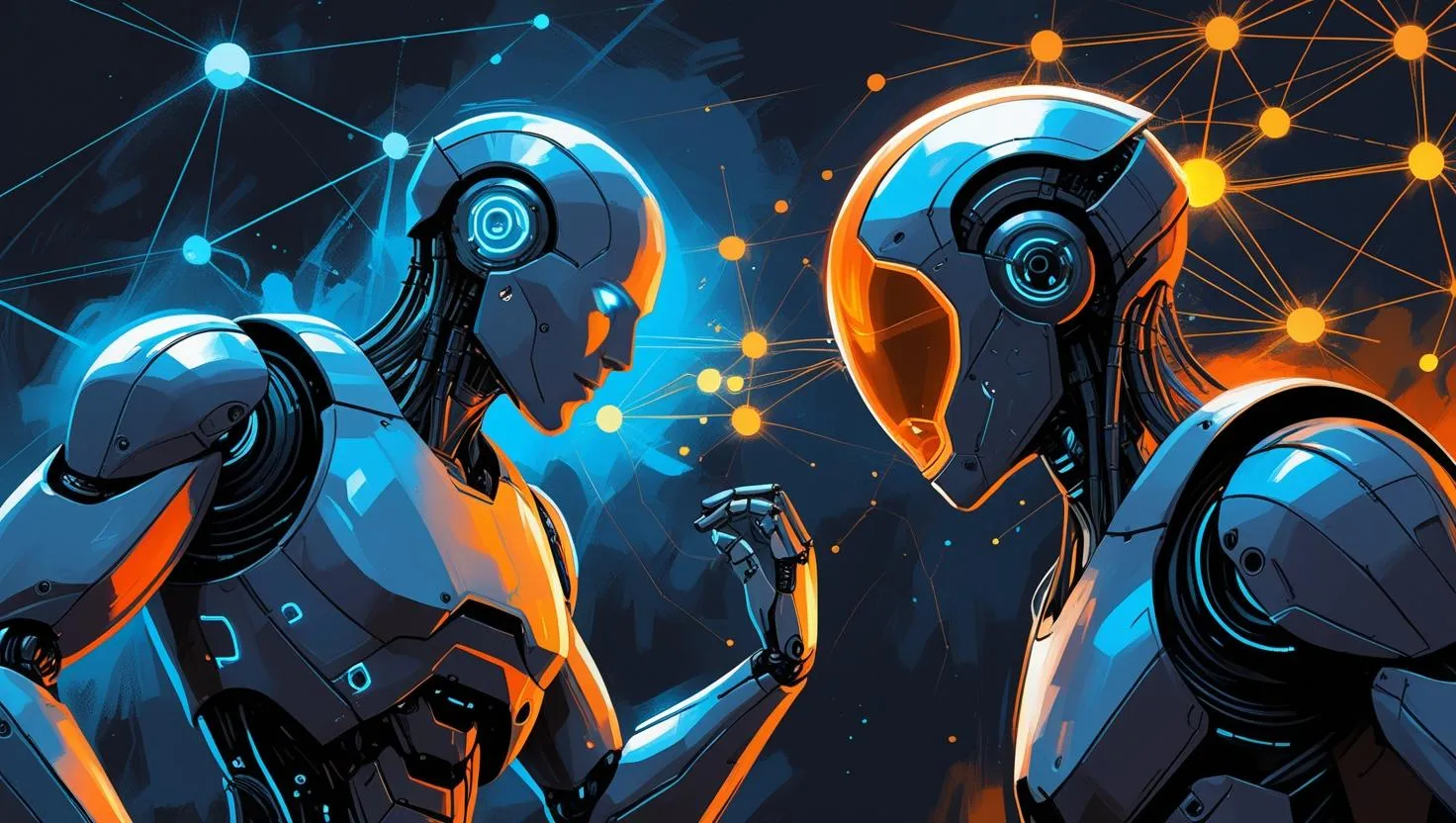
The rise of multi-agent AI systems has created a need for frameworks that go beyond simple prompt chaining. Developers now want tools that can orchestrate multiple agents, manage shared state, and support complex workflows with branching, looping, and retries. Two notable frameworks leading this space are CrewAI and LangGraph.
While CrewAI focuses on collaborative agent teams—where each agent has a specific role, goal, and communication strategy—LangGraph provides a graph-based workflow engine designed for building structured, resilient LLM applications. Both aim to simplify multi-agent development but approach the problem from different angles: CrewAI emphasizes team coordination, whereas LangGraph emphasizes stateful, production-ready execution.
In this comparison, we’ll break down their core philosophies, features, and use cases to help you decide which framework better fits your AI development needs.
Agent teams or agent graphs — either way, they need guardrails.
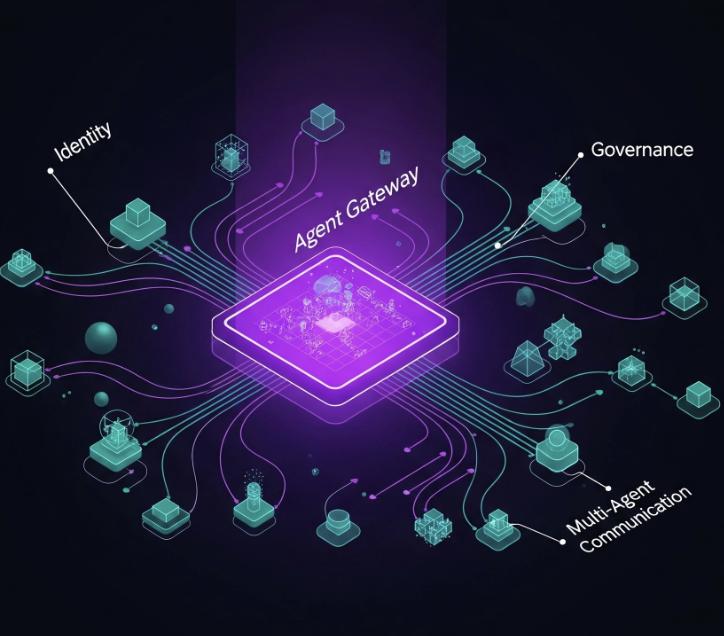
CrewAI and LangGraph agents in production both need model routing, cost caps, tool governance and tracing. TrueFoundry's Agent Gateway is that layer — in your own VPC.
Book a 30-min DemoExplore Agent GatewayCrewAI is an open-source, Python-based framework designed for orchestrating autonomous, collaborative AI agents, much like a digital team handling complex tasks. Each agent operates with a defined role, such as researcher, writer, or analyst, and works together within a structured crew to solve problems efficiently.
CrewAI combines modularity with performance, offering both high-level simplicity and precise control over how agents interact. Through components like Crews and Flows, it supports dynamic collaboration while giving developers the ability to manage control flows, tasks, and environments with flexibility.
Agents in CrewAI are set up with defined roles, goals, tools, and even personality through backstories. This is similar to how a human team organizes itself to divide work and minimize errors. The framework allows agents to work sequentially or in parallel, with coordination that ensures shared context and consistent progress.
Built from the ground up without dependencies on other orchestration frameworks, CrewAI is lightweight, fast, and adaptable. It is a strong choice for creating enterprise-ready agent systems that can operate on-premise or in the cloud. Backed by an active developer community and growing educational resources, CrewAI makes it easier for teams to build AI solutions that go beyond single-agent capabilities.
LangGraph is an open-source framework from the creators of LangChain, designed to help developers build advanced AI agents and workflows. Instead of following a fixed, linear sequence of steps, LangGraph organizes tasks into a graph structure. In this setup, each node represents a specific task, and the edges define how those tasks connect and pass information. This approach allows for branching, looping, and revisiting earlier steps, giving your AI workflows much more flexibility.
One of LangGraph’s key strengths is its ability to handle long-running, stateful agents. These agents can pause, wait for input, and resume exactly where they left off, which is valuable for complex decision-making processes. Developers can also insert human checkpoints into a workflow, allowing for manual review or approval before moving forward.
LangGraph is built for reliability in production. It integrates with monitoring and debugging tools like LangSmith, making it easier to trace actions, analyze performance, and understand how an agent reached a particular outcome. It also supports persistent memory, enabling agents to maintain context and learn from past interactions across sessions.
By combining graph-based logic with strong state management and observability, LangGraph is well-suited for applications where workflows need to adapt dynamically, run continuously, and manage multiple decision paths. Whether it’s powering a multi-agent system, a virtual assistant with complex reasoning, or a workflow that needs to handle unexpected events gracefully, LangGraph provides the structure and tools to make it happen.
CrewAI is purpose-built for orchestrating multiple autonomous agents that work together toward a shared goal. It emphasizes collaboration, with agents assigned distinct roles, goals, and tools to tackle different aspects of a task. Its design makes it easy to coordinate complex projects by dividing responsibilities and ensuring that each agent contributes to the final outcome. CrewAI is particularly effective when you want your agents to operate like a specialized team, working either sequentially or in parallel, with a clear structure guiding their interaction.
LangGraph, in contrast, focuses on creating flexible, adaptive workflows for AI agents. It uses a graph-based execution model that allows for branching, looping, and revisiting earlier steps in a process. This makes it ideal for scenarios where the path to a solution is not strictly linear and may require adjusting actions based on changing inputs. LangGraph’s explicit state management and support for human checkpoints also make it well-suited for long-running, production-grade applications that demand reliability and transparency.
| Feature | CrewAI | LangGraph |
|---|---|---|
| Focus | Multi-agent collaboration | Flexible multi-agent workflows |
| Execution model | Parallel task execution | Graph-based execution |
| State management | Shared context with crew | Explicit persistent state management |
| Human-in-the-loop | Possible with structured crew interactions | Built-in checkpoints for human review |
| Best use case | Specialized agents working together | Complex, dynamic workflows |
CrewAI is the right choice when your project depends on multiple AI agents working together, each with a clearly defined role and responsibility. If you think of your application as a “digital team,” CrewAI gives you the structure to assign tasks, coordinate workflows, and ensure that every agent’s contribution aligns with the overall goal.
This framework excels when you want to break down a large or complex problem into smaller, specialized parts. For example, one agent might focus on research, another on analysis, and another on drafting a report. CrewAI ensures these agents can share context, pass results between each other, and work in a sequence or parallel, depending on the needs of the project. This approach mirrors how human teams operate, making it easier to manage complexity and maintain quality.
CrewAI is also a strong fit for scenarios where efficiency and collaboration are equally important. Because agents can work in parallel, tasks that would otherwise take longer can be completed faster without sacrificing thoroughness. The role-based design also reduces the chance of agents duplicating work or overlooking critical steps.
It’s particularly valuable in projects that benefit from specialized reasoning, creative thinking, or step-by-step refinement. Whether you’re building a research assistant team, a multi-step content generation pipeline, or a collaborative problem-solving system, CrewAI gives you the tools to organize and control the process.
If your goal is to create a well-orchestrated system of AI agents that can operate like an expert team with defined roles, clear goals, and efficient communication, CrewAI provides the structure and flexibility you need to make that happen.
LangGraph is best suited for applications where workflows need to adapt to changing conditions, revisit earlier steps, or follow multiple possible paths to reach a goal. Instead of a fixed sequence, it lets you design processes as a connected graph of tasks, giving your AI agents the flexibility to handle complex, dynamic scenarios.
This makes LangGraph a strong choice for projects where the outcome depends on real-time decisions or where the process might loop back based on new inputs. For example, a customer support agent might collect information, evaluate it, and then return to ask additional questions before resolving the issue. With LangGraph’s graph-based architecture, these loops and branches are natural to implement rather than workarounds.
Another strength of LangGraph is its explicit state management. This means an agent can maintain context across the entire workflow, even over long-running sessions. If the process pauses either because it’s waiting for human input or handling a high-priority task, it can resume exactly where it left off. This is valuable in enterprise-grade applications where accuracy, continuity, and transparency are critical.
LangGraph also supports human-in-the-loop checkpoints, making it possible to insert reviews or approvals before the workflow continues. Combined with its integration capabilities for monitoring and debugging, this makes it well-suited for production environments that require both flexibility and reliability.
If your application involves complex decision-making, multiple possible outcomes, or needs to operate continuously with full visibility, LangGraph gives you the right foundation. It’s the better fit when adaptability and robust state control matter more than strict role-based collaboration.
Quick quiz: CrewAI or LangGraph for your project?
Two questions, instant recommendation.
Both CrewAI and LangGraph are powerful tools for building advanced AI systems, but they approach the challenge from different angles. Choosing the right one depends on how your workflows are structured, the type of collaboration you need between agents, and the level of adaptability your application requires.
When CrewAI Takes the Lead
CrewAI is the better choice if your goal is to build a “digital team” of AI agents, each with a specific role and set of responsibilities. Its role-based architecture makes it easy to divide tasks, coordinate efforts, and maintain a clear sense of ownership over different parts of a project. This is ideal when:
CrewAI’s sequential or parallel execution styles mean you can balance speed and thoroughness. It shines in scenarios like research pipelines, multi-stage content creation, or problem-solving tasks where different agents bring unique strengths to the table.
When LangGraph is the Better Fit
LangGraph excels when your workflows are complex, adaptive, and require explicit state management. Instead of fixed sequences, it lets you create branching and looping paths that can change based on real-time inputs. It’s especially valuable when:
LangGraph is a natural fit for production-grade applications where flexibility, error handling, and transparency are priorities. It’s ideal for customer service bots, multi-agent coordination with changing requirements, or any workflow that needs to handle unexpected turns without breaking.
Choose CrewAI if your focus is on structured, role-based multi-agent collaboration with a clear division of labor. Choose LangGraph if you need flexible, adaptive workflows with strong state control and the ability to loop, branch, and respond dynamically to new information.
Both frameworks can be powerful on their own, but in some cases, they can even complement each other. CrewAI for structured collaboration and LangGraph for orchestrating the more adaptive parts of your system. The decision should be based on your current needs while keeping future scalability in mind.
When you build with CrewAI or LangGraph, you are working with powerful frameworks for orchestrating AI agents. CrewAI excels in structuring multi-agent collaboration, while LangGraph shines in managing complex, adaptive workflows. But once these systems move from development to production, the challenges shift. You need to ensure they run securely, efficiently, and with complete operational visibility. That’s where TrueFoundry AI Gateway becomes the perfect companion.
For CrewAI users, TrueFoundry adds control and reliability to multi-agent operations. You can connect multiple LLM providers in one place, making it easy for different agents to use the most appropriate model for their task. Role-based access (RBAC) ensures that only authorized team members can modify prompts or adjust configurations, which is essential for collaborative agent setups. Prompt versioning and testing allow you to refine agent instructions without breaking live systems, ensuring smooth teamwork between agents.
For LangGraph users, TrueFoundry strengthens adaptive, stateful workflows with intelligent routing, rate limiting, and failover. If a model experiences downtime or produces low-quality outputs, the system can automatically switch to an alternative. Guardrails keep outputs safe and compliant, which is critical for workflows that may loop, branch, or involve sensitive decision-making. Detailed tracing lets you follow each request through your graph, making it easier to debug and optimize.
Key capabilities for both frameworks include:
Whether you are orchestrating a crew of specialized agents or building a resilient, adaptive agent network, TrueFoundry ensures your workflows are production-ready. It bridges the gap between innovative design and dependable deployment, so your AI agents, whether CrewAI’s role-driven team members or LangGraph’s adaptive executors, perform at their best in real-world conditions.
CrewAI and LangGraph both bring powerful capabilities to AI application development, but they excel in different areas. CrewAI is ideal for structured, role-based multi-agent collaboration, while LangGraph is built for adaptive, stateful workflows that can branch, loop, and respond to changing inputs. Your choice depends on your project’s nature. If you need a coordinated team of specialized agents, CrewAI is a natural fit. If your focus is on flexible execution with robust state management, LangGraph will serve you better. In some cases, a hybrid approach may even deliver the best results. Regardless of your choice, bringing your workflows to production requires operational excellence, reliable performance, cost control, security, and visibility. That’s where TrueFoundry AI Gateway becomes the ideal partner, ensuring your agents work seamlessly at scale.
Crews or graphs — ship them with cost caps, guardrails and tracing built in.
See Agent Gateway →
CrewAI focuses on orchestrating multiple AI agents with defined roles and goals, ideal for structured collaboration. LangGraph uses a graph-based workflow model, enabling adaptive, branching, and looping processes with explicit state management. Both are powerful but serve different types of AI application needs.
Yes. CrewAI can manage the structured collaboration between agents, while LangGraph can handle the adaptive or branching parts of the workflow. This hybrid approach combines the strengths of both, making it possible to build more versatile and resilient AI systems.
Choose CrewAI when your application benefits from clearly defined agent roles, parallel or sequential task execution, and structured collaboration. It works well for multi-step projects like research pipelines, content creation, or problem-solving tasks where each agent has a specific responsibility.
LangGraph is best for workflows that require adaptability, explicit state control, and the ability to revisit earlier steps. It’s ideal for dynamic, long-running processes, multi-path decision-making, and production-grade AI systems that must maintain context across complex or unpredictable tasks.
TrueFoundry adds centralized LLM management, smart routing, guardrails, prompt versioning, and detailed tracing to CrewAI and LangGraph workflows. It ensures these systems run securely, efficiently, and at scale, making it easier to move from development to production with confidence.
No, CrewAI is not based on LangGraph. The crewai vs langgraph comparison shows CrewAI is built independently for collaborative agent teams with distinct roles. LangGraph offers a graph-based workflow for flexible, stateful AI applications. Each framework provides a unique approach to multi-agent development.
A leading alternative for those considering crewai vs langgraph is LangGraph. While CrewAI focuses on multi-agent collaboration with defined roles, LangGraph provides flexible, graph-based workflows for AI agents. It excels in managing dynamic, stateful execution and supports human checkpoints, making it ideal for complex and adaptive AI solutions.
Deciding which is better in the crewai vs langgraph comparison depends on your project. CrewAI is ideal for collaborative agent teams with defined roles and goals, focusing on coordination. LangGraph suits complex, dynamic workflows that require explicit state management, looping, and human checkpoints for robust, adaptable applications. Choose based on your specific requirements.
Yes, CrewAI is highly effective for building collaborative AI agent systems. It excels in orchestrating autonomous agents with defined roles, enabling efficient team coordination. If your project needs specialized agents working together, CrewAI is a strong choice when comparing crewai vs langgraph for multi-agent development.
TrueFoundry AI Gateway delivers ~3–4 ms latency, handles 350+ RPS on 1 vCPU, scales horizontally with ease, and is production-ready, while LiteLLM suffers from high latency, struggles beyond moderate RPS, lacks built-in scaling, and is best for light or prototype workloads.
Product
Company
Resources








.webp)
.webp)
.webp)
.webp)
.webp)
.webp)

.webp)
.webp)