|
VOOZH | about |
|
VOOZH | about |
TrueFoundry recognized in Gartner Hype Cycle for Platform Engineering 2026. Read the full report →
Join our VAR & VAD ecosystem — deliver enterprise AI governance across LLMs, MCPs & Agents. Become a Partner →
Get instant access to a live TrueFoundry environment. Deploy models, route LLM traffic, and explore the full platform — your sandbox is ready in seconds, no credit card required.
Blazingly fast way to build, track and deploy your models!
An LLM Gateway is a middleware layer between your application and multiple LLM providers — OpenAI, Anthropic, Cohere, Mistral, and self-hosted models — that routes requests, enforces auth, tracks cost, and handles failover through a single API.
An LLM Gateway is a middleware layer that sits between your application and multiple LLM providers - OpenAI, Anthropic, Cohere, Mistral, and self-hosted models. It routes requests, enforces authentication, tracks costs, and handles failover through a single API.
Instead of writing separate integrations for every provider, your team talks to the gateway. The gateway handles the rest.
Curious how an LLM Gateway behaves in production?
See TrueFoundry's LLM Gateway handle real traffic - routing, caching, and cost tracking live.
Explore TrueFoundry's LLM Gateway → Or take the interactive product tour
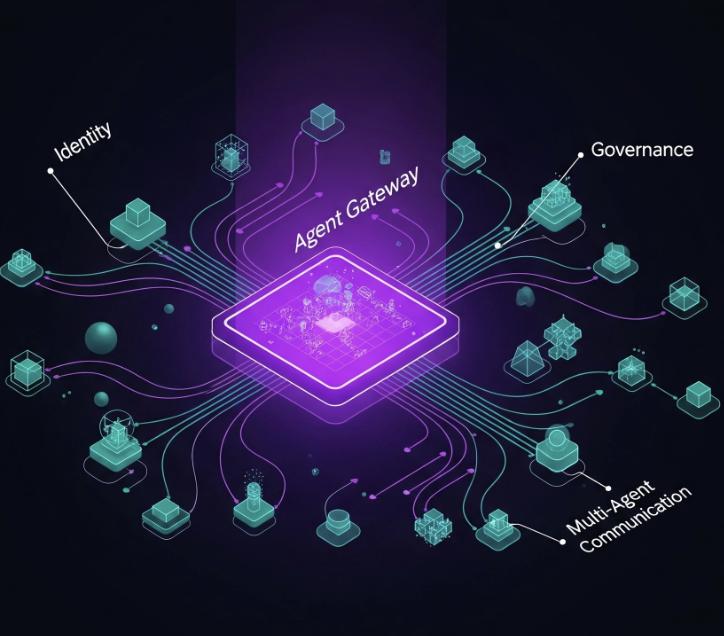
An LLM Gateway is a middleware layer that sits between your application and multiple LLM providers.
Think of it as a translator and traffic controller for AI models:
Just like an API gateway provides a unified way to manage REST/GraphQL services, an LLM gateway provides a single integration point for AI models. It's closely related to - but broader than - an LLM proxy, which handles basic request forwarding; the gateway adds routing intelligence, policy enforcement, and observability on top.
Before diving into gateways, it's worth understanding the pain points of integrating directly with LLM APIs:
Key Metrics for Evaluating Gateway
| Criteria | What should you evaluate ? | Priority | TrueFoundry |
|---|---|---|---|
| Latency | Adds <10ms p95 overhead for time-to-first-token? | Must Have | ✅ Supported |
| Data Residency | Keeps logs within your region (EU/US)? | Depends on use case | ✅ Supported |
| Latency-Based Routing | Automatically reroutes based on real-time latency/failures? | Must Have | ✅ Supported |
| Key Rotation & Revocation | Rotate or revoke keys without downtime? | Must Have | ✅ Supported |
| Key Rotation & Revocation | Rotate or revoke keys without downtime? | Must Have | ✅ Supported |
| Key Rotation & Revocation | Rotate or revoke keys without downtime? | Must Have | ✅ Supported |
| Key Rotation & Revocation | Rotate or revoke keys without downtime? | Must Have | ✅ Supported |
| Key Rotation & Revocation | Rotate or revoke keys without downtime? | Must Have | ✅ Supported |
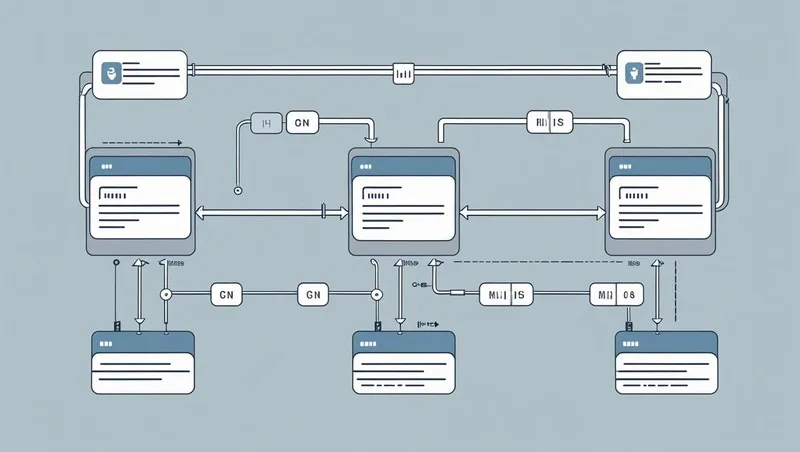
When your application sends an LLM request, here's what happens inside the gateway:
This entire flow adds approximately 3–10ms of overhead - imperceptible to end users but providing your team with complete visibility and control over every LLM interaction.
Not sure which LLM Gateway fits your stack?
We compared the top options — LiteLLM, Portkey, Kong, and more — on latency, cost, and enterprise readiness.
Read the Best LLM Gateways Guide → Or see TrueFoundry's full feature breakdown
| Aspect | Direct API Integration | LLM Gateway |
|---|---|---|
| Setup | Separate code for each provider | One integration point |
| Flexibility | Hard to switch providers | Easy provider switching |
| Scalability | Complex orchestration | Built-in routing & load balancing |
| Monitoring | Distributed across APIs | Centralized dashboard |
| Security | Managed per integration | Unified enforcement |
| Costs | Often higher | Optimized with routing |
Verdict: While direct integration may work for small projects, enterprises and production-scale applications benefit greatly from an LLM gateway.
Choosing the best LLM gateway for your organization means balancing abstraction, governance, observability, and long-term flexibility rather than focusing on routing alone.
The rise of LLMs has transformed how we build AI applications, but direct integration with providers creates complexity, vendor lock-in, and operational challenges. An LLM/AI Gateway solves these issues by acting as a unified, intelligent middleware layer that abstracts, secures, and optimizes model usage.
For developers, it means less time spent on boilerplate integrations. For enterprises, it means governance, compliance, and cost control. For the AI ecosystem, it’s the foundation that allows scalable, multi-model, and future-proof adoption.
As AI continues to evolve, the LLM Gateway is no longer just an optional tool, it’s becoming the backbone of enterprise AI infrastructure.
An LLM gateway works by intercepting application requests and routing them to various model providers through a single API. It validates security credentials, applies rate limits, and injects guardrails before the request reaches the model. This layer then standardizes the response, ensuring your application receives consistent data regardless of the backend provider.
LLM gateway offers enterprises a unified entry point that centralizes security guardrails and rate limiting across multiple providers. This infrastructure eliminates the risk of API key exposure while providing deep visibility into token usage and performance metrics. Implementing this layer allows organizations to scale their generative AI initiatives efficiently and effortlessly.
An LLM gateway prevents vendor lock-in by decoupling your application from specific provider APIs. It provides a standardized interface that translates a single request across various models. When developers understand what LLM gateway architecture is, they can swap providers like OpenAI for Anthropic instantly without rewriting any core application code.
Yes, an LLM gateway and an AI gateway are generally considered the same thing. An LLM gateway is a specialized type of AI gateway designed specifically to handle the unique complexities of large language models. While broader AI gateways manage various machine learning models, this specific infrastructure focuses on token-based rate limiting, prompt guardrails, and centralizing API access across multiple LLM providers.
An LLM gateway centralizes fragmented API management and enforces consistent security policies across your entire organization. This infrastructure shields your team from credential leakage while providing unified cost tracking and vendor-neutral access. By utilizing this layer, you build resilient AI applications that scale effortlessly without increasing operational overhead.
TrueFoundry LLM gateway offers a production-grade solution that prioritizes data sovereignty and security within your private cloud. While exploring “what is LLM gateway”, enterprises discover that our platform provides unique features like automated retries and detailed cost attribution. These capabilities ensure your engineering teams build reliable AI applications without compromising compliance.
TrueFoundry AI Gateway delivers ~3–4 ms latency, handles 350+ RPS on 1 vCPU, scales horizontally with ease, and is production-ready, while LiteLLM suffers from high latency, struggles beyond moderate RPS, lacks built-in scaling, and is best for light or prototype workloads.
Product
Company
Resources


%20(28).webp)








.webp)
.webp)
.webp)
.webp)
.webp)
.webp)

.webp)
.webp)