|
VOOZH | about |
|
VOOZH | about |
TrueFoundry recognized in Gartner Hype Cycle for Platform Engineering 2026. Read the full report →
Join our VAR & VAD ecosystem — deliver enterprise AI governance across LLMs, MCPs & Agents. Become a Partner →
Get instant access to a live TrueFoundry environment. Deploy models, route LLM traffic, and explore the full platform — your sandbox is ready in seconds, no credit card required.
Blazingly fast way to build, track and deploy your models!
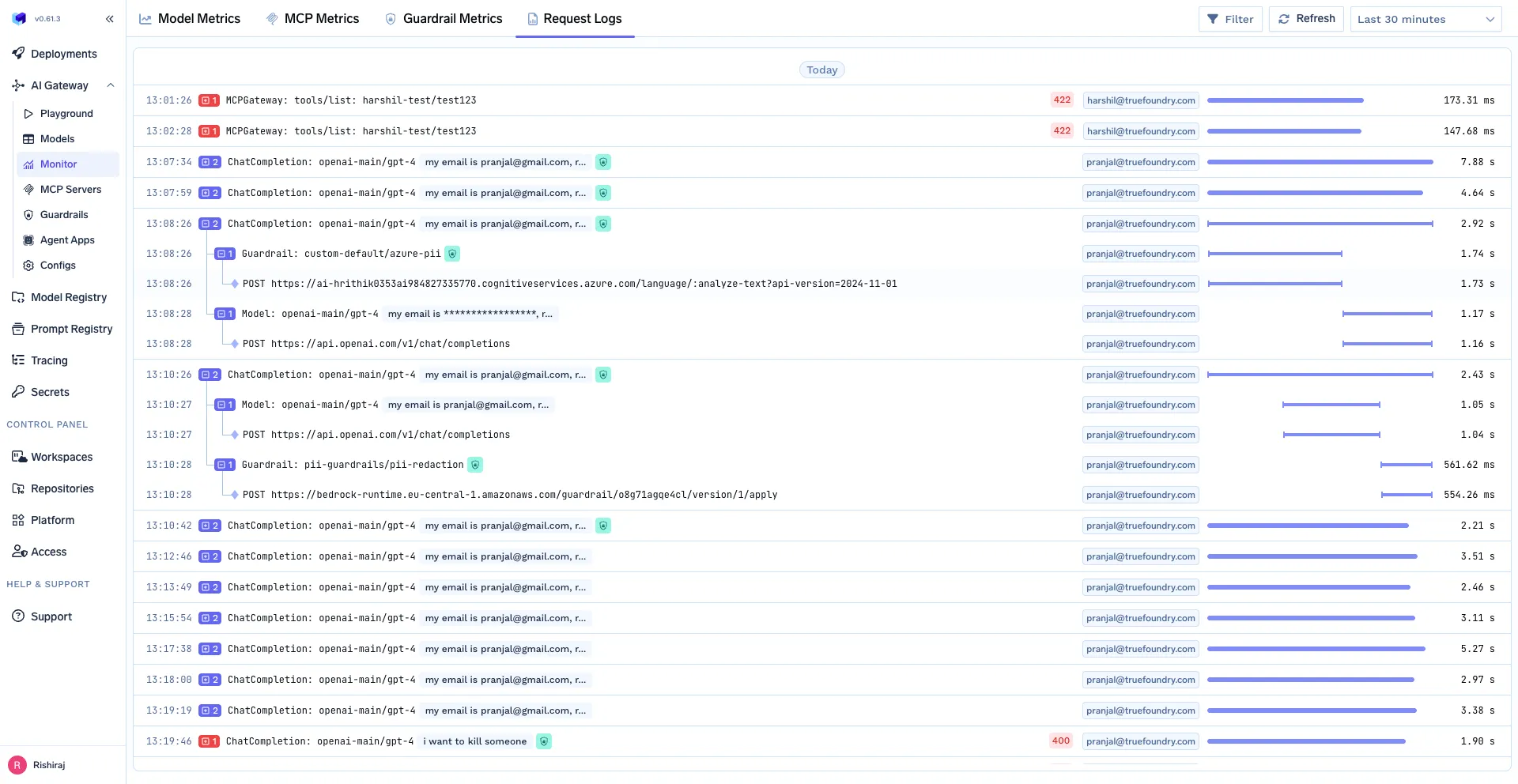
Every AI Gateway in the market offers logs and analytics. On the surface, they seem like a standard feature. But the architectural choices made behind the scenes have massive, hidden consequences for your reliability, security, and bottom line. The how is a critical detail that separates a truly enterprise-grade platform from a risky proposition.
When we first set out to provide our customers with fast, scalable analytics, we faced this exact challenge. The goal was clear: deliver powerful insights through our ai gateway layer without creating an operational nightmare for our customers' platform teams.
We realized early on that to build a solution worthy of our enterprise customers, we had to innovate beyond the industry-standard approach. This post details our journey from the powerful but problematic ClickHouse to a zero-maintenance, S3-native architecture, a system that gives our customers a powerful and durable competitive edge.
Our initial choice, like many others in the industry, was ClickHouse. It’s a phenomenal piece of open-source technology, renowned for its incredible speed in analytical queries. However, its power comes at a steep operational cost.
The core problem is this: managing a stateful, mission-critical database like ClickHouse inside a customer's cloud environment is an operational minefield. To do it right, you need to handle:
This isn't just theoretical. A simple, mistaken kubectl delete pv command could accidentally wipe out a customer's persistent volume, erasing all of their historical logs and metrics data forever. For any enterprise, this level of risk is simply unacceptable. We were effectively becoming a managed ClickHouse provider, which distracted from our core mission.
We researched and found, most platforms in the LLM Gateway space have settled for one of three flawed compromises.
We rejected all three. There had to be a way to deliver performance, security, and zero operational burden. So we built it.
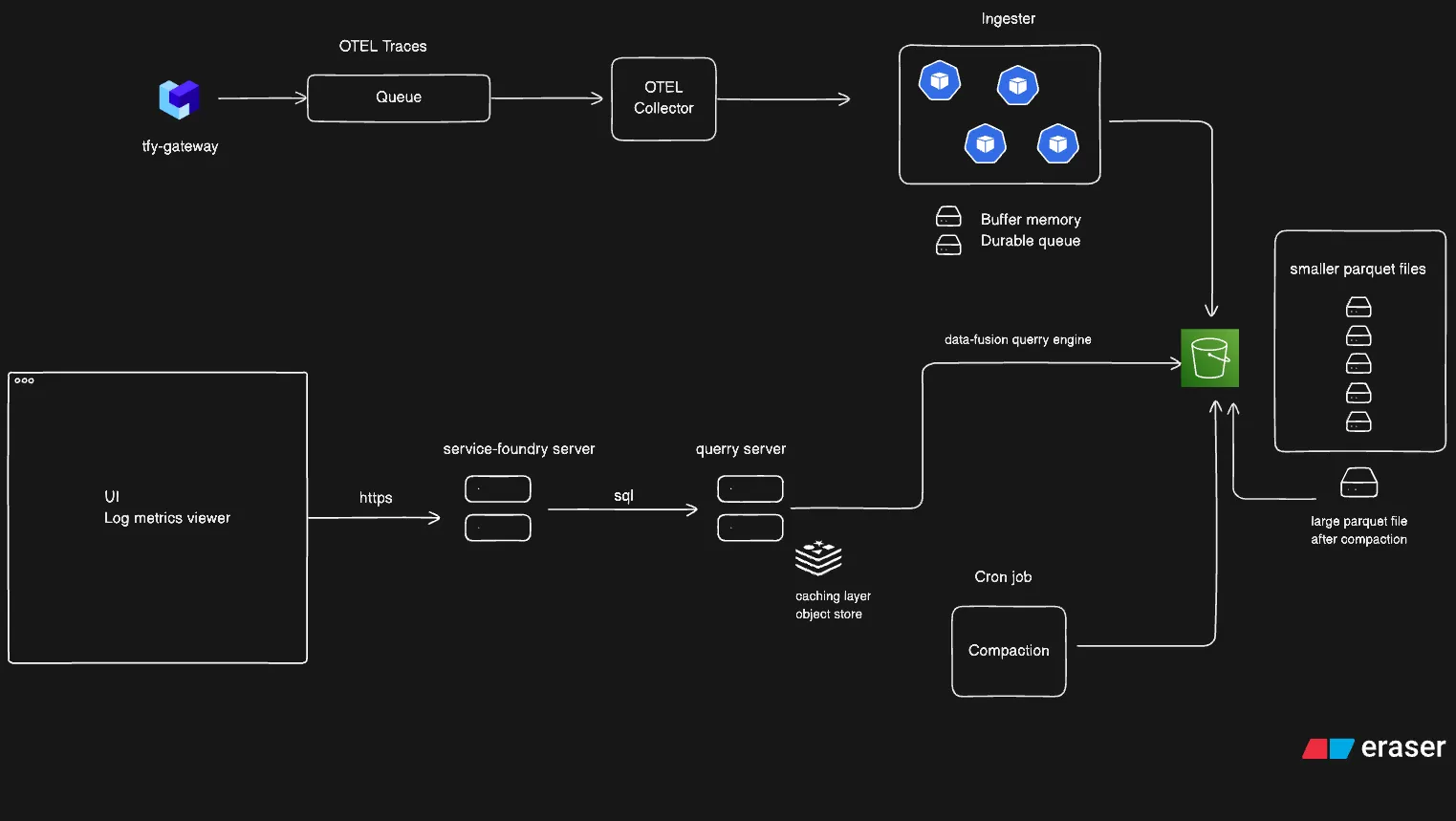
Our guiding principle was simple but powerful: decouple storage and compute. The data should live securely and durably in the customer's own object storage (like S3), while a stateless, scalable engine handles the queries.
We eliminated the database server entirely and made the customer's S3 bucket the source of truth.
We use DataFusion, a query engine from the Apache project. It's a modern, stateless engine that reads Parquet files directly from S3. To overcome S3's inherent network latency, we built a sophisticated multi-level caching layer (in-memory and on-disk) that keeps hot data ready for querying, delivering a fast and responsive UI experience.
Our architecture translates into clear, compelling value that directly impacts your business.
The journey to provide enterprise ready analytics with our AI Gateway was filled with tempting shortcuts and easy compromises. We faced a critical operational challenge, rejected the industry's standard solutions, and engineered a superior architecture from first principles. Ready to see what a truly zero-maintenance, secure, and sub-ms latency AI Gateway looks like? Schedule a demo with us today.
TrueFoundry AI Gateway delivers ~3–4 ms latency, handles 350+ RPS on 1 vCPU, scales horizontally with ease, and is production-ready, while LiteLLM suffers from high latency, struggles beyond moderate RPS, lacks built-in scaling, and is best for light or prototype workloads.
Product
Company
Resources










.webp)
.webp)
.webp)
.webp)
.webp)
.webp)

.webp)
.webp)