|
VOOZH | about |
|
VOOZH | about |
TrueFoundry recognized in Gartner Hype Cycle for Platform Engineering 2026. Read the full report →
Join our VAR & VAD ecosystem — deliver enterprise AI governance across LLMs, MCPs & Agents. Become a Partner →
Get instant access to a live TrueFoundry environment. Deploy models, route LLM traffic, and explore the full platform — your sandbox is ready in seconds, no credit card required.
Blazingly fast way to build, track and deploy your models!
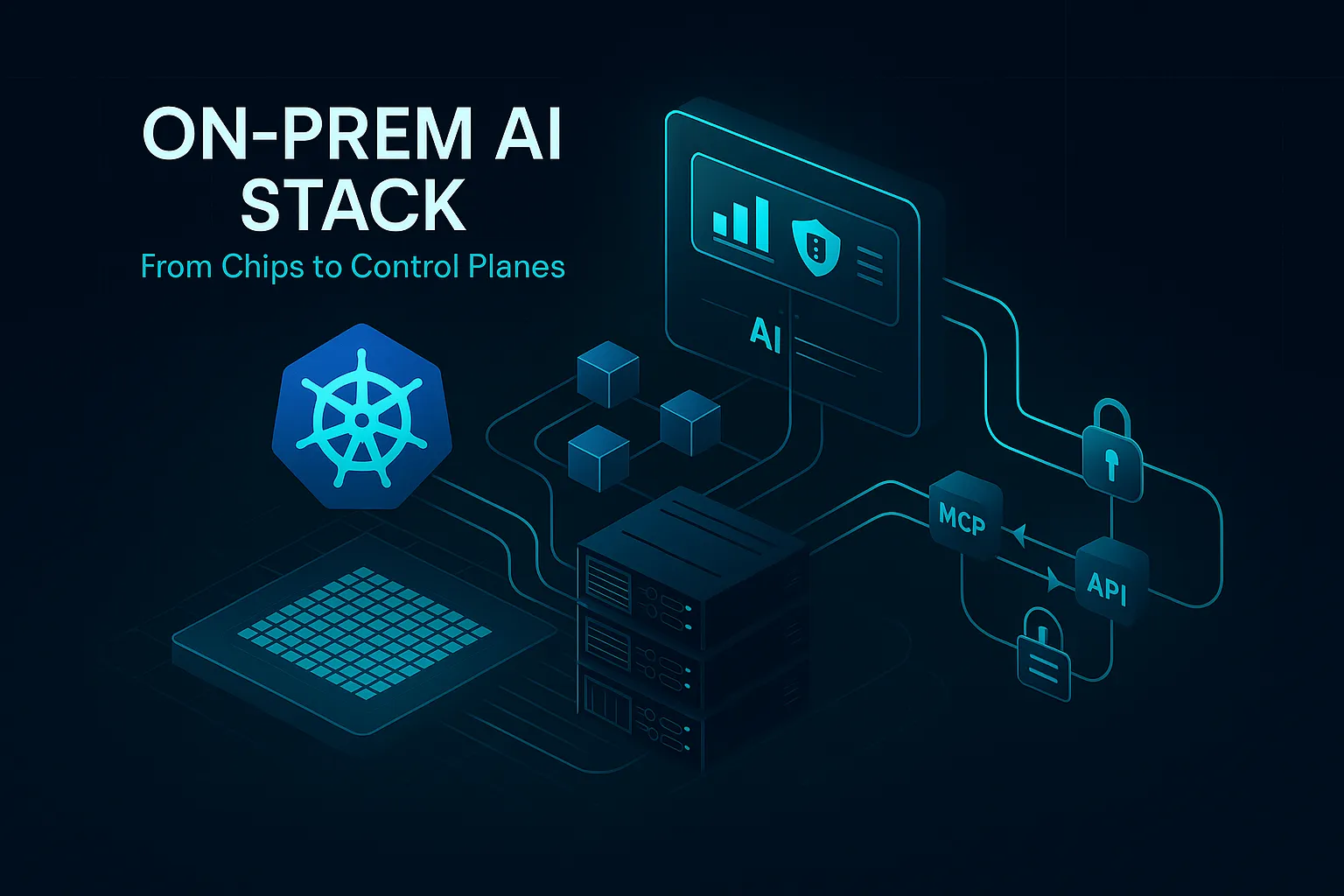
As enterprise adoption of artificial intelligence accelerates across sectors, the focus is rapidly shifting from the mere exploration of AI to the operationalization of AI at scale. One of the most pressing questions organizations now face is not just how to implement AI—but where. The debate between cloud-based and on premise AI platforms is no longer theoretical; it’s being shaped daily by evolving data privacy laws, tighter regulatory oversight, and increasingly customized workloads.
In this context, on premise AI platforms are staging a major comeback. These systems allow organizations to run AI entirely within their own infrastructure—giving them total control over data, compliance, performance, and cost. As more businesses realize that control and customizability can outweigh the convenience of cloud-native services, the momentum behind on premise AI is growing rapidly. This guide breaks down the what, why, and how of building a modern on premise AI stack—and why TrueFoundry is one of the best-suited platforms to help.
An on premise AI platform is a comprehensive environment composed of hardware, software, and orchestration tools that allows an organization to develop, train, deploy, and monitor artificial intelligence (AI) and machine learning (ML) models entirely within its own infrastructure. Unlike cloud-based AI solutions, where data and compute processes are managed by third-party providers, an on premise setup ensures that every part of the AI lifecycle happens behind the company’s firewall—within its local data centers or edge computing infrastructure.
This architecture appeals strongly to enterprises that operate in regulated industries, deal with confidential or proprietary data, or have specific performance and compliance requirements. By hosting AI infrastructure internally, organizations gain complete control over data residency, security protocols, model execution, and system customization. This not only simplifies regulatory compliance (e.g., HIPAA, GDPR, ISO 27001), but also empowers teams to tailor the stack to their unique needs—from low-latency inference at the edge to fine-grained resource allocation for training large language models.
Furthermore, on premise AI platforms enable deeper integration with legacy systems and proprietary hardware that may not be easily compatible with cloud environments. They also allow organizations to optimize cost structures by avoiding ongoing pay-per-use pricing models, which can become expensive at scale.
In the past, cloud AI platforms were the go-to option for quick experimentation and rapid scalability. However, recent shifts in data privacy regulations, customer expectations, and operational complexity have made on premise AI a viable—and sometimes superior—alternative. Here's how the two compare across key factors:
| Factor | On Premise AI Platform | Cloud AI Platform |
|---|---|---|
| Data Control | Full ownership and internal governance | Managed by external provider |
| Security | Localized control and risk mitigation | Shared security model |
| Customization | Deep system-level configuration possible | Limited to vendor tooling |
| Latency | Minimal, especially with edge deployments | Network-dependent and variable |
| Cost Model | Upfront investment, lower long-term costs | Pay-as-you-go, risk of cost sprawl |
| Scalability | Bound by physical resources and planning | Virtually limitless but less predictable |
While the cloud remains an excellent environment for fast deployment and elastic scaling, the advantages of on premise AI become more compelling as workloads grow, data becomes more sensitive, and compliance requirements stiffen.
On premise AI platforms offer a unique combination of security, performance, and control that cloud-native environments can’t fully replicate. By deploying your AI models and workflows internally, you unlock a range of benefits:
Deploying AI on premise isn’t without its hurdles. Organizations need to weigh the benefits against potential operational challenges:
Not every organization needs on premise AI. However, several use cases strongly benefit from this architecture:
When evaluating on premise AI solutions, organizations should look beyond basic deployment capabilities and assess the following core features:
TrueFoundry provides a tightly integrated set of core modules that allow enterprises to build scalable, secure, and fully observable on premise AI platforms. These modules are designed to support the full model lifecycle—from inference to fine-tuning—while offering the flexibility and control that organizations demand.
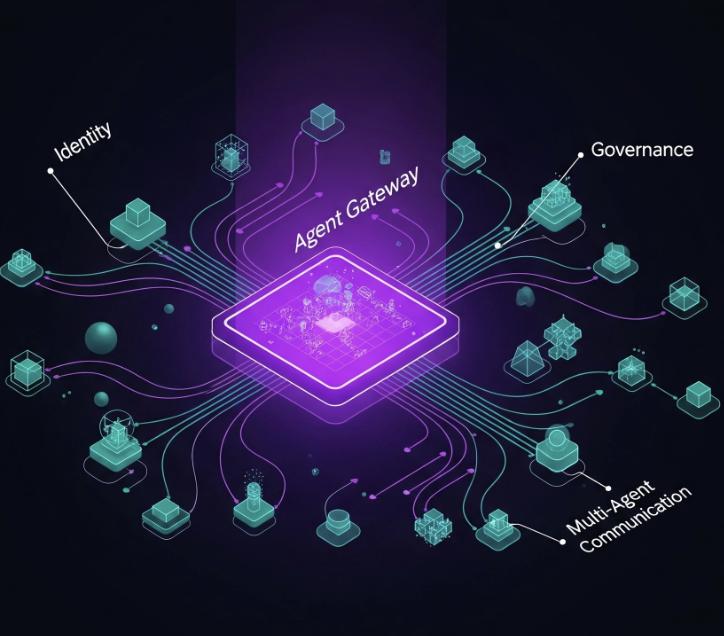
The AI Gateway acts as the centralized control layer for managing all inference traffic across models and APIs deployed in your private infrastructure. It supports advanced governance and cost control mechanisms, making it the operational heart of your AI stack.
The LLM Hosting module allows teams to serve and manage LLMs like LLaMA and Mistral on local hardware with enterprise-grade performance. It includes:
Fine-tuning is fully supported through secure, on premise pipelines that enable teams to train models on sensitive or proprietary data.
Telemetry modules provide complete visibility into agent workflows:
The evaluation framework integrates with:
TrueFoundry modules can be deployed independently or together, making integration seamless with existing observability, orchestration, or compliance workflows.
| Platform | Core Strengths | Notable Use Cases |
|---|---|---|
| TrueFoundry | Modular components, GenAI accelerators, zero vendor lock-in | Regulated industries, Fortune 500s, rapid GenAI deployments |
| NVIDIA DGX | High-performance GPU compute, deep learning optimizations | Scientific computing, medical imaging |
| IBM Watson | Governance, cognitive APIs, enterprise support | Predictive maintenance, compliance-heavy workflows |
| TensorFlow Enterprise | Open-source foundations, distributed model training | ML research, financial services |
| Azure Stack | Hybrid and edge-native deployments, cloud interoperability | Multi-cloud orchestration, edge intelligence |
| Intel OpenVINO | Optimized for edge AI, computer vision tooling | Manufacturing, retail analytics |
| Google Cloud AI Enterprise | Local model serving, integrated monitoring | NLP, recommendation engines, enterprise analytics |
TrueFoundry delivers a robust foundation for AI deployments that prioritize control, speed, and compliance. Its zero vendor lock-in philosophy allows you to deploy AI infrastructure on your terms—whether fully on premise or in a hybrid environment.
The platform offers enterprise-grade security and governance capabilities, including RBAC, audit trails, and workload traceability, making it ideal for organizations with sensitive or regulated data.
TrueFoundry is built for the next generation of AI, with modular APIs and native support for GenAI tooling such as LangChain, VectorDBs, and its LLM Gateway and Finetuning pipelines. These components reduce engineering overhead while accelerating rollout of LLM-backed applications.
The Kubernetes-native architecture ensures fast setup and scale across diverse infrastructure footprints, while its integrated observability stack gives you full transparency into performance and cost.
On premise AI platforms are already transforming workflows across multiple sectors:
For organizations where data governance, system customization, and infrastructure control are critical, on premise AI platforms offer unmatched value. While the cloud excels in rapid experimentation and flexibility, it cannot offer the same level of security, performance, or compliance.
TrueFoundry empowers enterprises to run modern AI stacks entirely within their own environments—securely, scalably, and with full observability. With modular components for inference routing, model hosting, fine-tuning, tracing, and evaluation, TrueFoundry eliminates complexity while preserving the control enterprises demand.
If you’re looking to future-proof your AI strategy with a platform that puts you in control, investing in an on premise AI solution built with TrueFoundry may be the smartest move forward.
TrueFoundry is the top on premise AI platform that helps you host generative AI and machine learning on your own infrastructure. By supporting NVIDIA GPUs and models like Llama, it allows healthcare teams to manage patient data while following strict regulations and data governance.
An on premise AI platform is usually better if you need a high level of control and data sovereignty. Unlike cloud AI from external providers, local hosting gives you greater control over intellectual property and data security. While cloud usage helps with scalability, on-prem setups avoid risks from third-party cloud platforms.
The security risks for an on premise AI platform involve unauthorized access if your internal security policies are weak. You must manage your own infrastructure to prevent downtime. However, this model protects data privacy because you aren't sending sensitive data to cloud providers or external cloud services.
The main difference is where your AI infrastructure sits and how you maintain data control. Cloud AI uses cloud platforms like AWS or Google for data analysis, but an on premise AI platform runs in your hybrid or local environment. These solutions offer more customization for legacy systems and lower operational costs for specific needs.
TrueFoundry is the best on premise AI platform because it gives you full control over the GenAI lifecycle. Our platform ensures regulatory compliance with HIPAA and SOC2 for all your Gen projects. We strengthen your AI strategy by providing a secure way to handle fraud detection in the world of AI.
TrueFoundry AI Gateway delivers ~3–4 ms latency, handles 350+ RPS on 1 vCPU, scales horizontally with ease, and is production-ready, while LiteLLM suffers from high latency, struggles beyond moderate RPS, lacks built-in scaling, and is best for light or prototype workloads.
Product
Company
Resources












.webp)
.webp)
.webp)
.webp)
.webp)
.webp)

.webp)
.webp)