|
VOOZH | about |
|
VOOZH | about |
TrueFoundry recognized in Gartner Hype Cycle for Platform Engineering 2026. Read the full report →
Join our VAR & VAD ecosystem — deliver enterprise AI governance across LLMs, MCPs & Agents. Become a Partner →
Get instant access to a live TrueFoundry environment. Deploy models, route LLM traffic, and explore the full platform — your sandbox is ready in seconds, no credit card required.
Blazingly fast way to build, track and deploy your models!
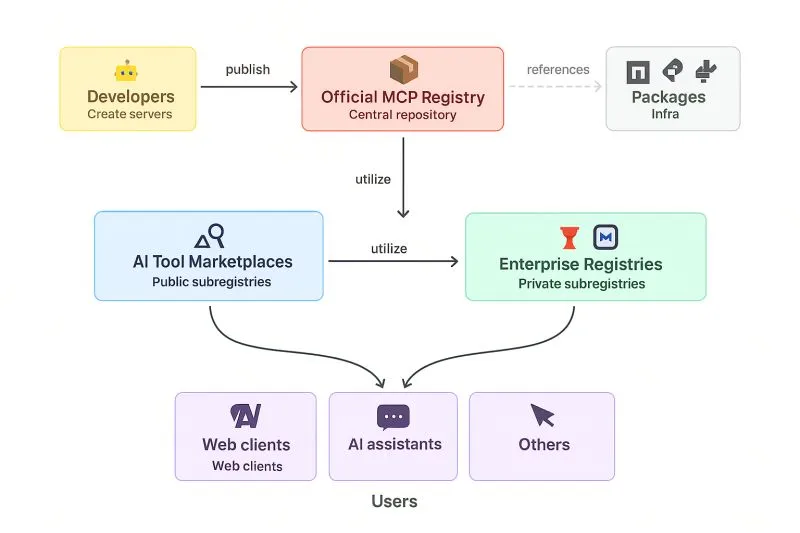
In February 2025, the MCP Registry emerged as a centralized platform for the Model Context Protocol (MCP) ecosystem, aiming to standardize how MCP servers are discovered, registered, and accessed.
Until its launch, MCP adopters had to navigate fragmented server lists, private implementations, and community-driven catalogs, making tool integration and interoperability challenging.
The MCP Registry addresses these issues by acting as a single source of truth for publicly available MCP servers, while enabling the creation of public or private sub-registries tailored to specific client needs. By providing structured metadata, API schemas, and community moderation mechanisms, it allows developers and organizations to reliably discover and interact with MCP servers.
This foundation not only improves accessibility and governance but also accelerates the adoption of context-aware AI applications across the ecosystem.
The MCP Registry is a centralized, open catalog and API for the Model Context Protocol (MCP) ecosystem. It standardizes how MCP servers are discovered, registered, and accessed. MCP itself defines a protocol for structured communication between large language models (LLMs) and external tools or systems, enabling models to perform real-world actions reliably.
When organizations ask, “what is MCP registry in an enterprise context?”, they often find it acts as the backbone of their ecosystem, providing a single source of truth where maintainers can publish metadata and API schemas. In production environments, this registry typically works alongside an MCP registry and AI gateway architecture, where discovery, authentication, routing, and governance are centrally enforced for all agent and LLM interactions.
Key features of the MCP Registry include:
The MCP Registry is more than a listing. It is foundational infrastructure that facilitates discoverability, governance, and interoperability across the MCP ecosystem, enabling LLMs to interact with external tools in a structured and scalable manner.
To fully grasp what is MCP registry functionality, one must look at how servers are registered. MCP server maintainers submit their servers to the registry by providing structured metadata, including API Endpoints, Authentication Methods, and Input/Output Specifications.
Once registered, MCP clients can query the registry to locate servers that meet specific criteria. After discovery, MCP clients generate structured requests according to the server’s input specifications. To ensure these requests are handled safely and at scale, many organizations use TrueFoundry Unified AI Deployments to host their MCP servers and AI agents in a single, governed environment.
Here is a detailed breakdown of the entire process:
MCP server maintainers submit their servers to the registry by providing structured metadata, including:
This structured approach ensures that clients can programmatically discover and understand the capabilities of each server.
Once registered, MCP clients can query the registry to locate servers that meet specific criteria. The registry provides search functionality and standardized server descriptions, allowing clients to interpret the server’s capabilities and data structures consistently. This ensures that models can reliably identify which servers to use for particular tasks.
After discovery, MCP clients generate structured requests according to the server’s input specifications, handle authentication securely, and process responses in the expected format. This enables LLMs to execute real-world actions such as querying databases, invoking APIs, or interfacing with external systems in a predictable and standardized manner.
To maintain quality and security, the registry includes a community-driven moderation mechanism. Users can flag servers that contain spam or malicious code, and maintainers review these reports to denylist problematic entries. This ensures that the registry remains a reliable resource for developers and organizations.
The MCP Registry serves as the backbone of the Model Context Protocol ecosystem by providing essential functionalities that enable LLMs to interact reliably with external tools and services. Understanding what is MCP registry architecture helps developers address challenges faced when integrating multiple MCP servers.
By combining these functions, the MCP Registry ensures that LLMs and external tools can interact in a structured, scalable, and secure manner, forming the foundation for robust, context-aware AI applications.
For developers who need to customize how their models use these tools, TrueFoundry's Prompt Management can be used to refine the instructions the LLM uses when interacting with the discovered MCP servers.
The Model Context Protocol (MCP) Registry is a centralized, open-source system designed to facilitate the discovery, integration, and management of MCP servers.
It provides a standardized repository where developers and organizations can register and access MCP-compatible services, ensuring seamless interoperability between large language models (LLMs) and external tools.
At the heart of the registry is a centralized metadata store that maintains detailed records of registered MCP servers. This metadata includes capabilities, input-output schemas, authentication mechanisms, and versioning information, allowing clients to programmatically discover and interact with servers that meet their specific requirements.
Communication relies on JSON-RPC 2.0 over HTTP, typically using Server-Sent Events (SSE) for real-time transport. This ensures clients can invoke server functionalities with standardized message types. To prevent impersonation, the registry enforces strict namespace verification: publishers must verify ownership via GitHub accounts (e.g., io.github.username) or domain DNS records before their servers are listed.
Security is a key focus, with robust authentication mechanisms such as OAuth 2.0 to restrict access to authorized clients, protecting sensitive data and operations.
Additionally, the MCP Registry incorporates a community-driven moderation and governance system. Users can report servers that are malicious, non-compliant, or of low quality, and registry maintainers review these reports to denylist problematic entries. This approach ensures that the registry remains reliable, trustworthy, and aligned with MCP standards, providing a solid foundation for building context-aware AI applications.
The MCP registry hosts a growing library of servers that extend LLM capabilities into critical workflows. Here are some most commonly used MCP servers:
The MCP Registry offers multiple advantages that make it a cornerstone of the Model Context Protocol ecosystem. One of the primary benefits is centralized discoverability. By providing a single source of truth for MCP servers, the registry allows clients to locate services quickly and reliably. This eliminates the need for fragmented, ad-hoc server lists and reduces errors in integration, ensuring that LLMs can access the right tools for specific tasks.
Key benefits of an MCP registry include:
The registry also enhances security and governance. With community-driven moderation, users can flag non-compliant or malicious servers, and maintainers can denylist them, preserving the integrity and reliability of the ecosystem.
By supporting standardization, the MCP Registry enables predictable client-server interactions, reduces integration complexity, and ensures interoperability across tools and platforms.
Its scalable architecture allows enterprises to deploy context-aware AI workflows efficiently while maintaining consistency and compliance.
Overall, the MCP Registry empowers developers and organizations to build robust, reliable, and secure AI applications. By centralizing discovery, enforcing standardization, enhancing security, and supporting scalable deployment, it provides a foundation for efficient, trustworthy, and future-ready AI ecosystems.
The TrueFoundry MCP Registry centralizes how AI agents discover, authenticate, and interact with MCP servers across an organization. It acts as a “USB-C for AI,” offering a universal interface for tool integration.
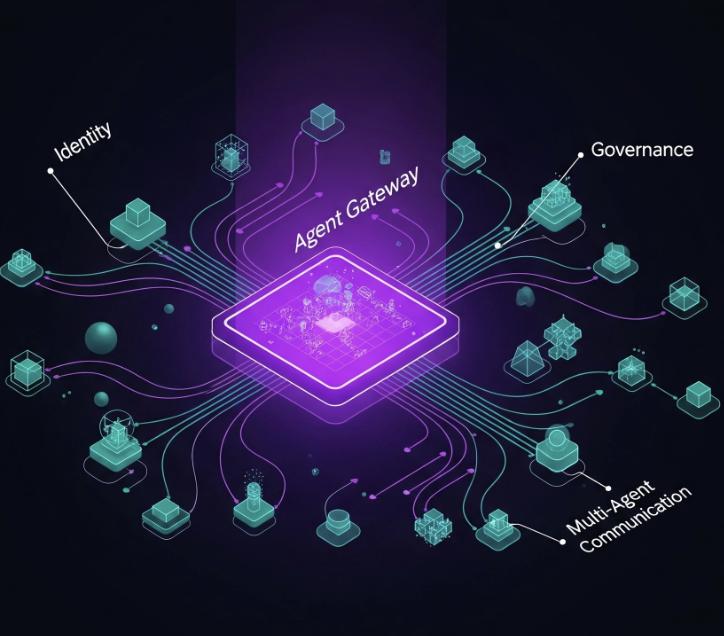
Instead of every developer managing their own MCP servers and credentials, the registry serves as a single source of truth. It maintains metadata, authentication settings, and access policies for all registered servers. When considering what is MCP registry governance for your team, TrueFoundry offers a solution that integrates directly with an agent gateway to provide centralized authentication and secure orchestration of agent workflows.
Administrators can organize MCP servers into groups (for example, dev-mcps or prod-mcps) and define fine-grained access permissions. Supported authentication methods include OAuth2, header-based, and token-based mechanisms.
Users can generate a single Personal Access Token (PAT) or Virtual Account Token (VAT) to securely access all authorized MCP servers. This unified architecture enables dynamic tool discovery, secure automation, and scalable agentic AI workflows across the enterprise.
The TrueFoundry MCP Registry provides a centralized way to register, manage, and govern access to all your MCP servers. You can add both public and self-hosted MCP servers to the registry through the TrueFoundry AI Gateway UI or API.
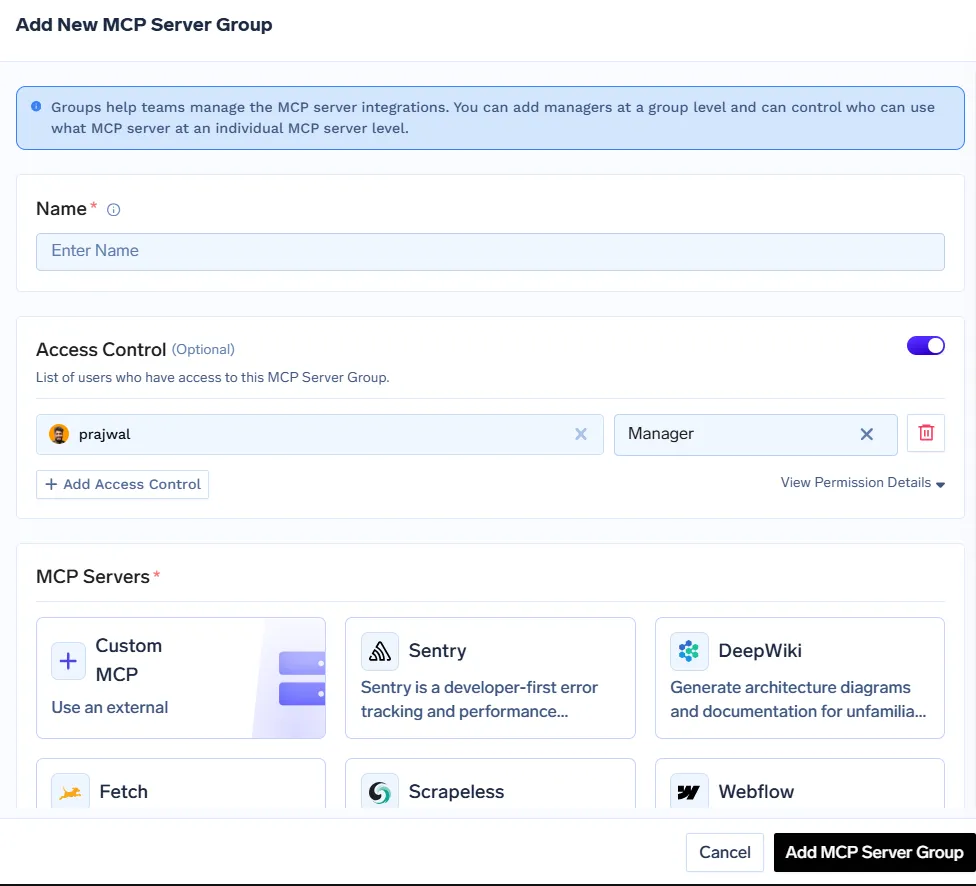
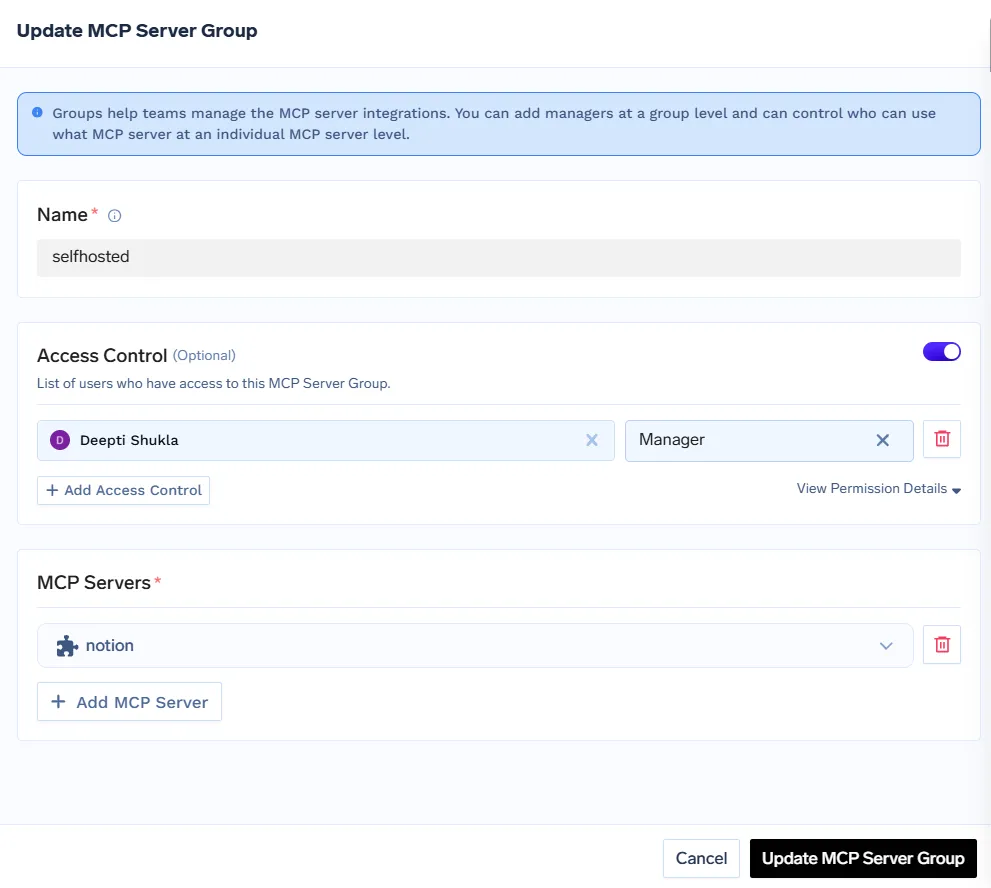
Before adding a server, create an MCP Server Group to organize servers by environment or team. For example:
To create a new group:
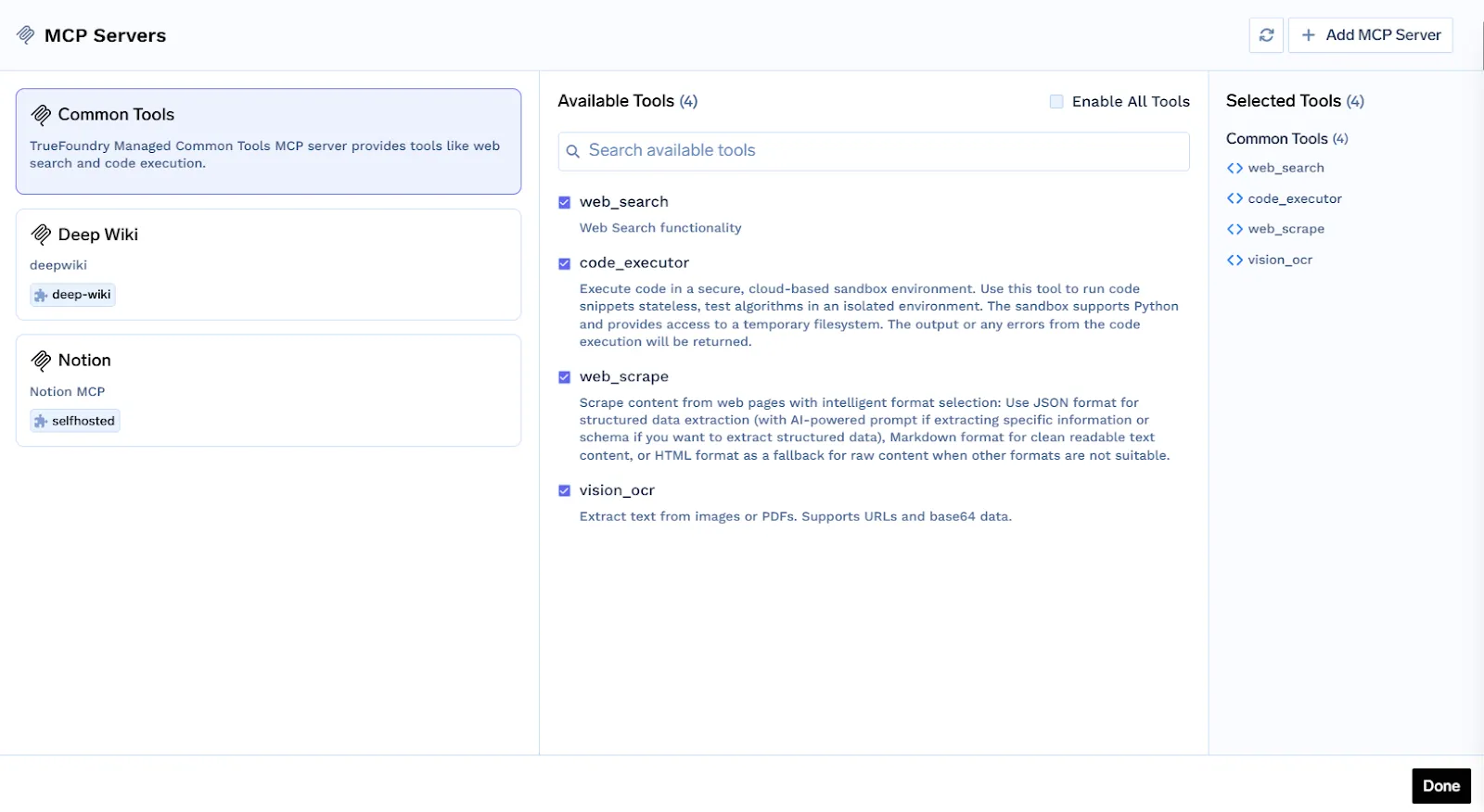
Once the group is created:
After registration, the server appears in the MCP Playground. You can:
This setup ensures centralized governance, consistent authentication, and quick onboarding of new tools into your AI ecosystem.
The MCP Registry stands out from traditional registries due to its focus on standardizing interactions between large language models (LLMs) and external tools. Unlike container registries or general API catalogs that primarily store artifacts or endpoints, the MCP Registry maintains structured metadata about server capabilities, input-output schemas, authentication mechanisms, and versioning.
This enables LLMs to discover and interact with servers predictably, ensuring reliable execution of real-world tasks.
Traditional registries, such as general API registries or package repositories, often lack standardized definitions for model-tool interactions. They may list endpoints or packages, but do not enforce uniform schemas or provide a single source of truth for client applications.
In contrast, the MCP Registry centralizes this information, supporting both public and private sub-registries while allowing governance, access control, and community moderation.
| Feature | MCP Registry | Traditional Registries |
|---|---|---|
| Purpose | Standardized LLM to tool integration | Artifact or API storage |
| Metadata | Structures server capabilities | Minimal or unstructured metadata |
| Access Control | RBAC and OAuth-based | Limited or externally managed |
| Community Moderation | Active moderation and quality control | Rare or absent |
| Sub-registries | Supports public and private sub-registries | Usually not supported |
By providing standardized schemas, centralized discovery, access control, and governance, the MCP Registry enables developers and organizations to integrate LLMs with external systems reliably. This structured approach reduces integration errors, improves security, and supports scalable AI workflow capabilities that conventional registries typically cannot offer.
While the MCP Registry provides centralized discovery and standardized integration for LLMs, managing it comes with several challenges, especially when operating through an MCP gateway. One of the primary issues is keeping metadata accurate and up to date. MCP servers frequently update capabilities, input-output specifications, and authentication methods. Without automated validation and synchronization, outdated metadata can lead to failed integrations or runtime errors for clients.
Security and access control are also critical challenges. With multiple users, teams, and organizations accessing the registry, it is essential to enforce granular permissions and monitor usage. Misconfigured access or compromised tokens can expose sensitive systems or data to unauthorized parties.
Another challenge lies in scalability and performance. As the number of registered MCP servers grows, the registry must handle increased query loads from clients while maintaining low latency. Efficient indexing, caching, and search algorithms become crucial to ensure responsive and reliable service discovery.
Finally, community moderation and governance require ongoing attention. Ensuring that servers comply with standards, are free from malicious code, and maintain quality requires active review and reporting mechanisms. Balancing automation with human oversight is essential to maintain trust and reliability across the ecosystem.
Despite these challenges, a well-managed MCP Registry remains a cornerstone for enabling structured, secure, and scalable AI workflows.
The MCP Registry plays a pivotal role in the Model Context Protocol ecosystem by providing a centralized, standardized, and secure platform for discovering and managing MCP servers. Maintaining structured metadata, supporting access control, and enabling both public and private sub-registries, it allows large language models to interact with external tools reliably and predictably.
While challenges such as metadata accuracy, security, scalability, and governance exist, the registry’s structured approach, combined with community-driven moderation, ensures that these can be effectively managed. Ultimately, the MCP Registry empowers developers and organizations to build robust, context-aware AI applications, streamlining integrations, reducing errors, and fostering trust across the AI ecosystem. It forms a critical foundation for scalable, reliable, and future-ready AI workflows.
Ready to streamline your internal AI tool discovery? TrueFoundry provides the most robust private MCP Registry solution on the market, offering enterprise-grade security and seamless integration for your LLM applications. Book a demo today to build your own private, governed MCP ecosystem.
MCP stands for Model Context Protocol, an open standard introduced in September to standardize how AI models interact with external data and tools. Supported by a growing MCP community, the protocol is currently in preview as it moves toward general availability. By defining a universal interface for servers and clients, MCP eliminates the need for custom integrations, allowing LLMs to connect to any compatible system seamlessly.
An MCP server is the actual tool or data source (like a Google Drive connector) that an AI model interacts with, often deployed via npm or docker containers. In contrast, the official MCP registry is the "phonebook" that lists these servers, helping the AI discover where they are and how to connect to them securely.
Tools available for working with the MCP Registry include the official mcp-publisher CLI for managing server metadata and the MCP Inspector for visual testing and observability. Developers can integrate these into IDEs like VS Code using specialized extensions. Additionally, hosting platforms like TrueFoundry and Azure API Center provide enterprise-grade environments for registry management and server hosting.
TrueFoundry AI Gateway delivers ~3–4 ms latency, handles 350+ RPS on 1 vCPU, scales horizontally with ease, and is production-ready, while LiteLLM suffers from high latency, struggles beyond moderate RPS, lacks built-in scaling, and is best for light or prototype workloads.
Product
Company
Resources



.webp)








.webp)
.webp)
.webp)
.webp)
.webp)
.webp)

.webp)
.webp)