
There are two kinds of PC hardware consumers out there: those who are willing to camp out for releases, and those who aren’t. In the history of this great hobby of ours, we’ve seen a lot of components come and go, some of which revolutionized the way we experience our work and play, and others we wish we could forget about. The former sometimes results in extreme demand, especially in this age of social media-driven hype trains. Not everything on this list required an overnight stay outside a big box store, but these are the 6 PC components that everyone and their mother would’ve pitched a tent for.

6 NVIDIA GeForce GTX 1080 Ti
NVIDIA releases a monster
.jpg)
Honestly, there isn’t much to say that hasn’t been said already regarding the GTX 1080 Ti. NVIDIA might’ve underestimated what this card was capable of when they released it in early 2017. On launch, it gave Titan X-like performance to the mainstream and was $500 cheaper to boot. $700 for a flagship GPU from the Green Team is almost unheard of these days, but back in 2017, even with AMD’s promises in Vega, it was very clearly a bargain.
The Founders Edition card was good, but the partner models really pushed this thing to its limit, and despite new graphics tech like ray tracing, the 1080 Ti kept up in raster a lot longer than anyone expected. NVIDIA stepped on the toes of its own product line by releasing such an awesome card, nearly nullifying the 1080 and making the 2080 look like a pretty poor value proposition. Myself and many other enthusiasts would’ve gladly pitched a tent for a chance to buy what was essentially a binned-down Titan X.
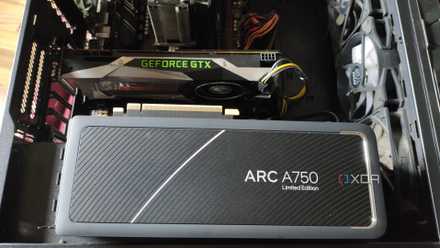
5 reasons why your next GPU should be pre-owned
Buying used is an excellent way to breathe life into your build without breaking the bank
5 AMD Ryzen 7 5800X3D
A GOAT contender that came out of nowhere
When AMD announced their 3D V-Cache technology at Computex in 2021, nobody really knew just how effective it was going to be. It was easy to have reserved expectations, as AMD was still on Zen 3 at this point. How much improvement could we really see without the jump to a new architecture? With clock speeds slower than the 5800X, but a price tag $100 steeper, what’s the point?
We quickly learned that this really was the wonder-chip AMD was claiming it was. Its ability to be dropped into any AM4 motherboard, combined with an exceptional ability to push framerates out in CPU-bound games, is what makes this processor one of the GOATs. It wouldn’t face the stocking issues that would be seen later with the 9800X3D, but it was a sign that AMD was cooking with gas when they developed 3D V-Cache. Intel could just barely keep up with raw performance numbers, but they simply couldn't match the efficiency of the X3D chips.

4 things to know before investing in an AMD X3D CPU
AMD's Ryzen X3D CPUs are unparalleled for gaming, but you should remember a few things before buying one
4 Intel Core 2 Quad Q6600

When you thought it couldn’t get any better with dual-core CPUs, Intel released the QX6700 in 2007, a quad-core chip for an eye-watering $1000 price tag. It was very clear that the target market for such an expensive chip was small, so when Intel launched the Q6600 a few months later for almost half the price, that was the true moment that quad-core CPUs hit the mainstream.
When this chip launched, it was clearly impressive, but the biggest limiting factor was the software that ran on it. Nobody was really ready to take advantage of 4 cores, so on release, it was nearly able to be matched by Core 2 Duo CPUs with a slight overclock. As time went on and more applications took advantage of the extra performance headroom, it was clear that this CPU was going to stick around for a very long time. Today, many enthusiasts look back on the Q6600 very fondly, and rightfully so.
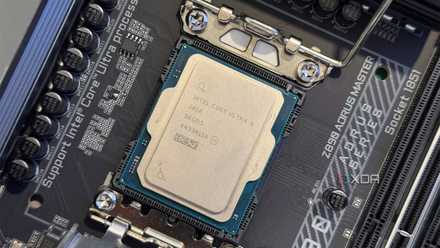
Intel will be stronger than ever in 2025 - here's why
Despite its somewhat disastrous 2024, there's reason to believe Intel will be back with a vengeance next year
3 Intel Core i5-2500k
Intel outdo themselves once more
Intel’s Lynnfield processors were no slouch, but the best was truly yet to come with Sandy Bridge. The i5-2500k was an absolute stunner. For just over $200, you could get a CPU that doesn’t just smoke AMD’s lineup at that time, but also rivals the best of Lynnfield. The launch didn’t go without some hitches, but man, Sandy Bridge was the beginning of Intel’s total domination over the CPU market. The improvements they saw from generation to generation were really impressive, and that started with this chip. The rest of the stack was great, but the 2500K was truly the star of the show in terms of what it offered.

7 best CPUs of all time
The CPU might not be that exciting, which is why we can always tell when a truly great CPU comes along.
2 AMD Ryzen 7 1700
The Red Team finally strikes back
After a woeful product cycle with the FX series of CPUs, it was beginning to look very grim for AMD, with whispers of bankruptcy on the horizon and Intel smashing through performance ceilings. AMD desperately needed a win, and they got one with the first CPU released under their Zen architecture.
The Ryzen 7 1700 didn’t smash through any performance ceilings, but it provided exceptional performance per dollar in both gaming and productivity workloads. On launch, it matched the $1100 6900K for about a third of its price, which was extremely impressive for a 65W chip. Zen 1 was also quite efficient, boding well for the rest of the lineup that came later in 2017 and beyond. It was also an acceptable overclocker with a completely unlocked core ratio multiplier. If you got one of these on launch, it felt like an absolute steal.

What is Infinity Fabric on AMD Ryzen CPUs and what does it do?
The high-speed, low-latency data highway powering AMD's Ryzen CPUs
1 NVIDIA GeForce RTX 5090
You may not like it, but it’s the king
Regardless of what you think about the rest of the RTX 50 series lineup, if you were one of the lucky few to get a 5090 at MSRP, you might not have to buy a new GPU for a very long time. 92.2 million transistors to go along with a huge 32 GB VRAM buffer, packed into a PCB just larger than a coaster is just downright impressive. Packing all of that into a two-slot design that cools everything adequately is the icing on the cake.
If you camped out for one of these (and actually kept it), you’re either very happy with your purchase, or wondering why I haven’t addressed the massive elephant(s) in the room. Missing ROPs, burning connectors and driver issues have plagued this series of GPUs from NVIDIA. I was quite reluctant to put the 5090 on this list, and it really came down to the 12VHP connector, which can literally cause a fire if not handled with extreme care. Even if you’re careful, it seems that these connectors are just not built to handle the power being put through them. Despite that, when the GPU is functioning properly, it’s an absolute monster, and if you managed to get one on because you camped out on launch day, everyone can agree that you’re extremely fortunate.
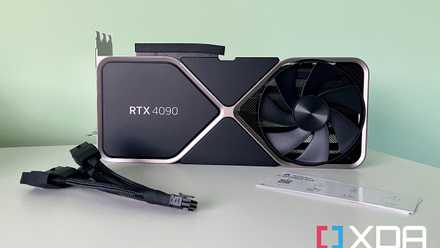
4 ways the Nvidia GeForce RTX 5090 is superior to the RTX 4090
Want the most powerful GPU? The RTX 5090 is your only option.
Components that were well worth the urban campout
I’ll admit it: I’ve never camped out for any PC components myself, but if I could turn back time, I wouldn’t mind doing so for those 6. It’s always a bit of a gamble buying things on launch. You never know when a component is going to be marred by issues like burning connectors or perhaps more benign stuff like malfunctioning drivers.