
PC gaming handhelds are all the rage these days, and they keep getting more and more powerful , and in tandem, more expensive. It's always tempting to go for the latest and greatest considering this portable hardware still hasn't caught up with big desktop PCs, but the truth is, you don't really need a powerful gaming handheld to have a great gaming experience.
Whether it's emulation or streaming, there are plenty of ways you can make great use of your gaming handheld, even if it's too weak to run the latest games in an acceptable fashion. And for many people, that's the best experience you can get.
Emulation is easy
You can play a lot with low-end hardware
Right off the bat, one of the best uses for any gaming handheld is to play classic games through emulation, and for that, you really don't need a lot of power. There's a huge library of wonderful games on platforms from the NES, SNES, Sega Genesis, PlayStation, or even the Nintendo GameCube, along with portable consoles all the way up to the Nintendo DS and PlayStation Portable, all of which can be played easily on relatively weak hardware these days.
You can set up a tool like Emulation Station (ES-DE) or use more specific solutions like EmuDeck or RetroDeck, and you'll get a wonderful experience browsing and playing all these games with fairly intuitive controls and great performance. This alone can get you hundreds of hours of playtime across all kinds of platforms and games, and if you're a fan of gaming, it can even serve as a history lesson about many of the games you may love today.
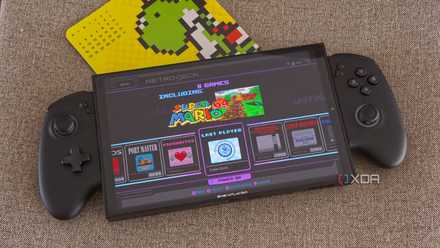
I switched from EmuDeck to RetroDeck for retro gaming, and the setup alone convinced me to stay
EmuDeck gets all the glory, but there's good reasons to switch
Any of these systems can run well on even an original Steam Deck or one of the lesser-known handhelds released before it, so you don't have to spend a ton of money on great hardware to have a great time. Even if you just have a phone, it can likelyt handle most of these systems fine by just connecting a controller.
Outside of emulation, older PC games also run very well on weaker hardware these days, as do 2D titles like Stardew Valley, Dead Cells, Balatro and many other beloved games. Having a super powerful gaming handheld won't do much for those games, and in fact, you'd most likely want to lower power consumption while playing them so the battery lasts longer.
You can even self-host retro games
For the NAS lovers
While we're talking about emulation, it's worth mentioning that you may not even need to host the games or the processing power on the handheld itself. Self-hosted services like RomM or RetroAssembly let you host your games in a NAS device and stream them to a web browser with controller, keyboard, and touchscreen support.
I've tested RetroAssembly myself, and while it doesn't support the more graphically-advanced platforms, it can still run a ton of retro games directly in a web browser on just about any device you use. What makes this especially great is you can also keep your save data on the NAS itself, which means you can keep playing from any device and still have your game exactly where you left it. You can move from your desk PC to your handheld and keep playing the same game right where you left off, or even continue on your phone if you're in a pinch. With a reverse proxy, you could even access your games from outside your network.
The only major downside I noticed with this approach is that RetroAssembly doesn't seem to work very well with built-in controller on Bazzite, but if you're using Windows, you should be fine.
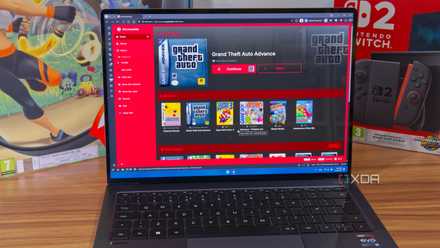
I play my entire retro collection in my browser thanks to this amazing self-hosted library
Yet another great use for a NAS
There's always streaming
I'm not talking about the cloud
Emulation is great, but I understand a big part of the appeal of a gaming handheld is the ability to play modern PC games, and for that, you need a relatively powerful computer. That's why handhelds keep getting better and better. But if you're that invested in PC gaming, chances are you already have a more powerful PC that can play your games, and at that point, you don't really need a powerful gaming handheld, too. That's where Steam Remote Play comes in.
Even if you've heard of Remote Play, I'd almost wager you've been underutilizing it, and most people who buy one of these handhelds aren't considering this option. Streaming may sound like it comes with a lot of downsides such as lag and input delays, but in reality, games are perfectly playable through this method.
Many times, a gaming handheld is used to play games sitting on the couch in the living room, where it's very likely you also have your router or a Wi-Fi access point. And your desktop PC is probably wired with an Ethernet connection. With that kind of connection you can stream your games easily from your main desktop to your gaming handheld with very little delay. And while there can be some compression artifacts due to streaming, the truth is your games will probably look far better and run much more smoothly than they would using the hardware on your handheld, even if you go for a higher-end model.

I streamed my Steam library to my handheld and stopped worrying about storage
It's much better than you'd think
I tested this myself using only Wi-Fi and a relatively weak gaming laptop, and I still had way better performance in Elden Ring compared to when I played directly on the handheld. With a better connection and a better PC, you can do even better. And if your games aren't on Steam, there are solutions like Moonlight and Sunshine, which let you stream almost anything from one PC to another. You're not out of options at all, even if you have an older handheld.
Of course, you could also stream games from the cloud using services like Xbox Game Pass, but that costs more money and I'd argue the experience is often worse depending on your location. Local game streaming is where these handhelds shine.
You don't need the latest and greatest
With shiny new handhelds coming out every other week, it's easy to be tempted to spring for the latest thing, especially as performance keeps getting better. But gaming doesn't have to be that expensive, especially when you already have a capable gaming PC. Even a used gaming handheld from a few years ago can still give you a great gaming experience through local streaming, and older titles run well on it, too. I highly recommend giving it a shot if you haven't before.