
More and more Wi-Fi 7 routers seem to be cropping up these days, perhaps due to newer devices like the iPhone 17 supporting the standard. Wi-Fi 7 builds on Wi-Fi 6E, improving speeds, latency, and bandwidth use, but most people don't have the network infrastructure to truly benefit from all the promised advancements. Even if your internet plan exceeds Gigabit speeds, an "older" Wi-Fi 6 router is still up to the task. Besides, the other parts of your home network, such as the switch, mesh nodes, and devices, may not be equipped to leverage the peak performance of Wi-Fi 7. Simply buying a Wi-Fi 7 router will not magically improve your network, and more importantly, it may not need improving at all.

We need to talk about Wi-Fi 7
This is not the speedy wireless future I envisioned.
Your internet plan doesn't come close to Wi-Fi 7 speeds
Wi-Fi 7 is made for the post-Gigabit era
While Gigabit plans have been around for years, Wi-Fi 6 routers already support them. Both Wi-Fi 6 and 6E routers offer a maximum theoretical bandwidth of 9.6 Gbps, with real-world speeds topping out at around 1.2 Gbps and 2 Gbps, respectively. These limits are still enough for a Gigabit plan. Most people in the US have an internet plan not faster than 300 Mbps, which is fine even on a Wi-Fi 5 router. Wi-Fi 7, on the other hand, makes sense when you're dealing with multi-gig internet with speeds exceeding 2.5 Gbps. Indeed, Wi-Fi 7 offers more than just faster speeds, but the latency benefits, Multi-Link Operation (MLO) for multi-band use, and 320MHz channel bandwidth won't be as noticeable if you're already on Wi-Fi 6E.
Many countries in the world don't allow the 6GHz band that Wi-Fi 7 requires for the fastest speeds. Even in the countries that have approved it, there's no guarantee that you'll be able to use the sub-bands that are wide enough for the new 320 MHz channel. Even the latest consumer devices don't offer more than 2x2 stream compatibility, so Wi-Fi 7's super speeds become even more theoretical. To further complicate matters, your older wired devices like desktop PCs, laptops, and NAS devices, could still be limited to Gigabit Ethernet, capping internal transfer speeds anyway. A Wi-Fi 7 router can improve multi-device connectivity for your wireless devices, but it's still overkill if that's the only thing you buy it for. To fully take advantage of Wi-Fi 7, many more things need to fall into place — a multi-gig internet plan, devices with multi-gig Ethernet ports, and devices supporting Wi-Fi 7.

Wi-Fi 7 is exciting, but here's why you shouldn't buy a new router (yet)
You can afford to wait a little longer to upgrade your router
Your wired backhaul may be capped to 1GbE
It isn't slow, but it isn't Wi-Fi 7 territory
You may be enjoying the benefits of a mesh network in your home, but adding a Wi-Fi 7 router into the mix won't boost performance without an improved wired backhaul. Most mesh nodes still support only a 1GbE wired backhaul, meaning your devices are theoretically capped to Gigabit speeds. Wireless backhaul is simpler to set up, but it further reduces the max speeds due to the shared bandwidth for relaying signals back to the router. If you're going to be using only Gigabit speeds anyway, you may as well stick to your Wi-Fi 6 or 6E router. Without a 2.5GbE wired backhaul, your mesh network won't be scratching the surface of what a Wi-Fi 7 router can do, making the latter little more than a cosmetic makeover for your network.
Upgrading your mesh nodes isn't cheap or recommended, since you're probably enjoying a great connection already. Gigabit backhaul is nothing to scoff at. Besides, your wired devices with a direct connection to the router would still be getting the maximum bandwidth of your plan. Upgrading to Wi-Fi 7 could benefit you in the future, but that future seems far away right now, at least for most people.

Your mesh Wi-Fi isn't the problem, your backhaul is
Running wires beats running circles around the problem
Your network infra needs to step up
Before you bring in a Wi-Fi 7 router
Before upgrading to a Wi-Fi 7 router, you need to ensure that every piece of your home network is ready. Most users don't think about their Ethernet cables, which form the backbone of their entire home network. While Cat 5e can handle 2.5 Gbps connections over shorter runs, Cat 6 is needed for robust 2.5GbE connectivity. And ideally, you should opt for Cat 6a if you're aiming for a consistent 10GbE over longer runs. Most users ignore the cabling because they expect it to "just work." If you're unsure about pre-installed Ethernet cables in your house, replace them with Cat6a cables to support your Wi-Fi 7 upgrade.
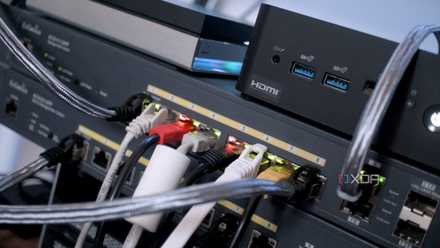
For users who have four or fewer wired devices to connect to the router, a Wi-Fi 6E model is still more than enough. You don't really need a Wi-Fi 7 router unless you also need a switch to hardwire even more clients. The switch becomes a potential choke point in that scenario, since most switches still feature only Gigabit ports. Hence, if you're a staunch supporter of "wired-only" for every device in your house, you may need an upgraded switch before you can think about a Wi-Fi 7 router.
4 reasons your 2.5GbE is slower than Gigabit
A faster port doesn't guarantee faster speeds
Wi-Fi 7 is ready, but your home isn't
The biggest hurdles in Wi-Fi 7 adoption are the practical internet speeds, Gigabit access points, and dated Ethernet cables. Without every part of your network tailored to support the advanced features of Wi-Fi 7, a new router alone won't move the needle. Your wireless devices may see some latency improvements, but don't expect drastic changes compared to Wi-Fi 6E. Most homes still don't need a Wi-Fi 7 router, even for internet plans touching 2 Gbps speeds.