
After delaying my OLED upgrade in the hopes of falling prices, I bought the Alienware AW3423DWF a few months ago. It's a fantastic QD-OLED panel at the price I got it for, and the ultrawide form factor further increases the immersion. That said, not everything was an improvement over my previous monitor. The increase in the resolution meant that my 5-year-old GPU was struggling even more than earlier. I didn't think the impact would be too noticeable, but I was wrong. The 3440x1440 resolution exposed my GPU's weaknesses, and a new graphics card is out of the question in the current market.

6 things no one told me about living with an ultrawide OLED monitor
OLED & ultrawide is a deadly, not perfect, combination
3440x1440 is just too many pixels for my GPU
The performance hit was worse than I anticipated
While the RTX 3080 inside my gaming PC was one of the fastest GPUs in the world in 2020, it's far from that in 2026. It used to feel like a high-end card even when I got it in 2022, but over three years later, it has started to show its age. It used to work fine in the latest titles on my older 1440p monitor, but on a 3440x1440 ultrawide display, there are around 35% more pixels to deal with. Sure, that doesn't mean I see a direct 35% drop in performance, but the impact is still in the 20% range. That's a significant hit for the FPS on a card that often struggles to cross 60 FPS in High-Ultra settings in demanding AAA games. I can still reduce the in-game settings to cross that magic number, but it's not something I take pleasure in.
You'd think I would be prepared for the performance decrease, but honestly, I overestimated my GPU's capabilities when upgrading my monitor. Although I've been meaning to switch to a more recent graphics card since the RTX 40 series came out, I never found the right price to take the plunge. And now, it seems I'm too late. The best time to upgrade was six months ago, when the GPU prices had finally settled after a long time. Models like the RTX 5070 and RTX 5080 were selling at near-MSRP levels, but I waited for the RTX 50 Super series, which never arrived. I'm now stuck with a monitor that's too demanding for my GPU, unless I compromise with the visuals in the latest titles.
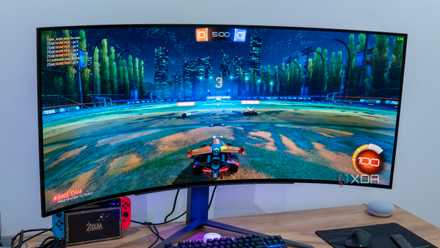
Buying a gaming monitor? — Stop making these 7 mistakes
Make sure you're buying the right display for your gaming setup
10GB of VRAM is starting to feel restrictive
It was bound to happen
As the resolution increases, so does the VRAM usage. While 3440x1440 isn't quite 4K, the jump is still significant enough to make a difference, considering my RTX 3080's 10GB framebuffer. If you look at the track record of AAA games in the last few years, even 12GB is cutting it close at the highest settings, and that's regular 1440p. Bumping the resolution to 3440x1440 demands even more VRAM from the GPU, in the absence of which, I sometimes run into slight delays in texture loading and some noticeable stutters.
You might argue that playing at Medium-High settings is perfectly acceptable in demanding titles, and that's what I'm forced to do anyway in the most demanding games. However, occasionally, I'm tempted to crank ray tracing settings to High/Ultra, but I run into the VRAM ceiling even if the GPU is otherwise capable of pushing harder. I've tried overclocking my GPU to squeeze out some more performance, but the gains have been minimal. 10GB of VRAM on an 80-class card was questionable even in 2020, but that's what Nvidia deemed reasonable for gamers. In 2026, high-end gaming with a GPU that has less than 16GB of VRAM is a particularly tricky challenge, and even more so on ultrawide resolutions.
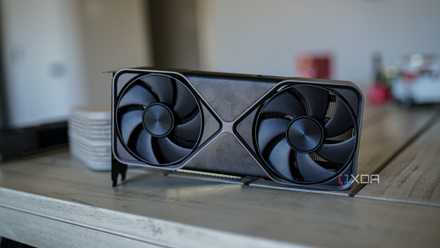
5 reasons your GPU's VRAM capacity matters more than ever
Remember the fears about low VRAM on GPUs? They're all coming true
I don't even have Nvidia's frame generation to fall back on
MFG can be helpful under the right conditions
DLSS has been doing the heavy lifting on the RTX 3080 for a while now, making it possible for me to enjoy many great titles, such as Cyberpunk 2077, Alan Wake 2, and Black Myth: Wukong. It has certainly helped extend its lifespan by a few years, but without frame generation, I can't expect wonders from this card. While I know that AI-generated frames don't "feel" equivalent to rendered ones, I would still like to have the feature, if only to saturate the 165Hz refresh rate of my ultrawide monitor. If the base framerate, even after DLSS upscaling, is around 80 FPS, I can legitimately make use of frame generation to boost it to around 160 FPS, without even getting into 4x or 6x frame gen territory, and the problems that come with those.
Sadly, the RTX 30 series doesn't have access to Nvidia's frame generation features. Yes, there are workarounds to force it with mods, but the performance, power usage, and thermals aren't good enough. The fact is that the RTX 30 series GPUs have been made to feel older than they really are, and Nvidia is the one doing it. Frame generation should have arrived on RTX 30 and RTX 20 series cards by now. Let gamers use the feature and decide for themselves if the gains are worth it. If the underlying hardware really can't handle frame generation, then we won't use it anyway.
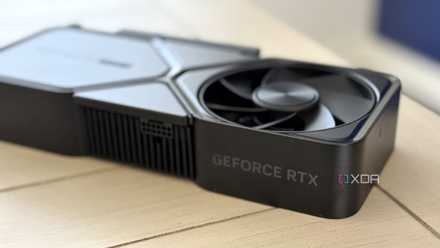
Nvidia's Dynamic Frame Generation might finally make it useful
Is it the way it's meant to be played?
Is it the end of the line for the RTX 3080?
I know I can't afford a new GPU at the inflated prices that have gripped the PC hardware industry right now, but is it the right time to upgrade anyway? Five years shouldn't make a GPU "old", but it's not a short time either, at least in the GPU world. We've seen two generations of GPUs succeed the RTX 30 series, and the performance levels and feature set have changed dramatically. The gen-on-gen gains with the RTX 50 series might feel middling, but the RTX 30 to RTX 50 jump is quite substantial. Alas, I will probably have to wait another two years before considering an upgrade.