
As PC gamers, we're almost always planning upgrades, tracking component prices, and thinking about the best time to upgrade. Some of us might not intend to upgrade for years, but others with older hardware might have made up their minds. It is then a question of finding the chosen parts at reasonable prices. Personally, I decide to upgrade my PC when my build is old enough, there's no new launch on the horizon, and prices are stable. Sadly, this trifecta actually existed around six months ago, but I was too distracted to take advantage. Since then, the prices of RAM, storage, and graphics cards have broken the stratosphere. We all missed the bus, and there's no telling how long our upgrade dreams need to wait.

PC gaming is becoming a luxury: Why the RAM crisis is a win for consoles
Every day now, a new PS5 or Xbox makes undeniably more sense.
The DRAM shortage has snowballed into a full-blown PC hardware storm
AI is taking over your PC upgrade dreams
As you might be aware, the monster at the heart of the latest PC hardware crisis is AI, yet again. The unprecedented demand for enterprise memory has led to a rapid wafer reallocation away from consumer hardware. The rumblings started around August–September when the prices of consumer RAM started climbing. In just a few months, DDR5 as well as DDR4 memory quadrupled in price, crashing the upgrade plans for countless PC builders. Manufacturers obviously want to utilize all available silicon for the most profitable product, i.e., high-bandwidth server-grade memory. This has created a DRAM supply crunch, the likes of which we've rarely seen before.
It was just RAM at first, but soon after, SSDs and hard drives started to feel the pressure, too. While NVMe prices doubled, hard drive prices also saw a significant upward movement. Micron's consumer arm, Crucial, exited the market, confirming that this was not one of those fleeting crises. Finally, Nvidia announced a cut in GPU production, AMD reportedly delayed its next-gen GPUs till 2027, and the prices of GPUs across the board shot up in response. The high-end SKUs, such as the RTX 5070 Ti, RTX 5080, and RTX 5090, seem to be the worst hit, since higher VRAM capacities automatically mean higher costs right now.
In the last 5–6 years, it seems that every 2 years, PC builders have to contend with one or the other industry upheavals disrupting their upgrade plans. First, there was the pandemic and the crypto boom, followed by lingering supply chain constraints and rising AI demand, and now we've entered a full-blown AI takeover. By all accounts, the latest crisis is going to last way longer than the ones before it.
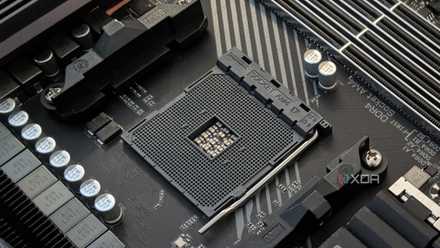
DDR4 being the smarter choice again wasn't on my 2026 bingo card
Market forces have conspired to make DDR4 great again
We didn't know how good we had it
You didn't have to be a genius to see the signs
They say there's always something better coming in the world of PC hardware. While that has been the case for ages, some telling signs in mid-2025 should have alerted PC gamers that they were living in a Goldilocks period. For one, graphics card prices had returned to near-MSRP levels for a good 2–3 months after a long wait. Models like the RTX 5070 and RX 9070 XT were available for a little over their MSRPs, which was a lot to expect in 2025. Even in November and December, you could find these models selling for around $580 and $650, respectively. If you were tracking GPU prices since early 2025, this was easily the best time to buy a new one.
Second, the raw performance of Nvidia's RTX 50 series clearly showed that the time of significant gen-to-gen gains was ending. Without AI-generated frames, these cards seemed like a refresh of the RTX 40 series models. Even the rumored RTX 50 Super cards were reported to ship only with a VRAM bump, not an increase in CUDA cores or overall bandwidth. By November, the RTX 50 Super series was reportedly delayed or canceled altogether. It was clear that if you wanted the opportunity to get a current-gen GPU at MSRP, this was the moment. AMD's RX 90 series had delivered on the promises made by the company, and the RX 9070 XT was a great product that AMD fans should have grabbed at MSRP when they had the chance.
In September, RAM and SSD prices hadn't yet begun their ascent into madness. For those looking to build a DDR5 system, CPU and motherboard prices were the most affordable they have ever been. The perfect storm was in your favor, but you probably waited, like me, for new GPUs or better prices, and missed the bus entirely. We couldn't have predicted everything, but the GPU market had, more or less, stabilized after months of inflated prices — that much was apparent. Some people managed to strike while the iron was hot, but most others missed the golden chance.

DDR5 prices killed my upgrade plans, so I overclocked my DDR4 RAM instead
It's a time-consuming process, but it helped me optimize my existing hardware
The next upgrade window might not arrive till 2028
It's a long road we've got ahead of us
Sad as it is, the next golden chance to upgrade your PC without paying through the nose might not arrive for two more years. Some reports predict that the ongoing crisis will last well into 2027 or even 2028. The AI bubble will get much, much bigger before it bursts, which means you probably need to spend a few more years with your existing build. Tech giants are investing billions in acquiring data center memory and GPUs, and the supply contracts with manufacturers are booked into the foreseeable future. OpenAI, Google, Microsoft, Amazon, and others have also been investing heavily in nuclear fusion, geothermal, and clean hydrogen energy to power their AI data centers. This train isn't stopping anytime soon.
Forget about building a new PC; you might not even be able to afford a graphics card for the next two years. Any GPU worth buying is likely to be hiked enough that it becomes a no-brainer to forget about upgrades and focus on other things in your life. The economy is anything but normal right now, job security is a myth, and the cost-of-living crisis has only worsened in the past few years. It might be time to put your PC upgrade plans on hold for good. Come back in two or three years with hopes of seeing the AI craze fade into a distant memory. Maybe that's too much hopium, but that's all we've got right now.
Stop ignoring these 5 non-hardware PC upgrades while chasing peak performance
Your desk setup is as important as the inside of your PC
The regrets are strong with this one
Hindsight is 20:20, but in this case, I'd say it's a case of missed opportunity more than anything else. The PC hardware market was in a great place, relatively speaking, in mid-to-late 2025. GPU prices had stabilized after months, and nothing else was inflated. I should have pulled the trigger on a new AM5 build, including an RTX 50 series GPU. Alas, it was not to be. I hope your gaming PC is still strong enough to last you into 2028, because that's when we might see things improve a bit.