
PCIe 5.0 or Gen5 SSDs have been on the market for a few years now, even dropping to relatively affordable levels before the DRAM crisis upended everything. The adoption, however, has been rather tepid. For one, countless PC users are still using PCIe 4.0 systems, and building a new PC with PCIe 5.0 support is anything but affordable right now. Even before PC hardware prices skyrocketed, there was little incentive for a complete platform overhaul. Secondly, the much-hyped transfer speeds of Gen5 SSDs don't translate to any real-world benefits for the majority of gamers. Gen4 SSDs are still more than enough for gaming. PCIe 5.0 storage does, however, benefit heavy file transfer and productivity workloads, more than justifying the investment in these cases. Before you shell out a premium for an expensive Gen5 drive with 15,000 MB/s speeds, decide whether it will even benefit your use case.
Gen5 SSDs might be useless, but most people don't even need Gen4 drives
Your gaming PC won't saturate Gen4 bandwidth anytime soon
Gaming still doesn't care about cutting-edge SSDs
PCIe storage 5.0 is worse than overkill
The marketing around PCIe 5.0 SSDs often misrepresents the blazing-fast sequential speeds. It misleads gullible gamers into believing that a Gen5 SSD will improve their gaming experience. In reality, if you already have a Gen3 or Gen4 NVMe SSD, buying anything faster will neither reduce your loading times nor improve your FPS in any way. Gaming depends on random read/write speeds rather than sequential speeds, and it's the latter where PCIe 5.0 storage has shown tremendous strides. The random IOPS (input/output operations per second) have not seen a similar jump from Gen4 to Gen5 SSDs, which is why the former performs just as well as the latter in gaming.
Technologies like DirectStorage were meant to remedy this situation, but the adoption has been abysmally low. Outside of a handful of games, DirectStorage has not been implemented anywhere, and we're still years from the technology becoming commonplace. Once that happens, Gen5 SSDs could become important for gaming, but you're good with Gen4 (and even Gen3) SSDs till then. Gen5 SSDs are worse than overkill, since you don't even get a theoretical improvement in loading or boot times. With an overkill GPU, you can at least make the argument that the extra performance exists and could be leveraged in the future. A Gen5 SSD is simply a bystander in your PC, while things proceed the same way they used to on older storage.
PCIe 5.0 storage solved a problem almost nobody had
Gen5 SSDs are technical marvels, but most consumers just don't need one yet
Your workstation will happily utilize PCIe 5.0 speeds
Horses for courses
The record-breaking sequential speeds of PCIe 5.0 SSDs aren't completely useless, at least not for professionals and power users. If you regularly run video editing, 3D rendering, and local LLM training workloads, you can genuinely benefit from those 15,000 MB/s transfer speeds. Video editing involves parsing through massive files, scrubbing long timelines, and exporting heavy output files, all of which need serious storage bandwidth. This is where you can truly feel the massive difference between Gen3, Gen4, and Gen5 SSDs. Even in 3D rendering, PCIe 5.0 storage accelerates asset loading, streaming, caching, and rendering performance. As for LLM training, large datasets and models can encounter slowdowns on slower storage, making Gen5 drives well worth the premium. For professionals, the investment is recouped in no time, and for enthusiasts, well, the extra money is often not a sticking point anyway.
Crucial T710
More cores didn't improve my workflow — faster storage did
Storage bandwidth trumped CPU horsepower for my productivity build
Large file transfers require all the sequential speed they can get
PCIe 5.0 drives were born for this
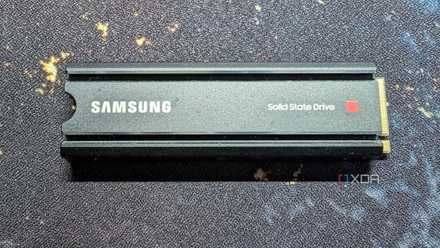
Another practical advantage of Gen5 storage is blazing-fast file transfer. If your daily workflow involves moving hundreds of GBs of media files, raw footage, backups, and other data across drives, the transfer time can really add up, especially for professionals. PCIe 5.0 SSDs are perfect for massive file transfers, saving you time by keeping things snappy. Most users don't fall in this bucket, but the ones who do can truly benefit from the cutting-edge transfer speeds of the latest SSDs. If you're planning to buy Gen5 storage for your PC, then make sure your build has enough cooling to sustain the high-speed PCIe 5.0 transfers. Gen5 SSDs are known to run hot, and can sometimes throttle even outside of intensive workloads. Most of them come with heatsinks and attached fans, but you might have to buy an aftermarket cooler if yours doesn't.
5 signs your NVMe SSD might actually need a heatsink
You better notice the signs before your SSD starts cooking (in the worst way)
PCIe 5.0 SSDs are useless for most users, but shine in certain workloads
The larger market hasn't yet adopted Gen5 drives the way some people thought it would, owing to poor value for money for the average user. Gen5 storage doesn't benefit gaming or general PC usage, making Gen4 SSDs the default for almost everyone. That said, professionals and enthusiasts who need high-bandwidth storage for serious productivity and large file transfers will find Gen5 storage the only viable option.