
PCIe 5.0 SSDs claim blazing-fast speeds that almost sound unreal on paper. We're talking about numbers that are twice what the best Gen 4 drives offer, sometimes pushing past 14,000MB/s. That kind of jump feels like it should translate into something you can actually notice, not just something you see in benchmarks. At the very least, you'd expect your PC to boot a little faster or your favorite games to load noticeably quicker. That's why I had high expectations when I bought the Crucial T710 a few months ago.
However, after living with it, I've learned the hard way that those expectations don't really line up with reality. Sure, those performance gains are real, but mostly only in benchmarks and very specific workloads that actually push sustained sequential speeds. In day-to-day use, though, it's hard for me to point to anything that genuinely feels faster. If anything, I was quick to notice how fast the drive heats up and how much more attention it needs when it comes to cooling and placement.

NVMe Gen 5 is twice as fast on paper, but I couldn't feel the difference in daily use
Take that theoretical bandwidth with a grain of salt.
Higher temps stand out immediately
Your motherboard's heatsink may not cut it for PCIe 5.0 drives
When PCIe 4.0 SSDs started coming out in 2019, many enthusiasts were already surprised by how warm they could get under load. It's why you have seen some manufacturers start including heatsinks with their SSDs. Despite cooling concerns, though, I was able to use my Corsair MP600 with just the motherboard's built-in heatsink and never really had to think about thermals at any point. That changed the moment I started using the Crucial T710. Unfortunately, the heatsink version wasn't available when I bought mine, so I had to rely on the one on my motherboard.
That’s when the difference became obvious. With Gen 5, the jump in speeds also brings a noticeable jump in heat. And the worst part? It doesn't take much time for temperatures to climb. Even at idle, it was averaging 7-10C higher than my old Gen 4 drive in the same case. You could argue that it would've run cooler if I had opted for the heatsink variant, but that's exactly my point. You need more aggressive cooling just to keep temperatures in check. I eventually bought an aftermarket heatsink with a cooling fan to bring those temps down.
All that extra heat for gains I don't notice
Most everyday tasks, including gaming, just don't take advantage of Gen 5 speeds
After dealing with higher temps, I expected at least some noticeable improvement in performance, like slightly faster boot times or shorter game loading times. But that's not what I experienced with the T710. My PC took just as long to boot, and I spent roughly the same amount of time on loading screens. At that point, it became clear to me that I was already in the "fast enough" territory with my old Gen 4 drive. And beyond that, it's all about chasing sub-second real-world gains that are hard to notice unless you're actively looking for them.
That becomes even more obvious once you're actually in-game. Storage speed just doesn't play a meaningful role once you have a decent NVMe drive, so performance is mostly identical. In the vast majority of cases, your frame rates, frame times, and overall responsiveness are dictated by your CPU, GPU, and RAM, not how much faster your SSD is. Even in open-world AAA titles that constantly stream in assets, you're not going to see any noticeable improvement in performance just by upgrading to a PCIe 5.0 SSD.
PCIe 5.0 SSDs do have their moments to shine
But the average user isn't going to benefit from their strengths
I'd be lying if I said PCIe 5.0 SSDs are completely useless, because their raw throughput does have its place in certain scenarios. Anyone who frequently works with raw 4K or 8K footage, for example, can actually benefit from that extra bandwidth when dealing with large files and sustained transfers. In these situations, you’re basically cutting down on how long certain tasks take, and that's where Gen 5 starts to justify itself. For creative professionals, shaving seconds off these workloads can add up quickly over time.
The problem, however, is that most people, especially those who mainly use their PCs for gaming like I do, simply won't take advantage of those higher speeds. Even in the most demanding open-world AAA titles, you'll often run into CPU, memory, or engine-level bottlenecks long before storage becomes the limiting factor. In fact, most workloads won't even saturate PCIe 4.0 drives. At that point, you're just paying more to live with a hotter SSD that doesn't feel any different in day-to-day use.
Real-world performance hasn't kept up with the heat
For now, PCIe 5.0 SSDs bring more heat into your case than a noticeable improvement in performance for the vast majority of users. The advertised speeds, if anything, feel like a preview of what could be possible with these drives in the future. If you're still on a SATA drive, it may be worth jumping straight to a Gen 5 SSD, but if you already have a PCIe 4.0 or even a PCIe 3.0 drive, you're better off waiting at least until games and regular workloads start benefiting from those higher speeds.
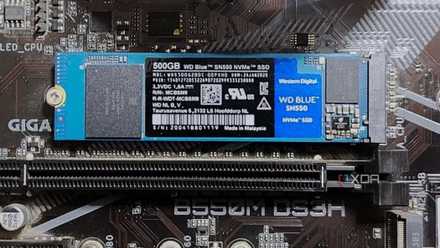
Forget about PCIe 5.0 — PCIe 3.0 SSDs are fast enough for 99% of users
Your PCIe 3.0 SSD has all the real-world performance of a PCIe 5.0 drive