
Over the years, there have been some attempts to bring Linux to smartphones, but they've never gone very far. Perhaps the most notable example is Ubuntu Touch, which was a version of Ubuntu optimized for small touchscreens, and it did appear on some devices. However, it didn't really go anywhere and it's been abandoned at this point.
But then there's Sailfish OS. This is a version of Linux for smartphones developed by Jolla, a Finnish company that also makes the phones running this operating system. It's a lot closer to the Linux experience than something like Android, but it's also the best version of Linux for people who don't want Linux on their phones.
No terminal needed
But it is there
The big problem with the idea of Linux on a phone is that most people don't want it. When you think of Linux, your mind likely jumps to the terminal first and foremost, and while modern iterations of Linux don't require the terminal nearly as much anymore, you may still need it every now and then, and on a phone, that just wouldn't fly. It's too cumbersome to have to type commands for basic tasks.
Thankfully, Sailfish OS is very clearly designed for smartphones from the ground up. There is a terminal app installed out of the box, and I think that's a positive overall because if you are a Linux user, having that ability is important for more advanced tasks where maybe you need extra information or access to specific commands. But at no point is the terminal required for using Sailfish OS on a phone that has it installed.
The entire process of setting up and using the phone has no need for the terminal. You can do everything with the mobile-first UI, from installing apps and software updates to changing your wallpaper and theme. Even if you download an RPM file from the internet, you can just run it to install the respective app.
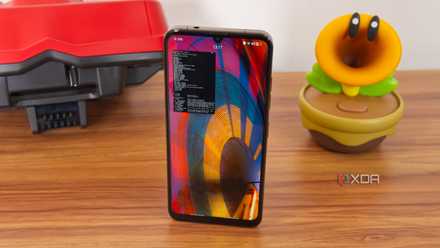
Designed from the ground up
It's made for phones
Sailfish OS isn't the first attempt to bring a proper Linux distribution to smartphones. Ubuntu Touch is a relatively well-known initiative that's still supported, and you have projects like Plasma Mobile shipping in distributions like PostmarketOS, which can put Linux on many existing phones. But those are often taking well-known desktop paradigms and trying to convert them to mobile. They're certainly usable in this form factor, but they feel too much like their desktop counterparts.
With Sailfish OS, you're getting an experience that's designed for mobile devices first and foremost, with none of the legacy or burden of the desktop platforms. It's very different anything you've seen, whether you're talking about Linux or other smartphone platforms, because the UI paradigms are all very unique. It gives off some vibes of Windows Phone with its visual design language, but the actual interactions are all very unique.
Swiping in from the side of the screen is how you go home, swiping down from a corner of the screen closes your current app, and the home screen is also your task manager, not just an app launcher. And on that note, the app launcher is always immediately accessible by swiping up, even while running an app.

Sailfish OS showed me what Linux phones could actually be, and we need more of it
A fantastic idea, but it needs more support
One of my favorite parts of the UI is how so many actions are "hidden" behind a swipe gesture. On an app store page, you can swipe down to have the option to install an app. In the file manager, swipe down to reveal actions for opening a file. On the lock screen, you can pin favorite apps so you can swipe down and choose one to launch without having to go through the app launcher itself. It's all very cohesive and unique, and I love how it works.
There's still going to be a learning curve if you're coming from a different platform, but everything in Sailfish OS feels intentionally designed for phones, and that's not something you can say for a lot of other Linux flavors on smartphones.
It needs more support
It's missing the apps
Unfortunately, the big problem with Sailfish OS is the lack of community support. There are some attempts to bring it to other devices, but by and large, Jolla phones are the only ones that can reasonably run Sailfish OS, and that limits its appeal. Ubuntu Touch and Plasma Mobile may not ship with any devices, but they have a bit more brand recognition to help make those platforms a bit more popular.
Regardless, though, all of them suffer from the same issue: a lack of apps. Sure, the basics of a phone are there and included with the OS, but if you need anything from a maps app to payments, it's going to be a lot more complicated, because these solutions just don't exist. There's a lot of modern convenience you're sacrificing by using Sailfish OS. It doesn't help that there are multiple app stores dividing the ecosystem even more.
While I don't think it would necessarily sway things and attract a lot of mainstream apps, it would still be beneficial if some of these projects could join forces for a more centralized app distribution platform, so we could at least have access to a few more interesting apps designed for phones.
Sailfish tries to combat this with its built-in proprietary Android compatibility layer, which does work decently well, but apps can't accurately detect my location, and since some security features from Google are missing, payment apps may also not work at times. More native apps are sorely needed, but if you don't need a lot of the modern niceties of platforms like Android, then Sailfish OS is likely the best way to get Linux on a phone.

Waydroid runs Android apps on Linux better than Windows ever ran them on WSA
They're barely in the same league
Disrupting the duopoly will be nearly impossible
On desktop PCs, Linux has managed to gain something of a foothold in the market, and while it's still far from a hugely popular choice, it's got enough support that a lot of software already exists for it, and typical user can reasonably switch to Linux without sacrificing usability. On phones, though, things still need a little more work, but Sailfish OS may be the best blueprint for what Linux should be like if it wants to get mainstream attention. It feels great to use, even on low-end hardware, and I can see the potential waiting to be unleashed here. Hopefully it keeps getting better.