
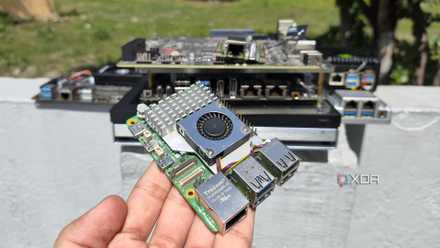
Raspberry Pi 5 was a popular single-board computer that offered a solid starting point compared to mini PCs. But in the past few years, the market has changed. With the influx of used office mini PCs available online, the gap between them and the Pi 5 has narrowed.
Sure, the comparison seems unfair, but one can’t ignore it. While the top Pi 5 model with 16GB memory easily crosses $100, you can find a used office mini PC with an Intel chip at half the price. Raspberry Pi’s ecosystem and community are solid. But home servers are in demand, even for running media libraries and providing an easily customizable experience that the SBC struggles to provide. Used x86 office mini PCs are now embarrassing the Pi 5 at half the cost and quietly outperform it in real-world use.
4 Raspberry Pi projects I abandoned after realizing sub-$150 mini PCs run them all better
After all, cheap mini-PCs crush Raspberry Pi SBCs on the performance and OS compatibility fronts
The compounded cost of a Pi 5 setup is higher
Low-cost is limited just to the board
Getting a Raspberry Pi 5 is easier, but you only get a board. Next, you’ll need to buy a capable power adapter, case, cooling solution, and storage just to assemble it into a workable machine. Though the Pi 5 SBC is readily available, the real challenge lies in finding suitable components in your region. Serious users prefer NVMe supporting HATs, dongles, or cases over microSD cards.
Cases for the Pi 5 are entirely a personal preference, but it’s recommended to get one with at least one cooling (PWM) fan and thermal pads for the board. Adding all these items to an online shopping cart will easily cost you nearly $200. Considering the assembly and setup required, the Pi remains a hobbyist option.
Instead, a used office mini PC comes as a complete package. After that, you simply need to power it up and either plug a LAN cable in or connect it to Wi-Fi. The overall cost of a used office mini PC is often less than half of what you’d pay for a fully-specced Pi 5.
Why used office mini PCs trump Pi 5
Delivering much better performance
A used mini PC makes sense when you need a small yet powerful plug-and-play computer for running experiments at home. Several corporations and institutions are getting rid of their old, small-form-factor mini PCs to make way for more powerful ones. You’ll mostly find different models based on Intel NUC-like systems from ASUS, Acer, MSI, Minisforum, Zotac, Beelink, Geekom, GMKTec, and many others. Besides them, models from big-name brands are also available in HP ProDesk/EliteDesk, Dell OptiPlex, and Lenovo ThinkCentre series.
Of course, you’ll need to select a used mini PC with a decent CPU, at least 8GB of RAM, and some storage. Otherwise, you’ll end up with a barebones model and will have to buy a compatible CPU, RAM, and storage separately. Unlike Pi 5, getting those components isn’t a problem.
When it comes to real-world performance, the mini PCs blow the Pi 5 out of the water. Whether it’s core CPU performance, thermal headroom, or multitasking, the mini PCs do it way better. On top of that, they deliver better networking, real NVMe and SATA storage support, and a stable USB experience. For home labs, mini-PCs can run Proxmox, virtual machines, and Docker containers without breaking a sweat.
Mini PCs win in more scenarios than Pi 5
Overall, uncompromised experience
Raspberry Pi 5 still maintains its prominence in embedded projects and IoT systems that can utilize its GPIO pins. For such always-on requirements at minimal power, the Pi is a worthy choice.
A mini PC is the best option for running Linux alongside Windows on the same machine. They’re widely preferred for building home servers for self-hosting, Home Assistant nodes, and media servers. Either way, a used mini PC provides desktop-like performance, backed by reliable hardware without architectural limitations.
And for IoT projects, you can opt for ESP32 boards and the ESPHome platform to build some for your smart home. Collectively, those ESP32 projects will work out well with a Home Assistant instance running on a used office mini PC.

3 reasons to pick a non-Raspberry Pi SBC for your next project
Sometimes, a Raspberry Pi-scented board just won't cut it
Leaving the Pi for another day, another project
Raspberry Pi 5 is the most evolved, capable Pi SBC. But the used office mini PC space has quickly taken over, offering more performance, easier storage and memory expansion, and better I/O for fewer bucks. They deliver better performance as home servers or small desktops.
While the Pi isn’t irrelevant, it's displaced as an everyday or home computer. It is the best choice for low-level hardware access or running ARM-friendly apps and development.
So, the Pi 5 hasn’t failed, but hardware decisions are holding it back against better, though used, mini-PCs. That’s why picking or recommending a Raspberry Pi 5 over a used office mini PC is challenging.