8 bad customer service stories to learn from (2026)


Last edited June 24, 2026

Table of Contents
- What turns a customer interaction into one of those bad stories?
- The true cost of creating your own bad customer service stories
- How I chose these bad customer service stories
- Summary of the worst bad customer service stories
- 8 bad customer service stories we can all learn from in 2026
- How to prevent your company from creating its own viral bad customer service stories
- Ready to write your own customer service success story?
We’ve all been there. Stuck on hold with terrible music, repeating the same information for the fifth time, and feeling completely, utterly unheard. It's a uniquely frustrating experience. While some bad customer service stories can be funny later, they’re also packed with lessons for any business that wants to, you know, keep its customers.
That's why I'm digging into some of the cringiest meltdowns in customer support history. I'm breaking down 8 of these unforgettable stories to figure out what went so horribly wrong. More importantly, I'll give you some real advice on how to build a support system that creates loyal fans, not viral complaints and nine-figure stock drops.
What turns a customer interaction into one of those bad stories?
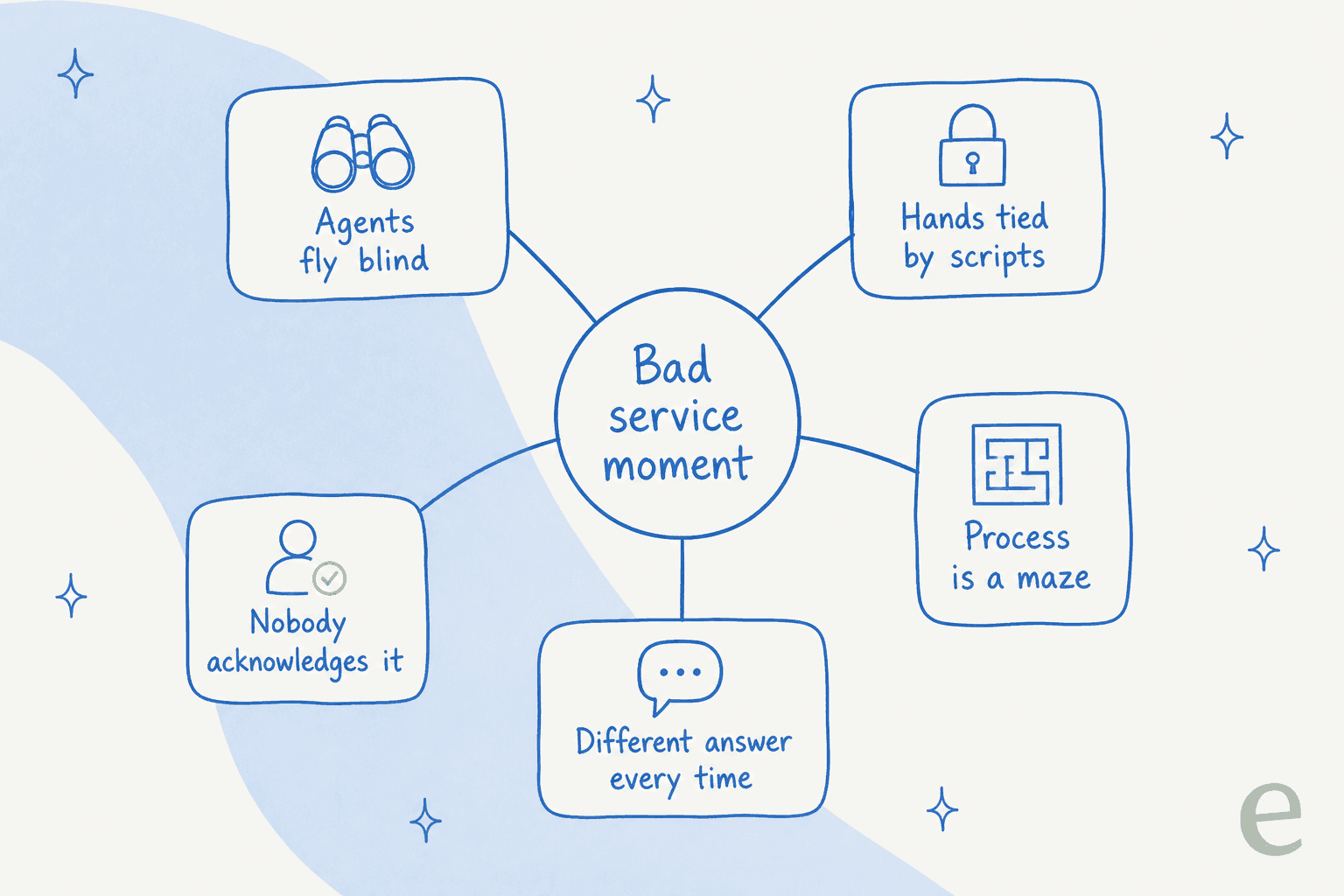
A truly awful customer service story isn't just about a single rude agent. It’s usually a sign that something is fundamentally broken in the company's process. It’s when the whole system seems designed to make you want to throw your phone against a wall.
The common threads in these horror stories usually come down to a few key problems:
- Agents are flying blind. They don't have the right answers because the information they need is scattered across a dozen different apps and old documents.
- Their hands are tied. Agents often know how to solve a problem, but a rigid script or an inflexible company policy stops them from actually helping.
- The whole process is a maze. Customers are forced to repeat themselves, wait on hold for ages, or deal with clunky, confusing systems.
- You get a different answer every time. One agent tells you one thing, a chatbot says something else, and an email reply contradicts them both.
- Nobody seems to care. The customer just feels like a ticket number. Their frustration isn't acknowledged, and the whole thing feels cold and robotic.
The true cost of creating your own bad customer service stories
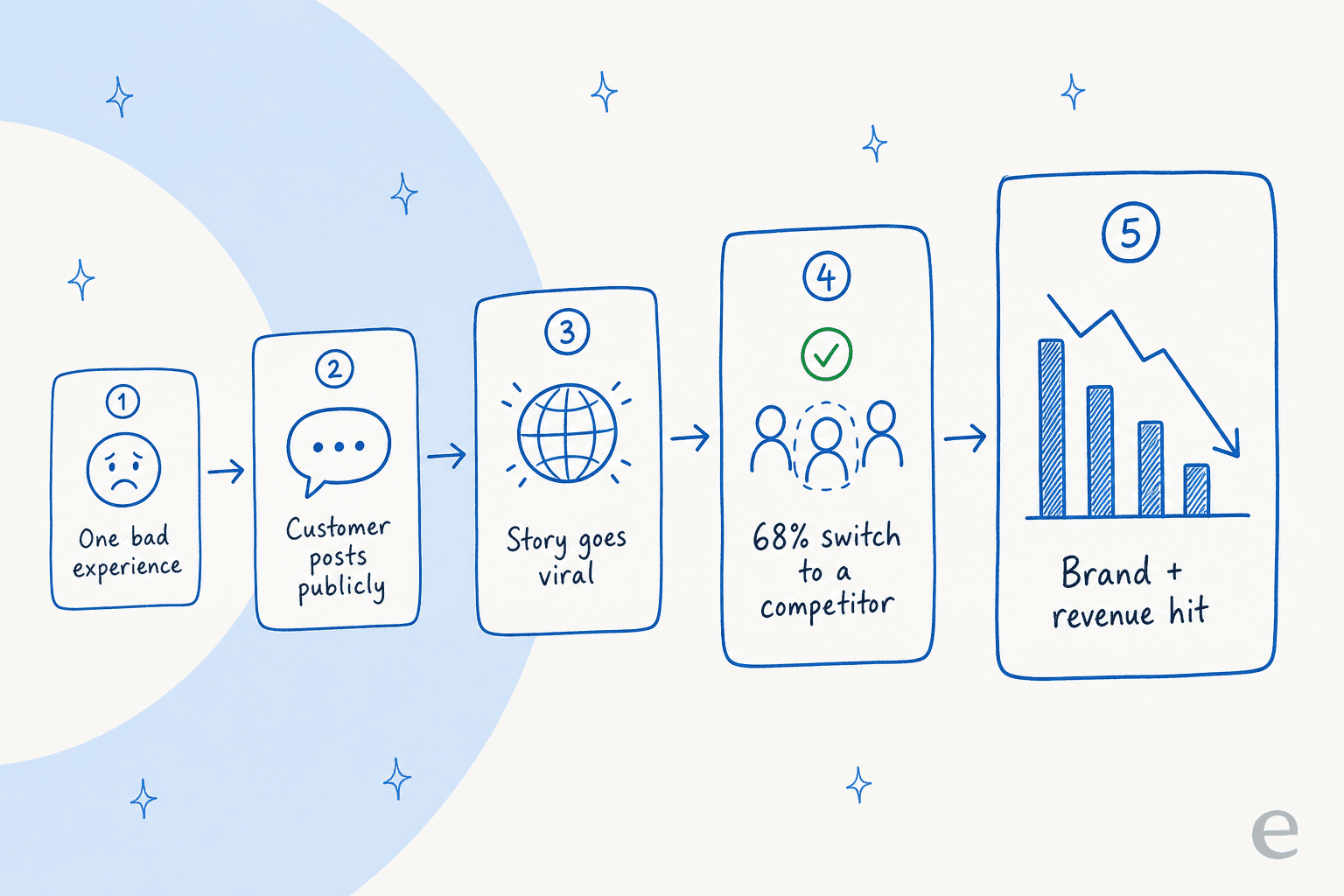
A single bad experience can do more than lose you one customer; it can become a viral story that damages your brand for years. In a world where everyone has a megaphone (aka social media), a frustrated tweet or a scathing Reddit post can reach millions in a few hours.
And this isn't just about feelings; it hits the bottom line. It costs five times more to attract a new customer than to keep an existing one, and a whopping 68% of customers will jump to a competitor after just one bad experience. The flip side is that fixing the underlying process pays for itself, the cost savings from AI support come precisely from the repeat-contact loops these stories are made of.
Think about the "United Breaks Guitars" incident. When the airline refused to take responsibility for a musician's broken guitar, he wrote a song about it that went viral. The result? A 10% drop in United's stock price, which wiped out $180 million in value. That’s one heck of an expensive mistake. These stories aren't just cautionary tales; they're expensive lessons in what not to do.
How I chose these bad customer service stories
I didn't just pick the most shocking stories I could find. I chose these eight examples because they perfectly show the common, preventable weak points that many modern support teams struggle with.
My criteria for making this list were simple:
- Impact: The story had to have real consequences, whether it went viral online or just caused a massive headache for the business.
- Lesson: It had to offer a clear, practical takeaway that you can actually use with your own team.
- Relevance: The problem had to be something that modern tools and strategies, like AI, are well-equipped to solve today.
Summary of the worst bad customer service stories
Here's a quick rundown of the legendary fails I'm about to get into.
| Story | Company | Core Problem | Key Lesson |
|---|---|---|---|
| The Retention Nightmare | Comcast | Agent Disempowerment & Friction-Filled Process | Let agents solve problems, don't just force them to follow a rigid script. |
| The Viral Song | United Airlines | Indifference & Lack of Accountability | A quick, human response is everything. One voice can cost millions. |
| The Billing Black Hole | Verizon | Siloed Information & Repetitive Work | Unify your systems so agents have one source of truth and stop repeat issues. |
| The Price Match Paradox | Walmart | Illogical Policies & Inconvenience | Focus on what makes sense for the customer, not just on rigid internal rules. |
| The Week-Long Repair | Auto Dealership | Poor Communication & Lack of Ownership | Communicate proactively and take ownership of problems, even if you didn't cause them. |
| The 9-to-5 Twitter Feed | British Airways | Limited Support Channels & Slow Response Time | Be available where your customers are, whenever they need you. |
| The Pickle Predicament | Restaurant | Inconsistent Service & Escalation Failure | Give your team de-escalation training and clear backup from managers. |
| The Unsanitary Return | Retail Store | Unhygienic Returns and No-Questions-Asked Policy | Balance customer-friendly policies with employee well-being and common sense. |
8 bad customer service stories we can all learn from in 2026
Alright, let's get into the hall of shame. The goal here is to learn from these blunders so you don't end up as the star of a blog post like this one day.
1. The comcast retention nightmare
The Story: In 2014, tech journalist Ryan Block tried to cancel his Comcast service. What should have been a simple phone call turned into an exhausting, nearly 20-minute argument. The retention agent just wouldn't let him go, relentlessly demanding reasons and refusing to process the cancellation. Block recorded the last eight minutes, it went viral, and it became the perfect example of terrible customer service.
The Breakdown: This wasn't just one rogue agent; it was the system working as designed. The agent was clearly trained and paid to do one thing: keep the customer at all costs, even if it meant making them miserable. He wasn't there to help; he was there to obstruct. The process was built to be as difficult as possible.
The Lesson: Make it easy for customers to leave. It sounds backward, but a good offboarding experience leaves the door open for them to come back. Your support team's job should always be to help the customer, even if "helping" means letting them go. Forcing them to fight their way out just guarantees they'll never return.
2. The united song
The Story: Musician Dave Carroll was on a United flight when he saw baggage handlers on the tarmac throwing his $3,500 Taylor guitar. It broke. For nine months, he was stuck in a bureaucratic loop, talking to reps who didn't care and ultimately refused to pay for the damage. So, he did what any musician would: he wrote a catchy country song about it called "United Breaks Guitars," and put it on YouTube. The video blew up, and it was a catastrophe for United's brand.
The Breakdown: The real problems here were indifference and a total refusal to take responsibility. Multiple employees had the chance to fix a $3,500 problem. Instead, their inaction led to a PR disaster that cost them millions in stock value and destroyed a huge amount of public trust.
The Lesson: Speed and empathy are non-negotiable. In the age of social media, you can't afford to let customer problems simmer, agent productivity tooling exists precisely so your team can respond before a complaint snowballs. The potential cost of a story going viral is way higher than the cost of just doing the right thing for one person. Own your mistakes, give a real apology, and fix it, fast.
3. Verizon's billing black hole
The Story: A Reddit user shared a multi-month nightmare with Verizon that started with a messed-up Black Friday order. The problem spiraled to include a lost 15-year-old phone number, ridiculously incorrect bills for nearly $500, and his service getting shut off repeatedly. All the while, different agents gave him conflicting information and temporary fixes that never actually fixed anything.
The Breakdown: This is what happens when information is stuck in silos. Every time the customer called, he was talking to an agent who couldn't see the full history of the problem. Without the whole story, each agent was just putting a bandage on a new symptom instead of fixing the root cause. It created a never-ending loop of frustration.
The Lesson: Your support team needs a single source of truth. When agents can see every past interaction, ticket, and note in one place, they get the full picture and can solve problems the first time. Stop making your customers do the work of remembering your company's history for you.
4. Walmart's nonsensical price match
The Story: A father and son went to Walmart to buy a Lego set they’d found for cheaper on Walmart.com. When they got to the store, the staff refused to honor their own website's price. The workaround? The father had to buy the Lego set online, while standing in the store, and choose "in-store pickup." He then had to watch an employee take the exact box he was holding off the shelf, put it behind the counter, and tell him he could pick it up the next day.
The Breakdown: This is a perfect example of a rigid policy that makes absolutely no sense from a customer's perspective. The employee was just following the rule, but the result was a frustrating, illogical experience that made the company look silly.
The Lesson: Policies should be there to help customers, not get in their way. Trust your frontline employees to use their judgment and make logical exceptions. Sometimes, the best customer service is just bending a rule that doesn't make sense in that situation.
5. The week-long car repair saga
The Story: In a detailed Quora post, a customer explained how a simple sunroof repair at a dealership turned into a week-long mess. First, their A/C mysteriously broke while the car was in the shop. Then the battery died. The whole time, they dealt with hostile reps who denied any responsibility and didn't bother to provide updates, leaving the customer car-less and furious.
The Breakdown: The issue wasn't just that things went wrong; cars break. It was the complete breakdown in communication and ownership. Instead of getting ahead of the problems, the dealership was defensive and reactive. The poor people skills of the staff turned a few unlucky events into a complete nightmare that shattered the customer's trust.
The Lesson: You have to own the entire customer experience. Proactive and honest communication is critical, especially when things go wrong, and it's where the right customer support tools earn their keep. Taking ownership, showing you understand their frustration, and being clear about how you're making it right can build trust even when the situation is a negative one.
6. British Airways' 9-to-5 Twitter feed
The Story: After British Airways lost his father's luggage, a man named Hasan Syed complained on Twitter. When he didn't get a response, he paid to promote his angry tweets, making sure his frustration reached a huge audience. The eventual reply from British Airways came hours later, explaining that their "twitter feed is open 0900-1700 GMT."
The Breakdown: A customer's problem doesn't end at 5 p.m. By offering support on a 24/7 platform but only staffing it during business hours, British Airways created a huge disconnect. Their response felt tone-deaf and only made the situation worse.
The Lesson: Be available 24/7 where your customers are, when they need you. If you're going to use a real-time channel like Twitter for support, you need a plan to manage it. That means either having enough staff or using smart automation that can give answers and set expectations, even when your human team is asleep.
7. The great pickle predicament
The Story: A Buzzfeed community member shared a story from their time as a server. A pregnant customer ordered a burger, but when it arrived with pickles, she started sobbing and screaming, eventually throwing the pickles at the server's face. The kitchen quickly remade the burger. When the manager brought out the new one, the customer's first complaint was, "Well that took forever." Her second? She opened the burger and demanded, "Where are the pickles?"
The Breakdown: Okay, this customer's behavior was completely out of line. But the story is a raw reminder of the intense emotional pressure that frontline staff deal with. The server was verbally and physically assaulted, and while a manager eventually stepped in, the employee took the brunt of the abuse.
The Lesson: You have to have your support team's back. Protecting your employees from abusive customers is not only the right thing to do, but it's also essential for preventing agent burnout. This means good training on how to de-escalate tense situations, clear rules for when to get a manager, and a company culture that makes it clear that no employee should have to put up with abuse.
8. The bed bug biohazard return
The Story: In a story from Not Always Right, a retail employee was forced by their manager to accept the return of a used mattress topper. The problem? The topper was visibly infested with bed bugs and stained with what smelled like urine and feces. When the employee raised the obvious biohazard issue, they were fired for questioning the store's "no-questions-asked" return policy.
The Breakdown: This is a terrifying example of the "customer is always right" mantra taken to a dangerous and illogical conclusion. A policy that was meant to be customer-friendly ended up creating an unsafe work environment and putting employees and other customers at risk.
The Lesson: Being customer-focused can't come at the expense of employee safety and common sense. Policies need to have boundaries. Empower your team to make judgment calls, especially when health and safety are involved. A good customer experience should never require an employee to handle a biohazard.
How to prevent your company from creating its own viral bad customer service stories
Reading through these is enough to give any support manager anxiety. But the good news is that nearly all of these meltdowns are preventable with the right approach and the right tools. Here’s how you can build a support operation that doesn't end up as a cautionary tale.
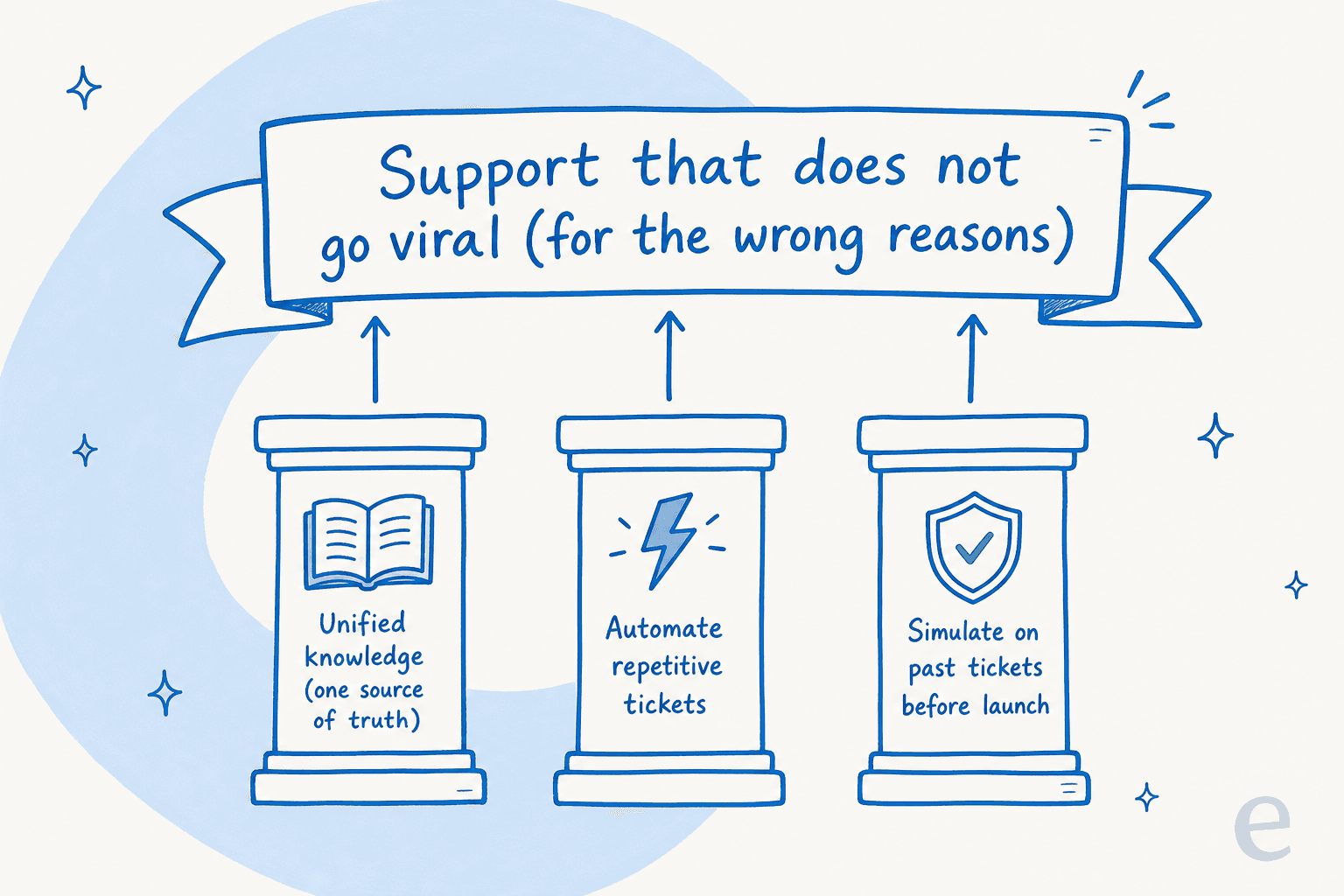
Give your team unified knowledge to prevent bad customer service stories
So many of these stories, like the Verizon billing mess and the dealership disaster, come down to one thing: agents not having the right information when they need it. When your company’s knowledge is spread across a Zendesk help center, old tickets, internal Confluence pages, and a bunch of random Google Docs, your agents have to play detective instead of just solving problems.
This is where a tool like eesel AI can make a huge difference. It connects to all your existing knowledge sources and uses that information to power an AI that gives instant, accurate, and consistent answers. No more "let me put you on hold while I look for that." It's like giving your entire team a single, perfect memory, ensuring they can solve the problem on the first try.
Automate simple tasks to avoid creating bad customer service stories
Let's be real, a lot of customer questions are simple and repetitive. Answering "where's my order?" a hundred times a day is a fast track to burnout. It leaves your agents drained when they need to handle a truly tough or emotional situation, like the pickle-throwing customer.
By automating these common questions, you free up your human agents to focus on the complex, high-empathy conversations that really define your customer experience. The eesel AI Agent can be set up in minutes to handle specific types of tickets on its own, answering questions, tagging tickets, and even looping in a human agent when it senses a tricky issue. This helps every customer get the right kind of support at the right time.
Test your support workflows to avoid future bad customer service stories
Remember Comcast's retention script? It was a process designed to hit a business goal, but in the real world, it created a toxic customer experience. Rolling out new processes or automation can be risky. How do you know if your new AI chatbot won't say something weird, or if a new escalation policy will actually help?
You need a way to test your changes in a safe environment. eesel AI's simulation mode is built for exactly this. You can run your AI agent against thousands of your own past tickets to see exactly how it would have performed. It gives you a solid forecast of resolution rates and cost savings, letting you tweak your workflows and launch them with confidence, knowing you won't be the next viral story.
And this connects back to the hardest lesson from years of running AI on live queues: the bot should only answer what it's actually sure about. As one CX lead I worked with put it, you want an AI handling only the tickets it's confident to handle, and leaving the rest alone. Confidence-based routing is the difference between a chatbot that quietly invents a wrong answer (your next viral story) and one that hands the tricky ticket to a person, the same logic behind first contact resolution and a clean AI-to-human handoff.
Ready to write your own customer service success story?
The line between a viral nightmare and a glowing 5-star review is thinner than you might think. It usually comes down to having empowered agents, smart processes, and the right information ready to go.
Modern AI tools aren't some far-off future tech anymore; they are the foundation for a support operation that is resilient, scalable, and actually helpful. They are how you turn potential disasters into moments where you really shine.
Instead of wrestling with outdated processes and scattered information, you can build a support system that stops these nightmares before they start. eesel AI works with your existing helpdesk and knowledge sources to automate frontline support, help agents with AI-powered drafts, and give you control over your customer experience.
See for yourself how it works. Book a demo or sign up for a free eesel AI trial and start building a support system that customers will rave about, not rant about.
Frequently asked questions

Share this article

Article by
Riellvriany Indriawan
Riell is a designer and writer at eesel AI with about two years of experience researching CX platforms, AI chatbots, and helpdesk software. She combines her design background with a sharp eye for how these tools actually look and feel in practice — making her comparisons unusually visual and user-focused.