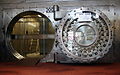
A bank is a financial institution that accepts deposits from the public and creates a demand deposit while making loans. Lending activities can be directly performed by the bank or indirectly through capital markets.
👁 Image UML class diagram depicting retail banking Retail banking, also known as consumer banking or personal banking, is the provision of services by a bank to the general public, rather than to companies, corporations or other banks, which are often described as wholesale banking (corporate banking).
Deposits placed with non-bank fintech (financial technology) companies are not protected by the FDIC against failure of the fintech company. If the company places the money in an FDIC-insured bank account consumers are protected only under some conditions. (Full article...)
The 2010 United States foreclosure crisis, sometimes referred to as Foreclosure-gate or Foreclosuregate, refers to a widespread epidemic of improper foreclosures initiated by large banks and other lenders. The foreclosure crisis was extensively covered by news outlets beginning in October 2010, and several large banks—including Bank of America, JPMorgan Chase, Wells Fargo, and Citigroup—responded by halting their foreclosure proceedings temporarily in some or all states. The foreclosure crisis caused significant investor fear in the U.S. A 2014 study published in the American Journal of Public Health linked the foreclosure crisis to an increase in suicide rates.
One out of every 248 households in the United States received a foreclosure notice in September 2012, according to RealtyTrac. (Full article...)
Fractional-reserve banking is the system of banking under which banks that take deposits from the public keep only part of their deposit liabilities in liquid assets as a reserve, typically lending the remainder to borrowers. Bank reserves are held as cash in the bank or as balances in the bank's account at the central bank. Fractional-reserve banking differs from the hypothetical alternative model, full-reserve banking, in which banks would keep all depositor funds on hand as reserves.
The country's central bank may determine a minimum amount that banks must hold in reserves, called the "reserve requirement" or "reserve ratio". Most commercial banks hold more than this minimum amount as excess reserves. Some countries, e.g. the core Anglosphere countries of the United States, the United Kingdom, Canada, Australia, and New Zealand, and the three Scandinavian countries, do not impose reserve requirements at all. (Full article...)
👁 Image MAC (Money Access Card) ATM Card An ATM card is a dedicated payment card issued by a financial institution (i.e. a bank) which enables a customer to access their financial accounts via its and others' automated teller machines (ATMs) and, in some countries, to make approved point of purchase retail transactions. Many ATM cards also doubled as cheque guarantee cards. ATM cards are not credit cards or debit cards, however most credit and debit cards can also act as ATM cards and that is the most common way that banks issue cards since the 2010s.
ATM cards are payment card size and style plastic cards with a magnetic stripe and/or a plastic smart card with a chip that contains a unique card number and some security information such as an expiration date or CVVC (CVV). ATM cards are known by a variety of names such as bank card, MAC (money access card), client card, key card or cash card, among others. Other payment cards, such as debit cards and credit cards can also function as ATM cards. Charge and proprietary cards cannot be used as ATM cards. The use of a credit card to withdraw cash at an ATM is treated differently to a point of sale transaction, usually attracting interest charges from the date of the cash withdrawal. (Full article...)
The CAMELS rating is a supervisory rating system originally developed in the U.S. to classify a bank's overall condition. It is applied to every bank and credit union in the U.S. and is also implemented outside the U.S. by various banking supervisory regulators.
Banking regulation and supervision refers to a form of financial regulation which subjects banks to certain requirements, restrictions and guidelines, enforced by a financial supervisory authority generally referred to as banking supervisor, with semantic variations across jurisdictions. By and large, banking regulation and supervision aims at ensuring that banks are safe and sound and at fostering market transparency between banks and the individuals and corporations with whom they conduct business.
Its main component is prudential regulation and supervision whose aim is to ensure that banks are viable and resilient ("safe and sound") so as to reduce the likelihood and impact of bank failures that may trigger systemic risk. Prudential regulation and supervision requires banks to control risks and hold adequate capital as defined by capital requirements, liquidity requirements, the imposition of concentration risk (or large exposures) limits, and related reporting and public disclosure requirements and supervisory controls and processes. Other components include supervision aimed at enforcing consumer protection, sometimes also referred to as conduct-of-business (or simply "conduct") regulation and supervision of banks, and anti–money laundering supervision that aims to ensure banks implement the applicable AML/CFT framework. Deposit insurance and resolution authority are also parts of the banking regulatory and supervisory framework. Bank (prudential) supervision is a form of "microprudential" policy to the extent it applies to individual credit institutions, as opposed to macroprudential regulation whose intent is to consider the financial system as a whole. (Full article...)
Worldwide, credit union systems vary significantly in their total assets and average institution asset size, ranging from volunteer operations with a handful of members to institutions with hundreds of thousands of members and assets worth billions of US dollars. In 2018, the number of members in credit unions worldwide was 375 million, with over 100 million members having been added since 2016. (Full article...)
A savings bank is a financial institution that is not run on a profit-maximizing basis, and whose original or primary purpose is collecting deposits on savings accounts that are invested on a low-risk basis and receive interest. Savings banks have mostly existed as a separate category in Europe.
Savings banks originated in late-18th century Europe as a development of the Enlightenment, and became a Europe-wide phenomenon in the first half of the 19th century. The trajectories of savings bank systems then diverged across European nations, variously leading to the formation of integrated banking groups, cohesive national networks, conversion into cooperative banking or commercial banking entities, and/or piecemeal consolidation with other credit institutions. In most countries, the surviving savings banks have private-sector status and no longer operate under a distinctive legislative framework; significant exceptions include Germany and Luxembourg, where savings banks are public-sector entities. (Full article...)
Münzhof, the company's headquarters in Zurich, Switzerland
UBS Group AG (stylized simply as UBS) is a Swiss multinational investment bank and financial services firm founded and based in Switzerland, with headquarters in both Zurich and Basel. It holds a strong foothold in all major financial centres as the largest Swiss banking institution and the world's largest private bank. UBS manages the largest amount of private wealth in the world, counting approximately half of The World's Billionaires among its clients, with over US$7 trillion in assets as of December 2025 (AUM).' Based on international deal flow and political influence, the firm is considered one of the "biggest, most powerful financial institutions in the world". UBS is also a leading market maker and one of the eight global 'bulge bracket' investment banks. Due to its large presence across the Americas, EMEA and Asia–Pacific markets, the Financial Stability Board considers it a global systemically important bank and UBS is widely considered to be the largest and most sophisticated "truly global investment bank" in the world, given its market-leading positions in every major financial centre globally.
UBS investment bankers and private bankers are known for their strict bank–client confidentiality and culture of banking secrecy. Apart from private banking, UBS provides wealth management, asset management and investment banking services for private, corporate and institutional clients with international service. The bank also maintains numerous underground bank vaults, bunkers and storage facilities for gold bars around the Swiss Alps and internationally. UBS acquired rival Credit Suisse in an emergency rescue deal brokered by the Swiss government and its Central bank in 2023, following which UBS' AUM increased to over $5 trillion along with an increased balanced sheet of $1.6 trillion. ('Full article...)
It is a major financial institution that started in 1875 as a postal savings system, and that still today continues to operate primarily out of post office branches. It manages over ¥205 trillion of assets and offers services in almost 24,000 branches across Japan. At times in its history, it was the largest financial institution in the world. Since its conception, it has played a significant role in both making economic services to people in Japan and making investments towards the economic and industrial development of the country. (Full article...)
👁 Image Danske Bank A/S (pronounced[ˈtænˀskəˈpɑŋˀk], lit.'Danish Bank') is a Danish multinational banking and financial services corporation. Headquartered in Copenhagen, it is the largest bank in Denmark and a major retail bank in the northern European region with over 5 million retail customers.
As of 2020, Danske Bank's largest shareholder with 21% of the share capital was A.P. Moller Holding [da], the investment holding company of the Maersk family. (Full article...)
It was the first building society in the United Kingdom to demutualise, doing so in July 1989. The bank expanded through a number of acquisitions in the 1990s, including James Hay, Scottish Mutual, Scottish Provident and the rail leasing company Porterbrook. Abbey National launched an online bank, Cahoot, in June 2000. (Full article...)
ING Group N.V. (Dutch: ING Groep) is a Dutch multinationalbanking and financial services corporation headquartered in Amsterdam. Its primary businesses are retail banking, direct banking, commercial banking, investment banking, wholesale banking, private banking, asset management, and insurance services. With total assets of US$967.8 billion, it consistently ranks among the largest banks globally.
👁 Image Crédit Agricole Group (French:[kʁediaɡʁikɔl]), sometimes called La banque verte (pronounced[labɑ̃kvɛʁt], lit.'The green bank', due to its historical ties to farming), is a French international banking group and the world's largest cooperative financial institution. It is the second largest bank in France, after BNP Paribas, as well as the third largest in Europe and tenth largest in the world. It consists of a network of Crédit Agricole local banks, 39 Agricole regional banks and a central institute, the Crédit Agricole S.A.. It is listed through Crédit Agricole S.A., as an intermediate holding company, on Euronext Paris' first market and is part of the CAC 40 stock market index. Local banks of the group owned the regional banks, in turn the regional banks majority owned the S.A. via a holding company, and in turn the S.A. owned part of the subsidiaries of the group, such as LCL, the Italian network and the CIB unit. It is considered to be a systemically important bank by the Financial Stability Board.
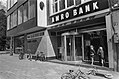
Image 4Statesman Jan van den Brink was instrumental in the merger of Amsterdamsche Bank and Rotterdamsche Bank in 1964, and remained on the bank's board until 1978 (from AMRO Bank)
Image 33From 1867 to 1890 the bank was headquartered at 59 Yonge Street. This was the 1852 Ross, Mitchell & Co. Building, designed by William Thomas. (from Canadian Bank of Commerce)
Image 38The bank's 1890 head office at 23 King Street West), designed by Richard Alfred Waite. It was demolished in 1928 to make way for the bank's new headquarters. (from Canadian Bank of Commerce)


.svg)


_ATM_Card.jpg)




.jpg)
















.jpg)


![👁 Image 10Helsinki head office extension designed by Harry W. Schreck [fi] in the late 1950s (from Bank of Finland)](https://upload.wikimedia.org/wikipedia/commons/thumb/b/b0/Bank_of_Finland%2C_Helsinki_-_DSC05358.JPG/120px-Bank_of_Finland%2C_Helsinki_-_DSC05358.JPG)







.jpg)

.jpg)




![👁 Image 26Rotterdam head office [nl], later repurposed as a shopping center (from AMRO Bank)](https://upload.wikimedia.org/wikipedia/commons/thumb/d/db/Forum_Rotterdam_-_Rotterdamsche_Bank_2022_01.jpg/120px-Forum_Rotterdam_-_Rotterdamsche_Bank_2022_01.jpg)
.jpg)





_(cropped).jpg)





![👁 Image 40Former branch [fi] in Tampere (from Bank of Finland)](https://upload.wikimedia.org/wikipedia/commons/thumb/0/00/Suomen_Pankin_talo_Tampere.jpg/120px-Suomen_Pankin_talo_Tampere.jpg)


![👁 Image 42Interior of the Helsinki Branch of the Vyborg-Bank [fi] in the 1910s (from Bank)](https://upload.wikimedia.org/wikipedia/commons/thumb/6/64/Pohjoismaiden_Osakepankin_Helsingin_sivukonttori.jpg/120px-Pohjoismaiden_Osakepankin_Helsingin_sivukonttori.jpg)