The land that comprises modern-day Ecuador was once home to several groups of indigenous peoples that were gradually incorporated into the Inca Empire during the 15th century. The territory was colonized by the Spanish Empire during the 16th century, achieving independence in 1820 as part of Gran Colombia, from which it emerged as a sovereign state in 1830. The legacy of both empires is reflected in Ecuador's ethnically diverse population, with most of its 17.8 million people being mestizos, followed by large minorities of Europeans, Native American, African, and Asian descendants. Spanish is the official language spoken by a majority of the population, although 13 native languages are also recognized, including Quechua and Shuar.
One of 17 megadiverse countries in the world, Ecuador hosts many endemic plants and animals, such as those of the Galápagos Islands. In recognition of its unique ecological heritage, the new constitution of 2008 is the first in the world to recognize legally enforceable rights of nature.
In the 2024 Global Hunger Index (GHI), Ecuador ranks 58th out of 127 countries with a score of 11.6, which indicates a moderate level of hunger. (Full article...)
The summit of Chimborazo, the point on the Earth's surface that is farthest from the Earth's center
Chimborazo (Spanish:[tʃimboˈɾaso]ⓘ) is a stratovolcano in Ecuador and the Cordillera Occidental range of the Andes. Its last known eruption is believed to have occurred around AD 550. Although not the tallest mountain in the Andes or on Earth relative to sea level, its summit is the farthest point on Earth's surface from the Earth's center due to its location along the planet's equatorial bulge. Chimborazo's height from sea level is 6,263 m (20,548 ft), well below that of Mount Everest at 8,849 m (29,032 ft).
Chimborazo is the highest mountain in Ecuador and the 39th-highest peak in the entire Andes. (Full article...)
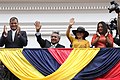
Image 3Former President Rafael Correa (left) attends President-elect Lenín Moreno's (middle) "changing of the guard" ceremony. The two PAIS leaders were considered close allies before Moreno's "de-Correaization" efforts started after he assumed the presidency. (from History of Ecuador)
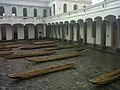
Image 11The banana boom of the mid-20th century boosted the economy of Guayaquil, where office buildings like these were built. (from History of Ecuador)
Image 14Satellite maps of the concentration of chlorophyll (representing abundance of phytoplankton) during El Niño (top) and La Niña (bottom). The color scale goes from blue at the lowest concentrations to red at the highest. Currents that normally fertilize phytoplankton reverse during El Niño, resulting in barren oceans. The same currents are strengthened by La Niña, resulting in an explosion of ocean life. (from Galápagos Islands)
Image 17A satellite map of chlorophyll and phytoplankton concentration (top) paired with a map of oceanic surface temperatures at the same time (bottom). The thriving populations represented by green and yellow in the upper map correlate to areas of higher surface temperatures represented by yellow in the lower map (2 March 2009). (from Galápagos Islands)
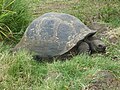
Image 37A Galápagos tortoise (Chelonoidis nigra) on Santa Cruz. C. nigra is the largest living species of tortoise, hunted to near extinction during the islands' whaling era. (from Galápagos Islands)
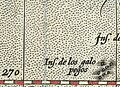
Image 51A manuscript map of the islands from the charts drafted by James Colnett of the British Royal Navy in 1793, adding additional names (from Galápagos Islands)
... that Ecuadorians refer to New York City as being Ecuador's third largest City based on the assumption that more Ecuadorians live in the Tri-State Region than in Cuenca?
... that Panama hats are not actually made in Panama but in Ecuador?
... that Guayaquil (Ecuador's largest city) became the first intelligent city in incorporating a global free internet access at the hot spots of the city?
... that Guayaquil (Ecuador's largest city) has the most modern airport of the Latin American region... (see municipalidad de guayaquil in red)
... that Ecuador's biodiversity is amongst the highest in the world? For instance more than 16,000 species of plants, including 4,000 species of orchids.


.jpg)


.svg)








.jpg)


.jpg)


.jpg)


_-_Galapagos_(2225816313).jpg)




_-_Santa_Cruz_Island.jpeg)


.jpg)
_-_Carta_XI_-_Divisi%C3%B3n_pol%C3%ADtica_de_Colombia,_1824.jpg)


,_Published_1953.jpg)

_Tortuga_Bay_on_the_Island_of_Santa_Cruz,_Gal%C3%A1pagos.JPG)




_-Espanola_-Punta_Suarez3.jpg)


.jpg)


.jpg)


.svg)


