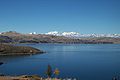
Peru, officially the Republic of Peru, is a country in western South America. It is bordered to the north by Ecuador and Colombia, to the east by Brazil, to the southeast by Bolivia, to the south by Chile, and to the south and west by the Pacific Ocean. Peru is a megadiverse country, with habitats ranging from the arid plains of the Pacific coastal region in the west, to the peaks of the Andes mountains extending from the north to the southeast of the country, to the tropical Amazon basin rainforest in the east with the Amazon River. Peru has a population of over 32 million, and its capital and largest city is Lima. At 1,285,216 km2 (496,225 sq mi), Peru is the 19th largest country in the world, and the third largest in South America.
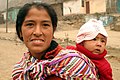
Peru's population includes Mestizos, Amerindians, Europeans, Africans, and Asians. The main spoken language is Spanish, although a significant number of Peruvians speak Quechuan languages, Aymara, or other Indigenous languages. This mixture of cultural traditions has resulted in a wide diversity of expressions in fields such as art, cuisine, literature, and music. Peru has recently gained international recognition for its vibrant gastronomy, blending Indigenous, Spanish, African, and Asian influences. Lima is now considered a global culinary capital, home to award-winning restaurants like Central and Maido. (Full article...)
A pisco sour is an alcoholic cocktail of Peruvian origin that is traditional to Peruvian cuisine. The drink's name comes from pisco, a brandy which is its base liquor, and the cocktail term sour, implying sour citrus juice and sweetener components. The Peruvian pisco sour uses Peruvian pisco and adds freshly squeezed lime juice, simple syrup, ice, egg white, and Angostura bitters. The Chilean version is similar, but uses Chilean pisco and Pica lime, and excludes the bitters and egg white. Other variants of the cocktail include those created with fruits like pineapple or plants such as coca leaves.
Although the preparation of pisco-based mixed beverages possibly dates back to the 1700s, historians and drink experts agree that the cocktail as it is known today was invented in the early 1920s in Lima, the capital of Peru, by the American bartenderVictor Vaughen Morris. Morris left the United States in 1903 to work in Cerro de Pasco, a city in central Peru. In 1916, he opened Morris' Bar in Lima, and his saloon quickly became a popular spot for the Peruvian upper class and English-speaking foreigners. The oldest known mentions of the pisco sour are found in newspaper and magazine advertisements, dating to the early 1920s, for Morris and his bar published in Peru and Chile. The pisco sour underwent several changes until Mario Bruiget, a Peruvian bartender working at Morris' Bar, created the modern Peruvian recipe for the cocktail in the latter part of the 1920s by adding Angostura bitters and egg whites to the mix. (Full article...)
El Misti, also known as Guagua-Putina, is a dormant stratovolcano located in southern Peru near the city of Arequipa. With its seasonally snow-capped, symmetrical cone, El Misti stands at 5,822 m above sea level and lies between the mountain Chachani (6,075 m) and the volcano Pichu-Pichu (5,669 m). Its last eruption was in 1784. Fertile valleys near the foot of El Misti make its surroundings ideal for agriculture. (more...)
The Colombia-Peru War (September 1, 1932 - May 24, 1933) was an armed conflict between the Republic of Colombia and the Republic of Peru. The War was the result of dissatisfaction with the Salomón-Lozano Treaty and the imposition of heavy tariffs on sugar and started with an internal insurrection in Peru, a civilian takeover of the city Iquitos. On the first of september President Luis Miguel Sánchez dispatched two regiments of the Peruvian Army to Leticia and Tarapacá, both Peruvian settlementes in the Amazonas Region in present day southern Colombia. (more...)
April 3, 1983 - The Lucanamarca massacre took place in which 69 peasants were killed by the Shining Path organization in and around the town of Lucanamarca.
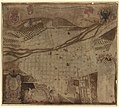
Image 16Colonial tapestry, late 17th or early 18th century. It was woven by indigenous weavers for a Spanish client, incorporating then-fashionable Chinese imagery. (from History of Peru)
Image 22Colonial tapestry, late 17th or early 18th century. It was woven by indigenous weavers for a Spanish client, incorporating then-fashionable Chinese imagery. (from History of Peru)
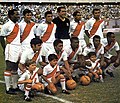
Image 23Peru's football team in 1970; the ethnic diversity of Peruvians is visible, with players showing African, Amerindian and European ancestry in various mixes. (from Demographics of Peru)
Water resources and irrigation infrastructure in Peru vary throughout the country. The coastal region, an arid but fertile land, has about two-thirds of Peru's irrigation infrastructure due to private and public investment aimed at increasing agricultural exports. The Highlands and Amazon regions, with abundant water resources but rudimentary irrigation systems, are home to the majority of Peru's poor, many of whom rely on subsistence or small-scale farming.
The Peruvian Government is undertaking several programs aimed at addressing key challenges in the irrigation sector like increasing water stress, competing interests, deteriorating water quality, poor efficiency of irrigation, drainage systems (including low technology systems and underutilization of existing infrastructure), weak institutional and legal frameworks, low cost recovery (i.e., operation and maintenance costs above actual collections), and vulnerability to climate variability and change, including extreme weather conditions and glacier retreat. (Full article...)
... that Swedish naval officer Axel Lagerbielke was imprisoned in Lima for over a year, held in Callao and eventually escaped from Panama on an English packet boat to Jamaica?
This is a list of recognized content, updated weekly by JL-Bot (talk·contribs) (typically on Saturdays). There is no need to edit the list yourself. If an article is missing from the list, make sure it is tagged (e.g. {{WikiProject Peru}}) or categorized correctly and wait for the next update. See WP:RECOG for configuration options.
This list was generated from these rules. Questions and feedback are always welcome! The search is being run daily with the most recent ~14 days of results. Note: Some articles may not be relevant to this project.






.png)


.svg)

.svg)








_LOC_2010592749.jpg)


.svg)